We find ourselves in an oddly apocalyptic era where a distorted logic fuels the mechanisms of public life, all while maintaining a facade of normalcy. Globally, political systems are exerting greater control over commerce, education, culture, and communication. Independent critical thinking is increasingly perceived as subversive rather than a civic asset. Public spaces, once arenas for egalitarian expression, are diminishing due to surveillance, privatization, and corporate influence.
In such a climate, the role of socially engaged art in a world that is progressively antagonistic to independent thought is questioned. The history of social practice art contains a unique and somewhat naïve optimism, positing that art in public spaces can help communities reimagine themselves in more equitable, attentive, and present ways. Artists have long ventured beyond the confines of traditional galleries to engage directly with communities, organizing workshops, building temporary monuments, and collaborating with residents to narrate overlooked stories.
Throughout my artistic career, I have explored performance, public art, installation, and social practice to experiment with communication in civic spaces. My projects utilize humor, irony, subtle détournement, and striking visual language to inspire contemplation of ingrained social and political dynamics in public settings. These efforts stem from DIY art ventures, community engagement, and independent public art initiatives outside conventional institutional frameworks.
In 2005, I established Art in Odd Places, a public art initiative responding to the decline of accessible public space and civil liberties. This project invited artists to intervene directly in New York City’s civic environment, particularly along the 14th Street corridor. However, as socially engaged art gained prominence, its strategies became co-opted by the very systems it aimed to challenge. Developers, corporations, and institutions began using the rhetoric of community engagement while perpetuating economic structures that drive displacement.
During a 2016 residency in Macon, Georgia, organized by the Macon Arts Alliance, I witnessed firsthand how art initiatives can be manipulated. Although the project was framed in the language of social practice, it served as a precursor to redevelopment, with an all-white board overseeing it. Art became a tool for rebranding the neighborhood, facilitating a gentle introduction to displacement rather than genuine engagement. This experience led me to question how social practice art can be exploited by the systems it seeks to critique.
To address these concerns, I developed Social Malpractice Art, a workshop at the School of Visual Arts examining the dual nature of socially engaged art — how it can be both effectively managed and misused. The workshop educates artists on how cultural production can be co-opted, from corporate sponsorship to artwashing by developers. Participants explore creative strategies to resist these dynamics, drawing inspiration from activist groups like the Guerrilla Girls and The Yes Men.
As political climates have grown more restrictive, the workshop has evolved into a speculative think tank exploring a future where independent cultural expression is tightly controlled. Within this imagined scenario, participants learn and then subvert the rules of a fictional Ministry of Cultural Harmony. They become part of the Invisible Art Union, experimenting with covert ways to circulate art beyond official oversight, demonstrating that creativity cannot be easily suppressed.
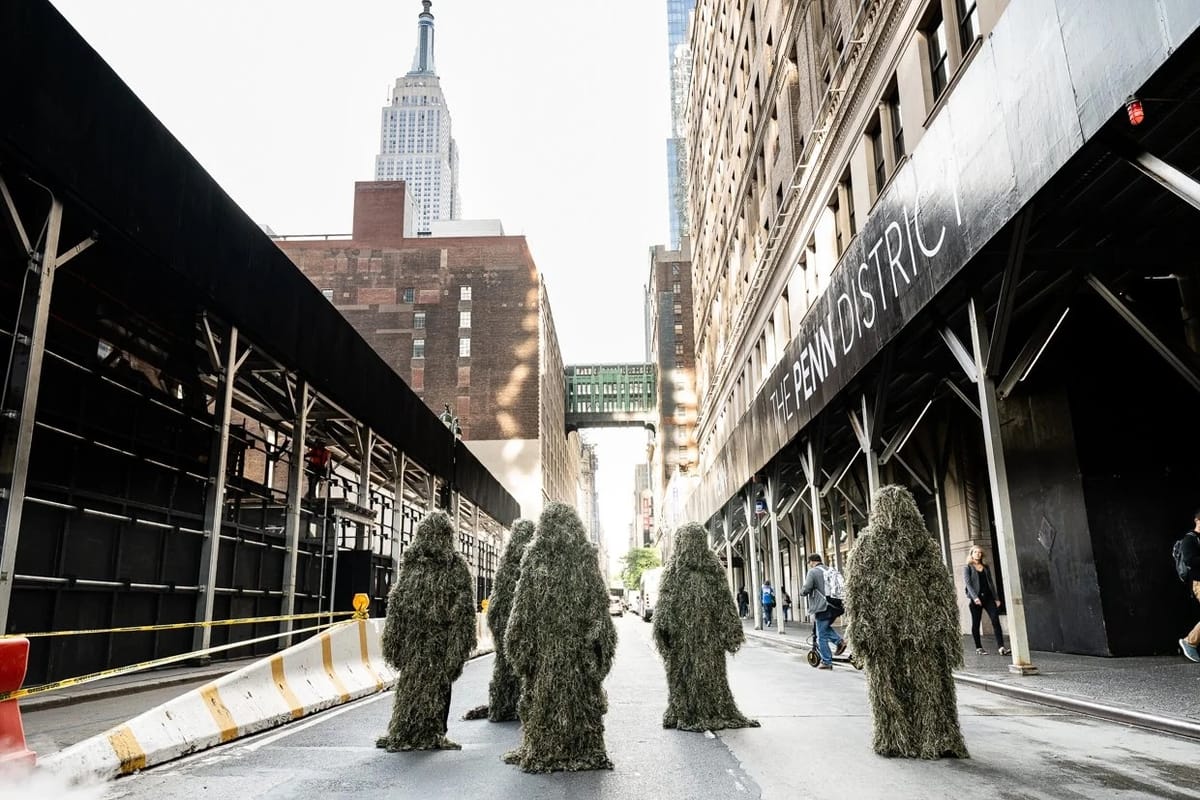
Student projects involve subtle acts of cultural misdirection, whether through unauthored tracts, camouflaged artworks, or coded communications. These projects contribute to an evolving manual for the Invisible Art Union, providing strategies for inserting art into civic life despite oversight. Even under cultural control, art finds ways to move through whispers, symbols, and temporary alliances, serving as a rehearsal for preserving creative expression if civic freedoms wane.
As this possible future looms, artists must critically examine who benefits from art in a neighborhood and who is excluded. The true power of art lies not in high-profile programs but in strategic, clandestine gestures and alliances. Artists may find themselves returning to the oldest tradition: creating transformative work together, quietly and strategically, without needing permission, to open minds and build solidarities.