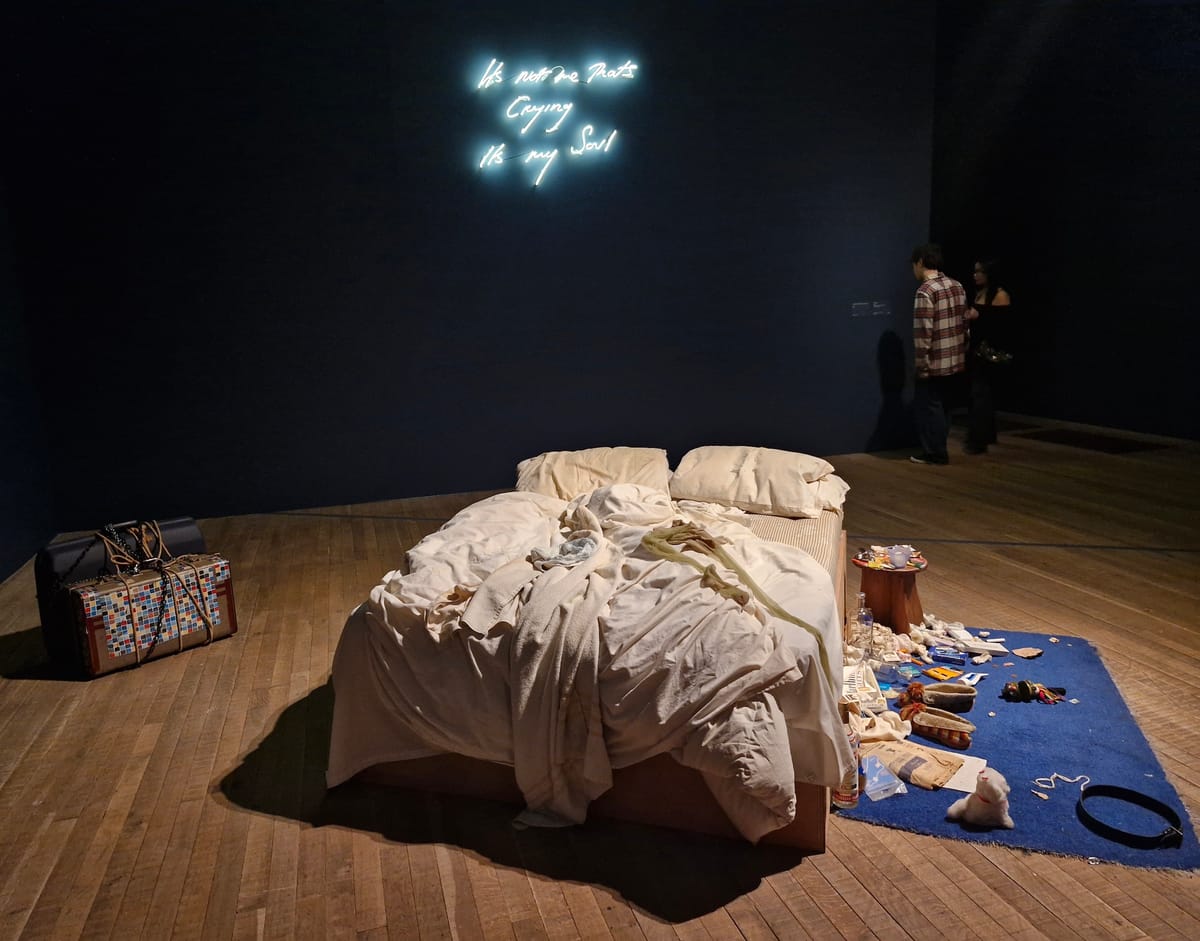
LONDON — Walking into Tracey Emin’s retrospective, A Second Life, at Tate Modern feels like flipping through the pages of a deeply personal journal. Emin, a dominant figure of the 1990s Young British Artists (YBAs) along with Damien Hirst, now stands as a Dame and former professor of drawing at the Royal Academy. Her work, however, detaches from traditional art historical narratives, lacking socio-political or broader societal commentaries, and instead, revolves around her personal experiences and self-reflection.
The exhibition provides minimal contextual or historical background, with works loosely arranged in chronological order. A brief introductory panel, partially hidden by the ticket counter, outlines themes of “love, desire, loss, and grief,” but offers little biographical insight beyond her Turner Prize nomination in 1999. Emin’s art is self-explanatory, yet it is her words — stitched onto fabrics, written on pages, or within titles — that truly narrate her story.
Words like “I,” “You,” and “Me” frequently surface, underscoring Emin’s persistent focus on her own intimate experiences, while the identity of “You” remains undefined. Her paintings, often raw and emotional, seem less about traditional representation and more like visceral exorcisms of personal trauma. The painting titled “Rape” (2018) conveys its meaning and emotional impact entirely through its title, highlighting the importance of language in her work.
This exhibition presents art as therapeutic expression, intended for personal exploration and reclaiming her narrative, especially concerning traumatic events. It transcends conventional critique concerning technical skill or audience communication. A caption at the exit provides helplines for those affected by issues like cancer, mental health, and sexual abuse, aligning with Emin’s intention to connect with survivors.
As viewers, we are invited to witness Emin’s personal pain, not framed as a broader commentary on womanhood or abuse. Her unfiltered self-exposure resonates with today’s social media culture, where personal validation and public curation are prevalent. Emin’s Polaroid sequence, capturing her body post-stoma surgery, exemplifies this. The exhibition’s centerpiece, a recreation of her notorious unmade bed, underscores her focus on personal narrative, solidifying her influence on contemporary art’s introspective and self-promotional trends. The popularity of this exhibition at Tate Modern underscores the success of Emin’s approach.
Tracey Emin: A Second Life is open at Tate Modern (Bankside, London, England) until August 31. The exhibition is curated by Maria Balshaw, Alvin Li, and Jess Baxter.