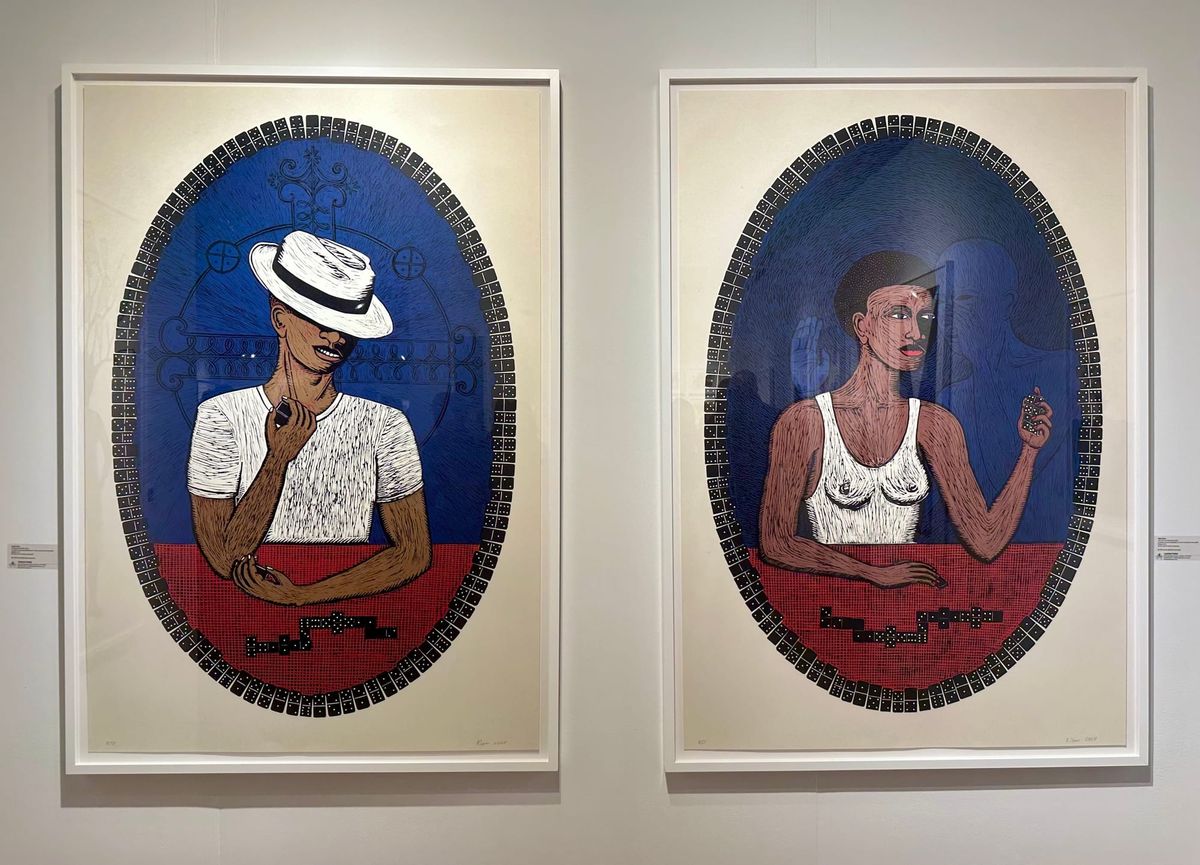
Deborah R. Grayson didn’t foresee her return to printmaking. “I was a painter until the pandemic struck. With no access to my studio, all I had at home were tools and wood,” she recounted. “I haven’t used a paintbrush since.” Grayson is among six artists presenting with the Black Women of Print collective at the extensive fair arranged by the International Fine Print Dealers Association (IFPDA), continuing until this Sunday.
The March 27 preview buzzed with energy as guests filled the historic Park Avenue Armory, exploring a global variety of prints. Among the plentiful free wine and fashionably dressed attendees, questions arose: How many are genuinely here to make purchases? What defines a print amid the assortment of sculptures and textiles? And is IFPDA pronounced “If-Pita” or “If-Pi-Duh”? That last one remains unresolved.
While navigating the fair’s opulence, a sentiment shared by Grayson lingered: “Printmakers are the most generous artists.” She explained that their work often thrives in communal settings, fostering collaboration and a palpable thoughtfulness. At Tamarind Institute’s booth, Gallery Director Marissa Fassano shared insights into artist Ellen Lesperance’s process, who draws from black-and-white photos of the Greenham Common Women’s Peace Camp protests for her vibrant prints.
One piece, featuring a knitted nipple attached to pants, nods to late activist Karen Silkwood, inspiring the print’s name. Another print, “XOXOX (All Night)” (2023), emerges from a scarf worn by a protestor. Lesperance’s work revives the solidarity spirit within the textiles. “This booth is about activism and connection,” Fassano noted, referencing the Trump administration’s strict measures against protestors and art institutions.
At Josh Pazda Hiram Butler’s expansive booth, prints resembling cosmic dust from the Webb Space Telescope shimmered under the lights. Artist Tara Donovan utilized CD film fragments in her “cosmic compositions,” a process explained by Meg Estopinal. Meanwhile, Crown Point Press showcased captivating works by painter Rupy C. Tut. The Lower East Side Print Shop emphasized introducing lesser-known artists, as Program Director Kyung Eun You highlighted. Master printer Jamie Miller, involved in Jean Shin’s “Pressed Jeans” collagraph, advised newcomers to return the following day to fully experience the fair.