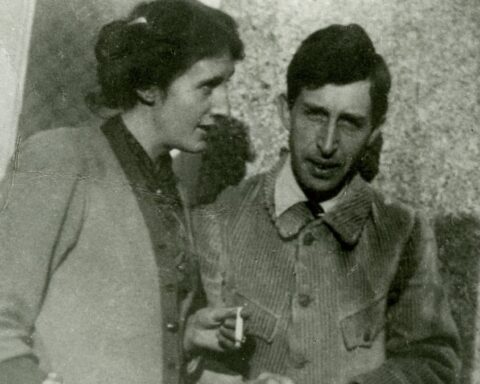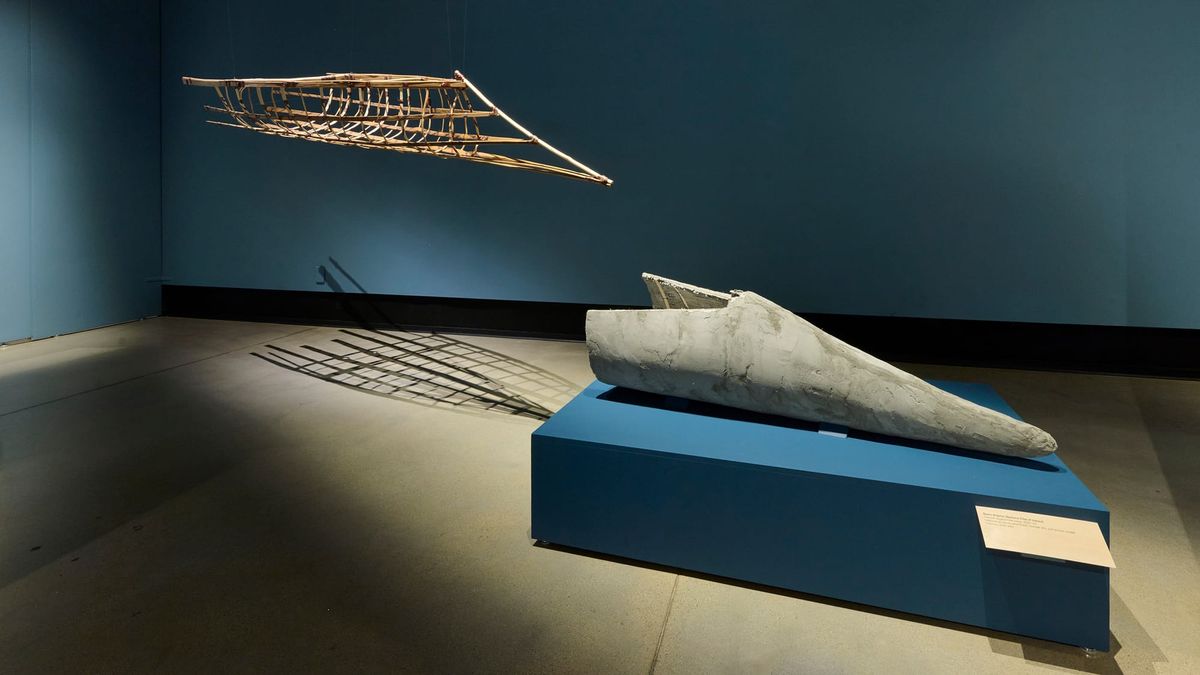
Parallax(e): Perspectives on the Canada–US Border serves as both a historical inquiry and a modern reflection on the creation of the boundary at the 49th parallel. The exhibition draws its name from the term ‘parallax,’ describing how an object’s position seems to alter based on the observer’s viewpoint. This showcase combines historical artifacts—such as photographs, maps, and watercolors by British and American surveyors from the Northwest Boundary Survey (1857–62)—with recent pieces from five Indigenous artists from both sides of the border.
These rare landscape drawings, photographic records, and cartographic efforts, sourced from collections in Canada, the US, and the UK, including The University of British Columbia, the US National Archives, and the Victoria and Albert Museum, depict the establishment of the border through Indigenous lands. Collectively, they attempted to legitimize a geopolitical construct. However, Parallax(e) critiques this colonial perspective, examining the boundary as a tool for disruption and control. Archival records highlight the essential contributions of Indigenous guides and laborers, like Thiusoloc and his father, whose knowledge was crucial yet often omitted from official accounts.
Developed with five Indigenous curatorial partners, the exhibition emphasizes that ‘the border crossed us,’ reflecting on how the boundary disrupted Indigenous kinship networks, stewardship, and trade. New works by Dr. Shawn Brigman, Dr. Michelle Jack uɬ snəmtÌtkʷ, Deb Silver, Xémóntalot Carrielynn Victor, and Dr. T’uy’t’tanat Cease Wyss address these themes with resilience and sovereignty, through cultural revivals and identity explorations. By presenting diverse perspectives, the exhibition prompts a reevaluation of the border’s purpose and significance for those affected by its imposition.
Supported by Canada Council for the Arts, Canadian Heritage, and the Terra Foundation for American Art, Parallax(e) is open at The Reach Gallery Museum in Abbotsford, British Columbia, until May 30.