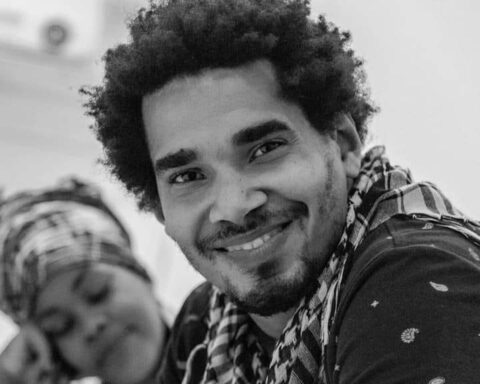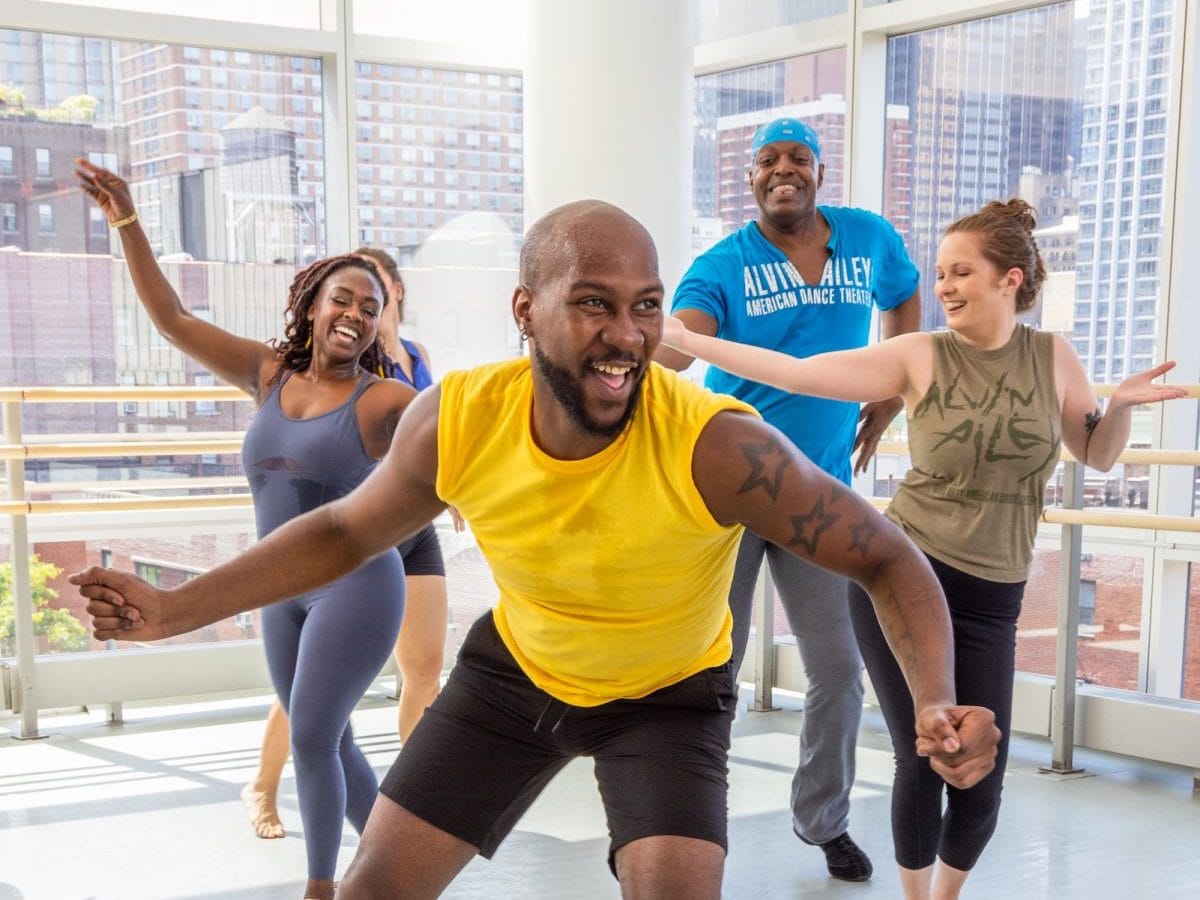
New York’s arts community is grieving the death of dancer O’Shae Sibley, who was stabbed outside a gas station in Midwood, Brooklyn, on Saturday night. Police said they received a 911 call at about 11:15pm on July 29. Sibley, a 28-year-old Black gay man, was rushed to Maimonides Medical Center, where he was pronounced dead. The New York Police Department told Hyperallergic that it is treating the case as a “possible biased incident.”
According to accounts, Sibley and four friends were dancing and vogueing — a style that emerged from Harlem’s queer ballroom scene in the 1980s and is known for catwalk-inspired poses and stylized arm movements — to Beyoncé near the gas pumps at the Coney Island Avenue and Avenue P Mobil Station. A customer walked out of the store and confronted the group, then was joined by several other men leaving the premises. Gas station shop worker Summy Ullah told Gothamist that the men said the dancing offended them as Muslims.
Security footage captured the violence. After a verbal dispute, Sibley and his friends started heading back to their car when one of the men in the attacking group began filming. The two groups then moved back toward each other outside the storefront and went around the corner of the building, where one of the men stabbed Sibley in the torso. He collapsed on the sidewalk outside the gas station.
Ullah said he recognized the attackers as a smoke shop worker and his friends, who often used the gas station shop’s bathroom. Police are reportedly looking for a 17-year-old suspect. No arrests have been made, and the investigation remains active.
On Sunday, July 30, Sibley’s friend Otis Pena, who was with him at the gas station, posted a Facebook Live video. Pena said the group had gone to the beach to celebrate his birthday and stopped at the gas station on the way back to his home, which was two blocks away. He said the attackers hurled homophobic slurs and that Sibley replied, “Yeah, we’re gay, but we’re just celebrating my brother’s birthday.”
“They murdered him because he was gay, because he stood up for his friends,” Pena says in the video, his eyes red as he fights back tears. “And they stabbed him, right in the heart. They took the one thing I always fought for. They killed my brother right in front of me. I’m covered in his blood.” He says he held Sibley and placed his hand on the stab wound.
Sibley moved from Philadelphia to New York City in 2019 and lived in Brownsville, Brooklyn. He was a member of the Philadelphia dance troupe Philadanco and performed in artist Jacolby Satterwhite’s “An Eclectic Dance to the Music of Time” (2022) at Manhattan’s Lincoln Center last year, a commissioned video work that combines archival footage, modern dance, and digital illustration to examine the history of the New York Philharmonic.
“The shoot with O’Shae and other queer black performers blew my mind,” Satterwhite said in a statement shared with Hyperallergic and posted to his Instagram account today, August 1. “Because they fused classical, modern, and voguing dance styles, exuding confidence and evidence of social progress, and a desire for a world stage they truly deserved. Their artistry transcended mere survival and coping, breaking free from the struggles of queer generations before them.”
Sibley also appeared in artist Kemar Jewel’s 2021 video “SOFT: A Love Letter to Black Queer Men” and was an active presence in dance studios throughout the city. “Anyone who ever met O’Shae was very blessed to know him,” Jewel, who met Sibley in Philadelphia and considered him a nephew, wrote on Instagram. “He was funny, unique, charismatic and always knew how to have a good time. Most importantly, he loved HARD!!! He went above and beyond for his loved ones and made sure no one was ever sad around him.”
Hate crimes in the United States have been rising since 2014, and in 2021 the Federal Bureau of Investigations (FBI) reported the highest total since it began collecting data in the 1990s. Because of underreporting and differences in state policing laws, the true figures are likely higher, though the FBI numbers still point to troubling patterns. Hate crimes against Black people made up the largest share at just over 31%; anti-Asian attacks increased by 167%; attacks against gay men rose by 41%; and hate crimes against LGBTQ+ people overall increased by 70% from 2020 to 2021.
The killing comes as lawmakers across the country have introduced a wave of measures targeting the LGBTQ+ community and drag performances. A 2022 report from the Williams Institute at the UCLA School of Law found that LGBTQ+ people are nine times more likely to be victims of violent hate crimes.