MADRID — Measuring more than 25 feet across and 11 feet high, Pablo Picasso’s “Guernica” (1937) is monumental not only in scale but also in cultural weight. Its harrowing portrayal of state violence against civilians has turned it into a symbol of post-war Spanish identity, while its denunciation of violence has spoken to people under siege around the world — from Vietnam to Gaza — for nine decades.
A new annual exhibition series at Madrid’s Museo Reina Sofía, which has housed the canonical work since 1992, is placing “Guernica” alongside other artworks. The program, called History Doesn’t Repeat Itself, but It Does Rhyme, is partly intended to reexamine the universal political impulses behind the anti-war painting, though its first edition also highlights race as an urgent concern for contemporary art institutions in Spain.
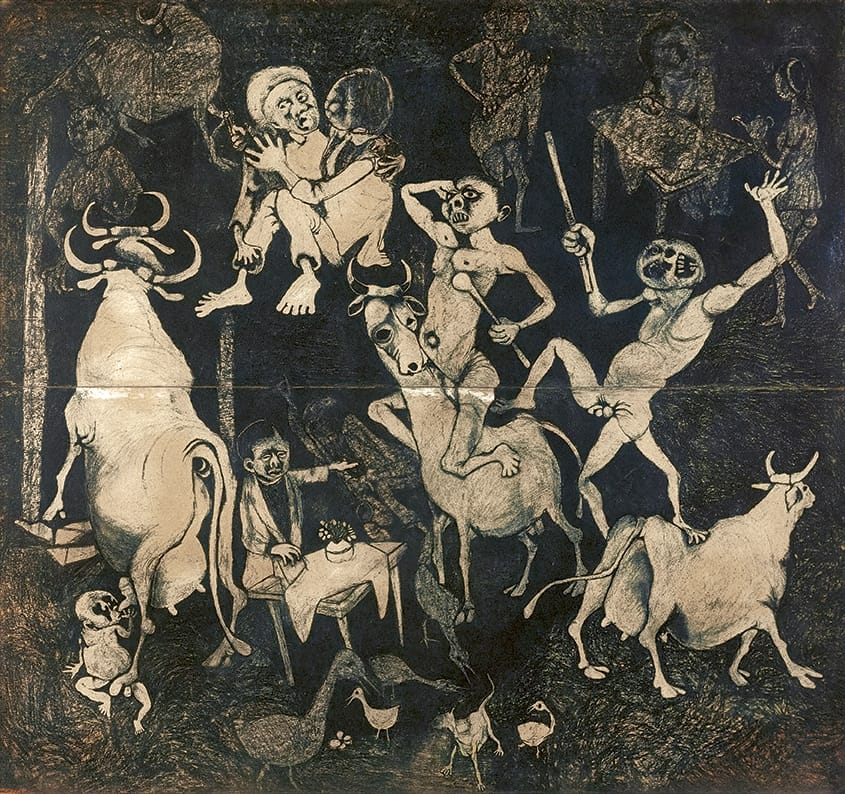
The inaugural presentation pairs Picasso’s masterpiece with the late South African artist Dumile Feni’s “African Guernica” (1967), a large charcoal drawing that carries a comparable sense of protest and distress. Whereas Picasso’s work responded to the bombing of the Basque town of the same name by fascist forces on April 26, 1937, during the Spanish Civil War, “African Guernica” emerged from the pervasive, insidious violence of racism under South African Apartheid.