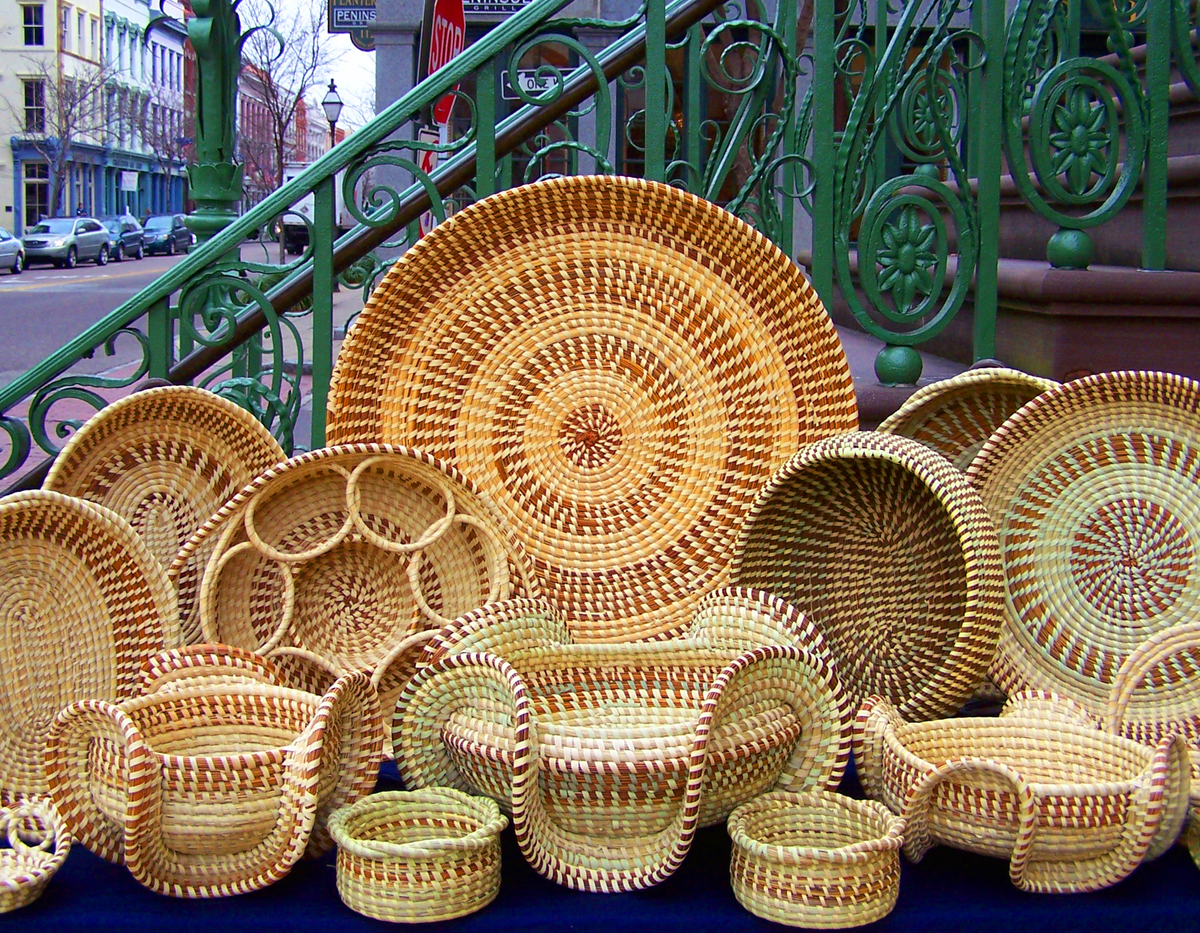
Curated by Lauren Jackson Harris, Grounded in Grain, Washed in the Water examines ancestral narratives and the lasting ties linking land, water, memory, and Black life in the American South. The collaborative exhibition, presented by the Halsey Institute of Contemporary Art and the Avery Research Center for African American History and Culture, brings together works by Maya Freelon, Corey Alston, christa david, and Derrick Beasley to consider how ancestral knowledge moves across generations.
Centered on resilience, creativity, and connection, the exhibition looks at how the past passes through the body, the land, material traditions, and acts of imagination. The artists suggest that the histories embedded in Southern soil and waterways are not fixed remnants, but living systems of knowledge that continue to shape contemporary Black life while pointing toward collective futures.
The partnership between the Halsey Institute and the Avery Research Center reinforces the exhibition’s core idea that history is not limited to the archive. While the Avery preserves records of African American life, the artists in Grounded in Grain, Washed in the Water activate histories that often live beyond written documents and boxed objects.
Through basketry, collage, sculpture, painting, and immersive installation, these artists show that Black Southern traditions are not relics to be displayed behind glass, but evolving systems of knowledge. In their work, memory must be honored, practiced, embodied, cultivated, and imagined. Grain becomes more than sustenance and becomes inheritance, while water becomes more than geography and becomes an archive.
The body, too, emerges as both witness and vessel, carrying histories that reach beyond individual experience into cultural preservation. The Halsey Institute of Contemporary Art at the College of Charleston School of the Arts serves as a multidisciplinary laboratory for the production, presentation, interpretation, and dissemination of ideas by innovative visual artists from around the world. As a non-collecting museum, it creates meaningful interactions between adventurous artists and diverse communities, and its exhibitions are free and open to the public. Learn more at halsey.charleston.edu.