Can generative AI be made socially responsible? Mitch Randall, CEO of Ascendant Art, says it can — or at least, it should be.
The company has introduced a new avatar generator app that compensates artists with royalties when their work is used, setting it apart from many similar tools. At a moment when programs such as Stable Diffusion and Midjourney have faced sharp criticism over artist compensation and accusations of plagiarism, Ascendant AI is presenting itself as a bridge between the art world and tech, arguing that AI can serve as an asset rather than a rival to artists.
“If you’re going to train your AI on artists’ work, then when you make money off what you’ve done, those artists should get reimbursed,” Randall told Hyperallergic. “Capitalism is not putting this forward as an idea when it’s actually the most obvious idea.”
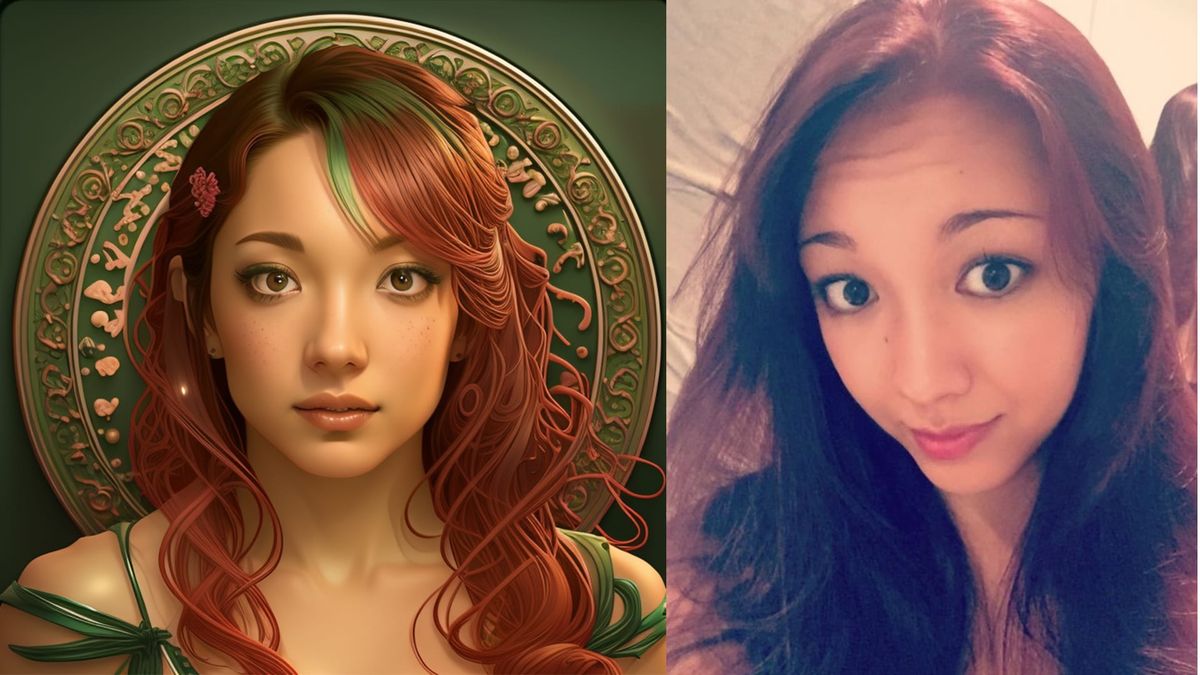
Users can currently buy 100 avatars from Ascendant for $11.99. The lifelike images take less than half an hour to generate and are created using facial recognition technology alongside generative AI. According to Ascendant’s website, 25% of net profits from sales is paid to the artists whose work helped train the system, with payouts distributed according to how much of their work was used, as measured by the company’s proprietary software.
But the model has drawn skepticism from some artists online, many of whom say AI has already taken too much from creative labor. Artist and writer Molly Crabapple, who recently wrote an open letter opposing generative images, argued that royalty-based systems like Ascendant’s “will further drive down our already meager wages and force artists to compete with their algorithmic doppelgängers.” Digital illustrator Zakuga Mignon, whose work has appeared on AI-made book covers, also criticized the proposal on Twitter, writing, “The system of ‘you will be compensated for your contribution in AI’ is bullshit,” and adding, “One, you cannot track it, and I don’t want to be forced to be a part of this. My art is already in romance indie covers using AI. I do not want to be forced into my own oblivion.”
Beyond payment, Ascendant says it is also trying to address consent and credit, two issues that have driven debate around AI-generated art. Artists can select which works they want to submit and upload them to the company’s site for training, rather than having their material used without permission. Randall said Ascendant is also developing a feature to give artists on the platform greater recognition and make it easier for users to find their work, describing the service as “a gallery” where artists receive royalties each time their work is used. “It’s a little different than a gallery because in a gallery you look, and you don’t walk away with anything, and you don’t pay anything. But in this gallery, you get just a little bit of that artist’s work, and they get just a little bit of royalty. When millions of people do that, that’s not a bad living,” he said.