Art connoisseurs are often imagined as refined figures cloaked in mystery, somehow privy to an inner certainty that the rest of us do not share. Faced with an unassuming Renaissance painting bought for $1,000 in New Orleans, one person may insist it was painted by Leonardo da Vinci; another may ascribe hundreds of works to Rembrandt and say his genius is obvious to the “experienced eye.” Yet connoisseurship has long prompted skepticism: can anyone really distinguish a garage sale replica from the real thing, much less a workshop painting from an Old Master?
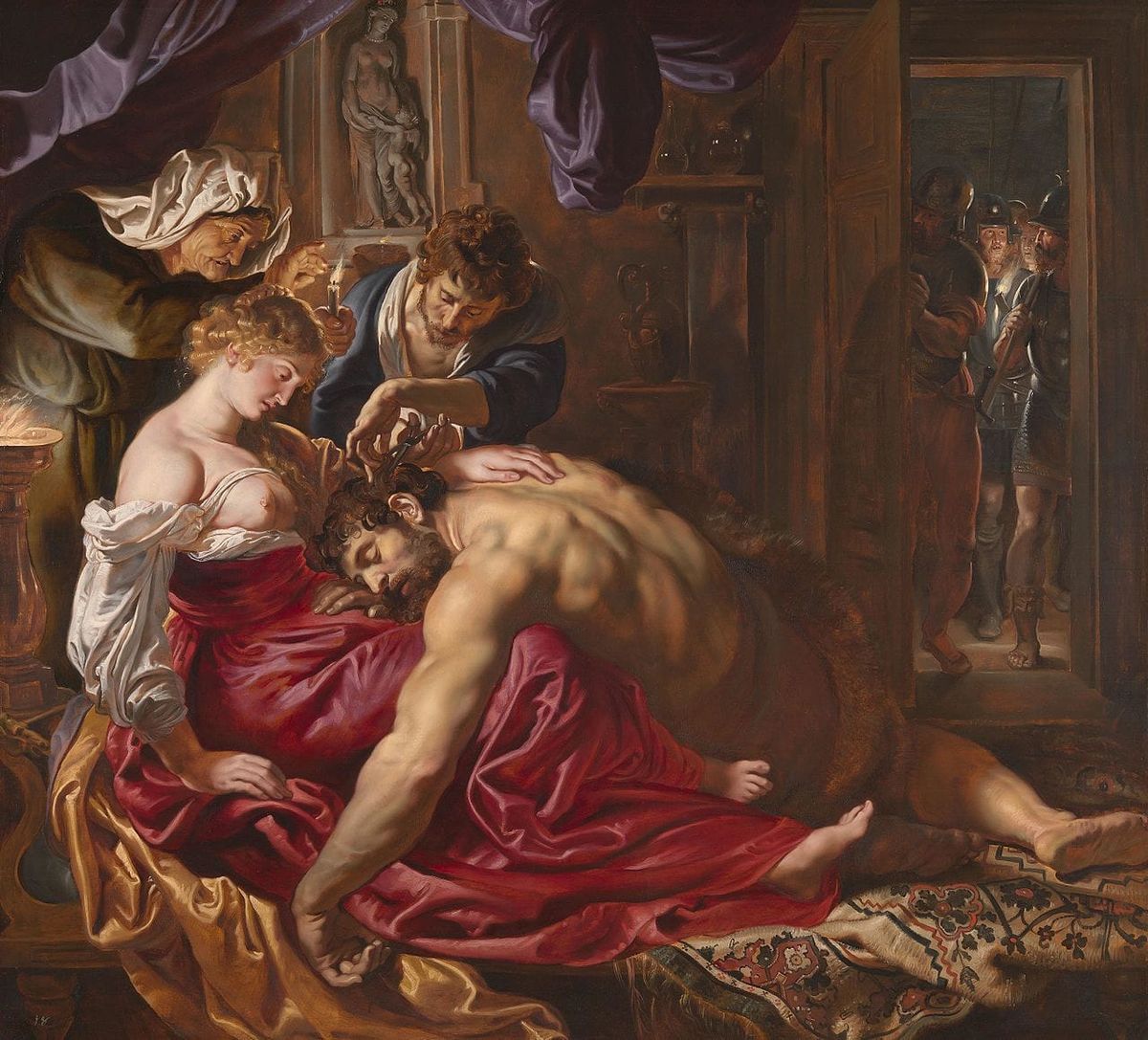
Recent advances in machine learning applied to artwork photographs promise a more objective approach to attribution when provenance is unclear. In September, AI analysis conducted by Swiss company Art Recognition examined “Samson and Delilah” (c. 1609-10), a painting attributed to Peter Paul Rubens that London’s National Gallery presents as a highlight of its collection and that sold at auction in 1980 for a then-record £2.5 million, or about $11.5 million today adjusted for inflation. The system concluded with 91 percent certainty that Rubens did not paint it.
A figure from the study shows the original water lily from the painting, surface height data in black and white, and patch attribution (courtesy Kenneth Singer).
Now, a new study from researchers at Case Western University suggests that machine learning analysis of a painting’s “surface topography” can reliably identify who made the brushwork. In tests using 720 patches taken from paintings by four artists, the algorithm correctly attributed 96.1 percent to the right painter. The researchers believed brushwork leaves behind a kind of “fingerprint” that is largely beyond human detection but can be recognized computationally — and the results supported that idea.
“We’ve uncovered what could be considered the unintentional style of a painter,” Kenneth Singer, a lead researcher on the study, said. Earlier research had already shown that machine learning can be used on high-resolution images of paintings to help judge style, period of origin and forgery. But the new study goes further by scanning the paint surface itself, collecting data on brush patterns and how the paint was applied and dried, adding another measure that can support or challenge an attribution.
Researchers divided the paintings into foreground, border and background regions. When the surface height algorithm was trained on the background and tested on the foreground, and then reversed, it proved twice as accurate as an algorithm that relied only on a photograph of the painting (courtesy Kenneth Singer).
To build the dataset, four art students from the Cleveland Institute of Art each created three similar paintings of a water lily using the same supplies and tools. The researchers then cut the paintings into small square patches ranging from 0.5 to 60 millimeters, using some for training. They also compared regions with different colors and found that, in those cases, the attributions were nearly twice as accurate as those made by a photograph-based algorithm. The technique could also allow art historians to assign different parts of a painting to different hands, a useful tool for understanding workshop production and potentially for valuation, since a painting largely forged by a master may be worth very differently from one with little master intervention.
These advances do not remove connoisseurs from the process, but they are likely to alter how they work. Intuition alone may no longer be enough to justify attribution, and the mystery may shift from a connoisseur’s certainty to what a neural network can perceive that human observers cannot.