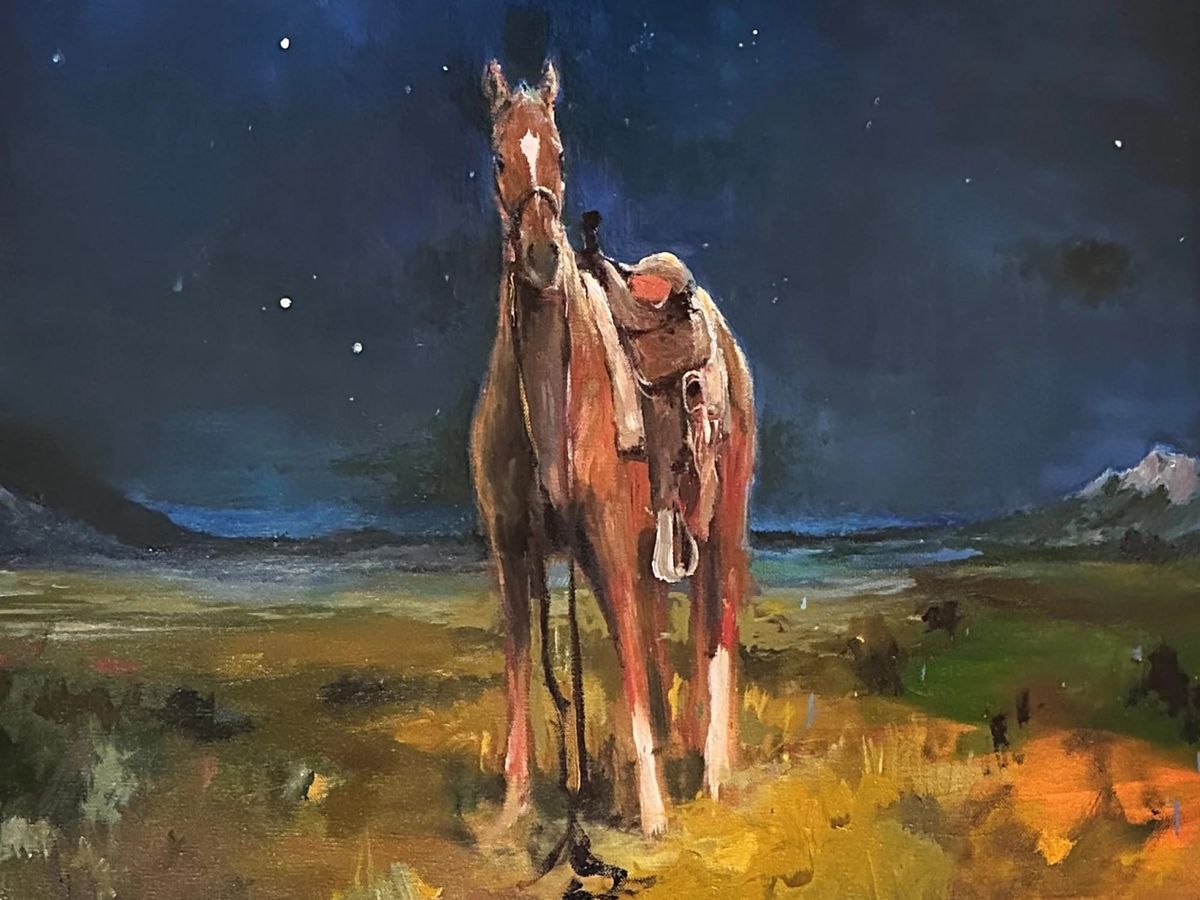
Artists and writers are taking the Year of the Horse especially seriously. Christopher Nolan’s summer adaptation of Homer’s Odyssey brought the classic Trojan horse back to the screen, with all it represents: what is handed down orally and what cannot be spoken. A month earlier, Ann Patchett released Whistler, her 10th novel for adults, which also leans into the zodiac theme — it takes its title from a horse in a story nested within the novel.
Patchett is widely known for character-centered fiction that remains approachable, and for novels that bridge literary ambition with broad appeal. She is perhaps best known for her 2001 breakthrough Bel Canto, inspired by the Japanese embassy hostage crisis in Peru in the late 1990s, as well as The Dutch House, published in 2019. She has become something of a touchstone in American fiction, with some readers describing her books as “beach reads” and others admiring her relationship-driven style. In Virginia Evans’s The Correspondent (2025), Patchett even appears as a minor character.
Whistler begins with a chance encounter at the Metropolitan Museum of Art. Daphne has not spoken to her stepfather Eddie in 44 years, since he and her mother abruptly divorced after a terrible car accident that Daphne and Eddie both survived miraculously when she was nine. While they waited for help in their wrecked car, Eddie told her the story of Whistler the horse, supposedly based on a book pitch that once landed on his desk. Eddie worked as an editor, while Daphne later became a high school English teacher at an all-girls private school in Manhattan.
Even decades later, Daphne still blames herself for Eddie’s sudden disappearance from the family. Now 53, she is walking through the museum with her husband when he notices an “old man” trailing them. The Met appears only once more, at the very end of the novel, when the family makes another visit there, but the museum’s presence — and the way art shapes memory and grief — hangs over the entire book. Another thread involving a collection of rabbit paintings makes that concern even clearer. The first unexpected meeting in the Contemporary wing is revisited repeatedly as Daphne’s first chance to reconnect with the only father figure she ever knew.
The emotional weight of the scene is underscored when Daphne’s husband, seeing her cry after encountering Eddie again in front of Charles Ray’s sculpture “Two horses” (2019), and “understanding none of it … [still knew] the big reveal should not have come here, in front of art.” That may be the novel’s most important line. Eddie serves as the center of gravity for the fractured family’s relationship to art — and, more broadly, to anything beyond sheer survival. When Daphne finally tells her mother about the encounter, she responds, “At the museum, that makes sense. Eddie had a great eye for art … Anything I know about art today is something Eddie taught me.”