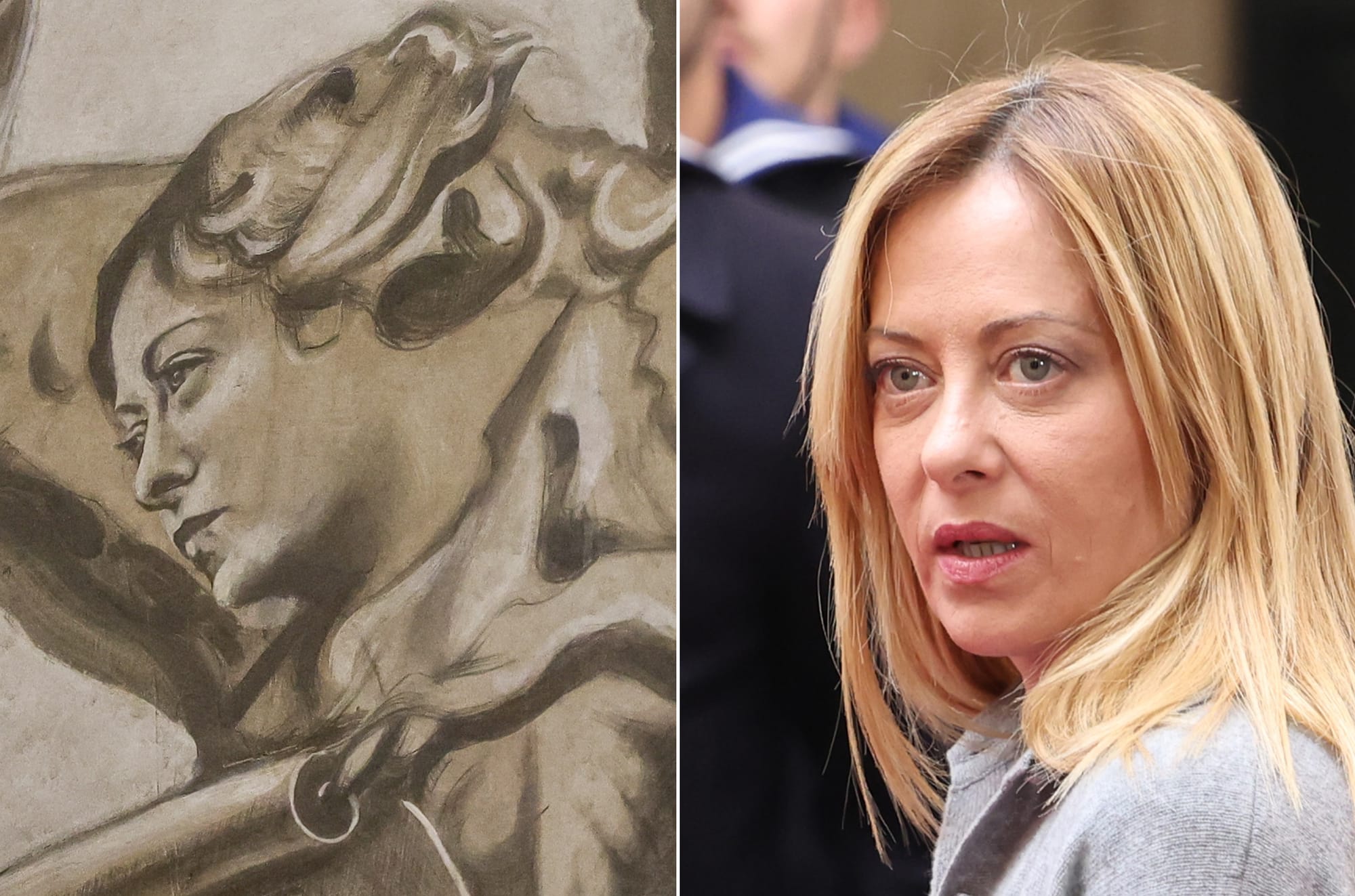
A newly restored fresco in a Roman chapel has sparked a heated debate among Italian officials, with claims that one of the cherubs has been painted to resemble far-right Prime Minister Giorgia Meloni. Bruno Valentinetti, the restorer responsible for the work at the Basilica Minore di San Lorenzo in Lucina, has denied these allegations, stating he did not intentionally use Meloni’s likeness. In reaction, the Italian Ministry of Culture has begun an investigation into the chapel’s restoration project.
The controversy intensified after images of the revised fresco circulated online on January 31. Meloni addressed the situation on Instagram, humorously posting a close-up of the cherub with a caption in Italian, “No, I definitely don’t look like an angel,” accompanied by a laughing emoji. Valentinetti, who first painted the mural in 2000 and recently restored it due to water damage, insisted in media interviews that he sees no resemblance to Meloni. He explained to La Reppublica that the cherub was inspired by a younger “old flame” of his, and he merely repainted what was originally there.
Valentinetti, now 83, clarified that he has no current political ties and survives on a social pension while maintaining the church in exchange for accommodation. Despite this, the parish priest, Daniele Micheletti, suggested Valentinetti might have once been associated with the neo-fascist Italian Social Movement. Micheletti noticed the likeness to Meloni and remarked, “It doesn’t escape me.” The fresco’s likeness to Meloni has elicited strong reactions nationwide, with Irene Manzi of the Democratic Party describing it as “unacceptable.” Meanwhile, Senator Susanna Donatella Campione of the Brothers of Italy dismissed the media focus as the left’s “obsession” with undermining the government.
This uproar triggered an inquiry by the Ministry of Culture to assess the nature of the fresco’s restoration. The Diocese of Rome confirmed the cherub’s facial changes were not reported to the authorities, with Cardinal Baldassare Reina issuing a warning against using sacred art for propaganda. Members of the Movimento 5 Stelle echoed Manzi’s call for intervention, emphasizing that art should not become a political instrument regardless of whose likeness it may bear.