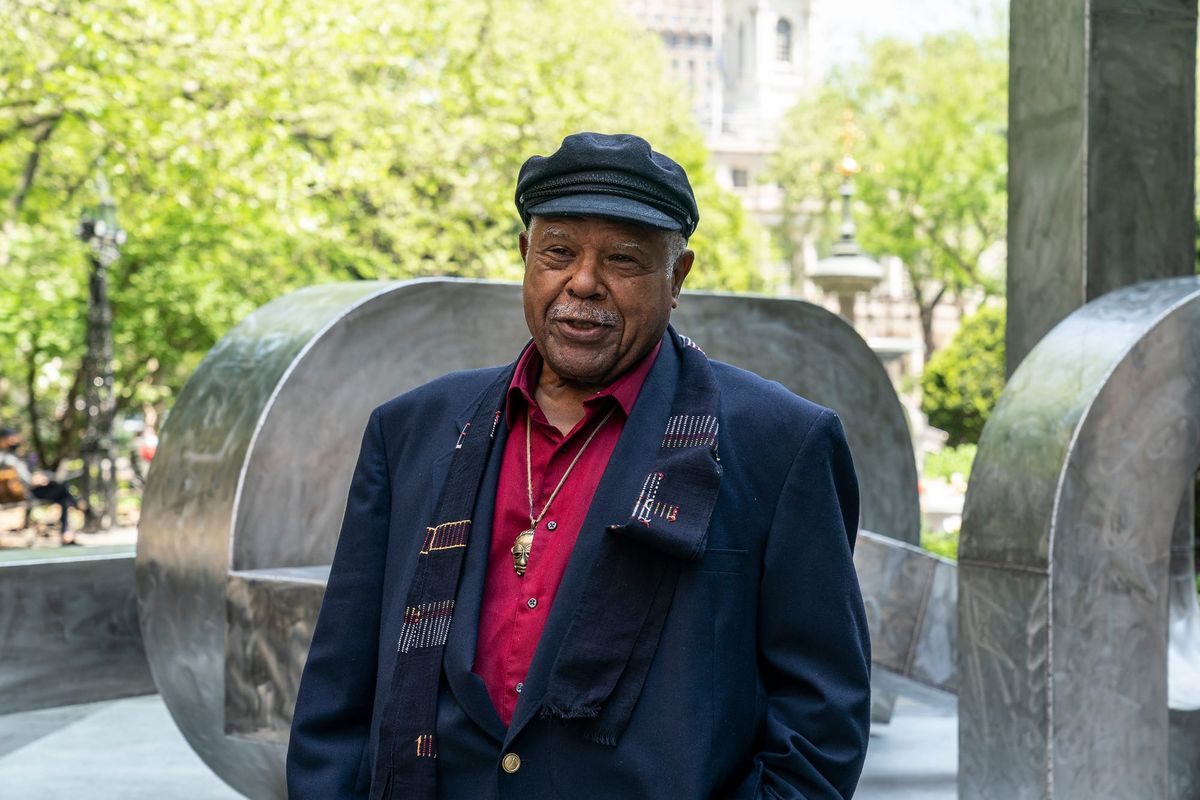
Melvin Edwards, the sculptor known for his innovative abstract works that bridged traditional sculpture with the lingering effects of Atlantic slavery, passed away on Monday, March 30, at the age of 88. His gallery, Alexander Gray Associates, confirmed the news of his passing.
Born in 1937, Edwards grew up in both segregated Houston, Texas, and integrated Dayton, Ohio. His family valued political engagement and education, with his father being a pioneer Black official in the Boy Scouts of America. Edwards’ interest in art was nurtured by his Dayton school art teacher, Mrs. Bang, and his visits to museums like the Dayton Art Institute.
Rejecting athletic scholarships, Edwards pursued art in Los Angeles, drawing inspiration from artists like Picasso and Michelangelo. He learned welding in college, which allowed him to explore the intersection of formal aesthetics and political expression. His great-grandfather’s history as a blacksmith in West Africa resonated in his work, which often included materials like chains and barbed wire that carried deep political connotations.
In 1963, Edwards created “Some Bright Morning,” marking the beginning of his Lynch Fragments series, which examined the material aspects of violence. His works were featured in exhibitions at prominent institutions, including the Whitney Museum of American Art. Edwards moved to New York in 1967, where he became involved in advocating for greater representation of Black artists in museums.
Edwards’ experiences in West Africa and Cuba deeply influenced his artistic practice. His impact was recognized later in life, with exhibitions and retrospectives highlighting his contributions to art. His legacy is evident in the works of artists like David Hammons and Glenn Ligon. Edwards’ ability to blend abstraction with political themes created a lasting influence on the art world, as he continually redefined the boundaries between home, history, and artistic expression.