Looking for History at the Museum of Contemporary Art Connecticut (MoCACT) brings together solo exhibitions by Rick Shaefer, Ellen Harvey, and Michael Borders, each exploring the ways the nation’s past continues to resonate in the present. On view through November 15, the exhibition commemorates the 250th anniversary of the United States through works focused on memory, identity, and place.
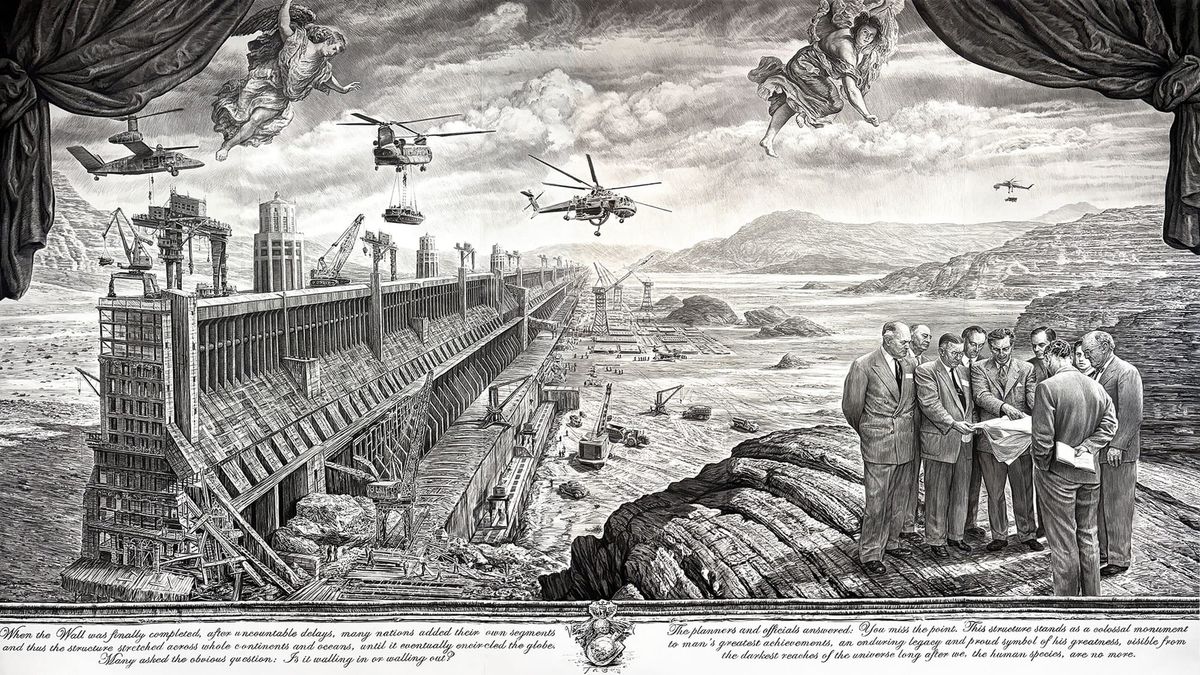
At the center of the exhibition is Rick Shaefer’s allegorical series Colossi, a group of monumental charcoal drawings shown together for the first time. In these expansive landscapes, impenetrable walls and looming towers signal priorities such as self-glorification, technological advancement, or imperialism over unity. Seen from a distance, the works recall Old Master etchings, while a closer look reveals a distinctly contemporary approach.
Shaefer’s compositions encourage reflection on the physical and symbolic boundaries that shape the nation and, increasingly, the planet. Though the recently completed Colossi series portrays barriers, Shaefer’s Water Crossing depicts the boat journey of refugees seeking a welcoming refuge. His series Liberty Dismantled addresses the gradual unraveling of the Mother of Exiles as a metaphor for America’s declining commitment to refuge and belonging.
With meticulous linework, Shaefer draws attention to the widening divide between the country’s founding ideals and the choices that are shaping its future. The work invites viewers to consider how those tensions continue to define the American story.
Also on view through August 2, Ellen Harvey’s The Disappointed Tourist features more than 200 postcard-style paintings from her ongoing award-winning international project, which is inspired by places that no longer exist. From August 13 through the end of the exhibition, Michael Borders’ Connecticut Industry will fill the gallery with an immersive mural tracing Connecticut’s industrial history and the development of the state’s landscapes, industries, and innovations.
Together, the three exhibitions offer distinct yet connected perspectives on America’s past, present, and possible future. Visit mocact.org to learn more.