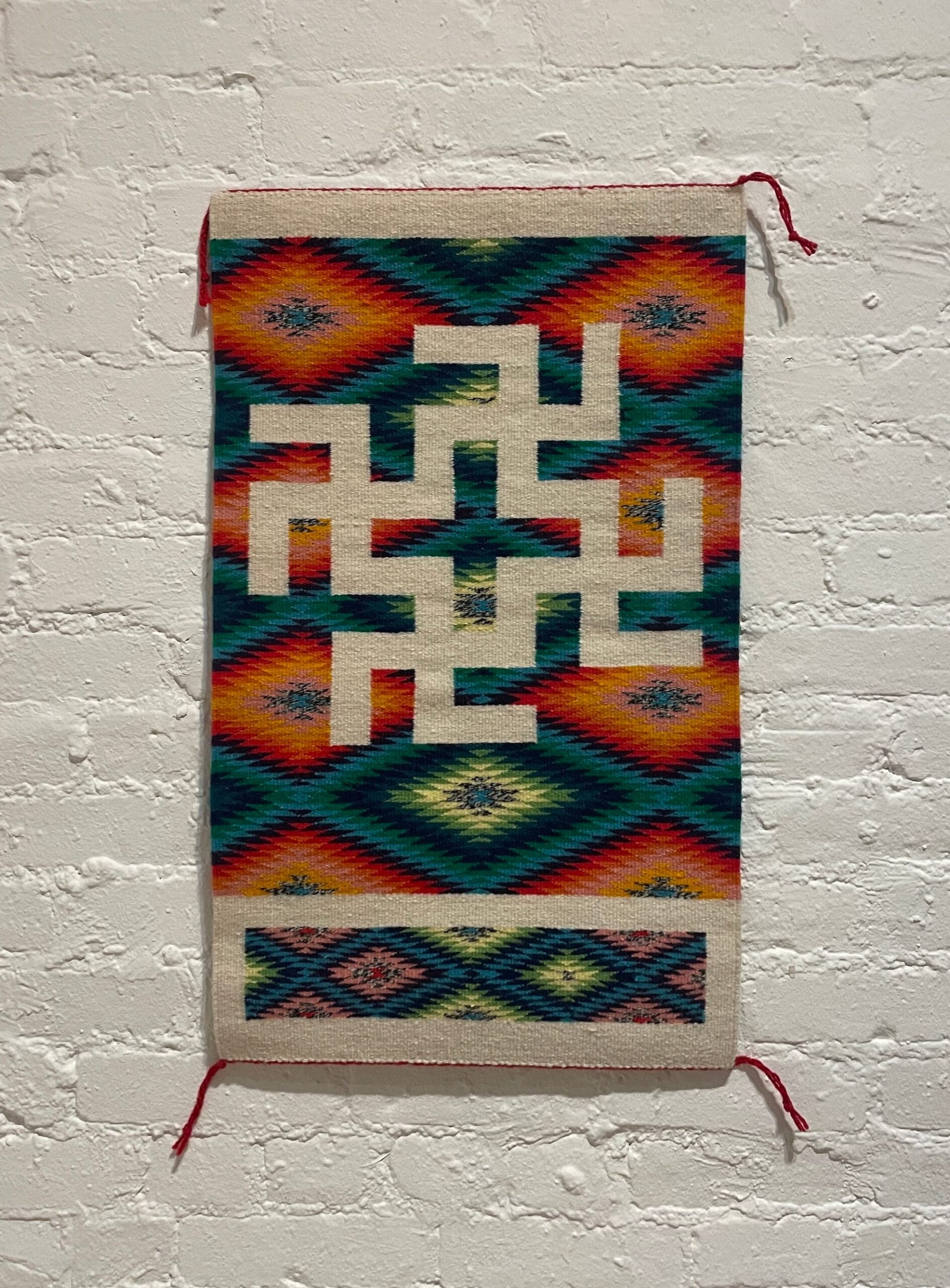
The Whirling Log symbol, known differently across various cultures — as the manji in Buddhism and the swastika in Hinduism — holds significant meaning for the Diné or Navajo people of Arizona, Utah, and New Mexico. In Diné bizaad, the Navajo language, it represents the Diné creation story and is viewed as a symbol of good fortune and harmony. However, for some, it evokes memories of Nazi symbolism, despite the distinct differences in appearance between the Nazi swastika, angled as a diamond, and the square-shaped Whirling Log.
For decades, the Whirling Log was suppressed in the art market due to its mistaken association with Nazism. Yet, contemporary Diné artists, such as master weaver Melissa Cody and others, are revitalizing its presence in modern art. Their work, including Cody’s exhibition at MoMA PS1, is sparking renewed interest and acceptance of the symbol within contemporary art circles, often accompanied by explanatory texts to educate non-Native audiences on its cultural significance.
Despite these efforts, some non-Native viewers persist in linking the symbol to Nazism, overshadowing its true Indigenous meaning. This highlights a history of cultural repression, as Native American religious practices were illegal in the U.S. until 1978. The Whirling Log, once incorporated into art by Diné artists under pressure to cater to settler tastes, fell out of use after the Nazis appropriated the swastika.
Today, new generations of Diné artists are reclaiming their artistic autonomy, though some remain cautious about using the Whirling Log due to potential economic repercussions. This cultural revival comes at a time when there’s a broader examination of the narratives surrounding Indigenous art and its place in contemporary contexts, urging a reconsideration of the biases and interpretations imposed by non-Native audiences.
As Indigenous art gains visibility, the importance of centering its original cultural meanings, rather than merely its aesthetics, becomes evident. The ongoing discourse challenges the historic pattern of settler-influenced art markets, advocating for a lasting inclusion of Indigenous perspectives in art without external reinterpretation. This calls for a reflection on the role of curators and art institutions in perpetuating or dismantling these narratives.