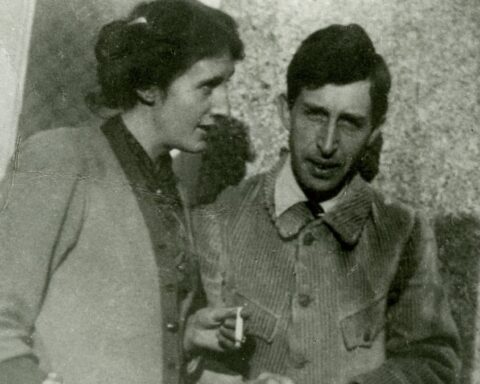
Cordy Ryman finds himself in a challenging position as the youngest son of the renowned artist Robert Ryman. Robert was previously married to the notable critic Lucy Lippard, with whom he had a son named Ethan. Following their divorce in 1966, Robert married painter Merrill Wagner, and they had two sons, Will and Cordy. All three sons pursued careers in art. Despite this imposing lineage, Cordy has carved out his own artistic niche, creatively transforming elements from his parents’ work and the broader Minimalist movement into a style that is distinctly his own.
My visit to Ryman’s Brooklyn studio revealed the unique character of his work, all constructed from 4-by-8-foot sheets or 2-by-4-inch wooden boards. He employs a wide range of acrylic paints, from matte to glossy, without limiting himself to a specific color palette. When a piece returns from an exhibition, it often becomes the basis for new work. Ryman’s process emphasizes fluidity and adaptability, where no piece is complete until it finds a new home, and each element remains open to transformation.
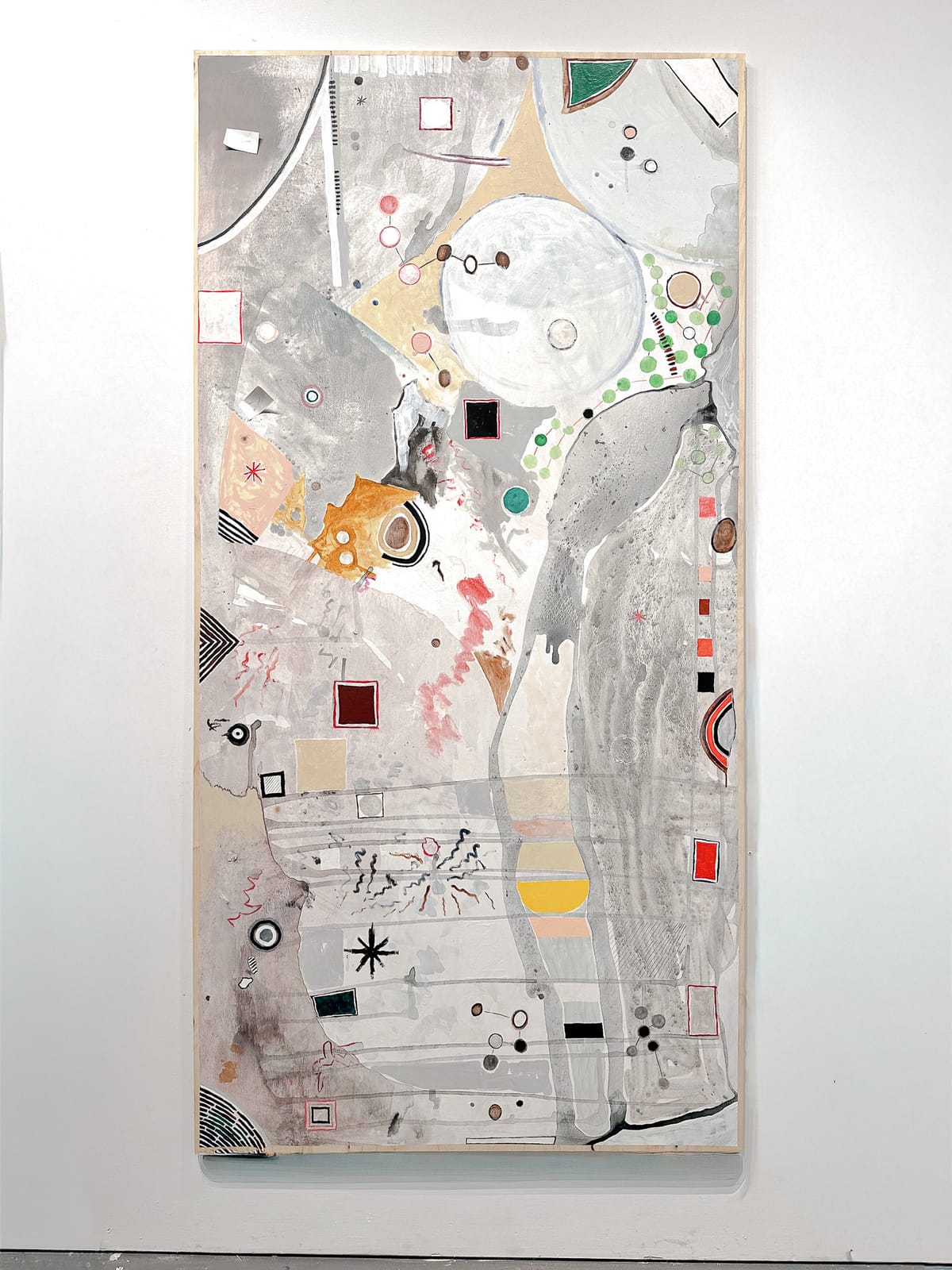
Cordy Ryman shared that the sole piece of advice his father provided was to avoid following others and not to cater to art market trends. Instead, he emphasized the importance of pursuing one’s own path. Despite the constraints of his materials, Ryman’s work radiates playfulness, innovation, and energy. He does not conceal the wood’s natural texture, even when it’s layered with paint. One of his noteworthy pieces is a 4-by-8 sheet of plywood featuring elongated shapes in brown, white, and gray set against a background of lichen green and a dried-blood hue, each form acting as a vacuole.
In his studio, circles of varying dimensions adorned other paintings. Some larger works featured clusters of these circles, with one color predominating. Other pieces displayed circles on blocks arranged in grids, while some incorporated small painted scraps affixed to the surface. Ryman’s commitment to not repeating himself is evident in his exclusive use of wood and an abstract vocabulary of circles and lines.
One part of Ryman’s studio showcased numerous blocks of wood protruding from a taped-off wall section. Many of these are destined for an upcoming exhibition at Thomas Park Gallery in Seoul, South Korea. Another intriguing aspect of Ryman’s art involves painted wooden lengths that can be assembled using eye-hooks and oval rings, demonstrating the breadth of his practice using limited resources. These pieces, which can be rearranged, engage the viewer to determine their orientation. In this playful approach, Ryman seems to challenge the solemnity of traditional Minimalism, suggesting a more lighthearted perspective.