During her residency in Clichy-sous-Bois, a suburb in eastern Paris, Chicago-based artist and activist Tonika Lewis Johnson encountered a familiar tune: Luther Vandross’s 1980 hit “Glow of Love.” Known as a classic Black Chicago barbecue anthem, it surprised her to find the song resonated with locals. She also discovered a connection to Chicago drill music, popularized by artists like Lil Durk and Chief Keef, which mirrored the experiences of the youth there.
Johnson realized these connections were rooted in shared challenges. In an interview, she noted, “They can relate to everything a Chicago drill music artist says because it’s very similar to their experiences here: They’re isolated from the center of the city … They do have a very challenging, precarious relationship with the police.” Such insights drive Johnson’s ongoing work, including her “Folded Map” project, which connects residents from Chicago’s north and south sides. She also highlighted the history of discriminatory Land Sale Contracts in Englewood, Chicago.
Her artistic journey in France was facilitated by Ateliers Médicis in Clichy-sous-Bois, a community with a significant French-African population and high unemployment rates. Johnson remarked, “All of it stems from housing segregation and how that shapes your personal relationships, where you live, and your social network.” The similarities between Clichy and Chicago’s South Side inspired the creation of Clichycago in 2021, aiming to amplify voices from working-class neighborhoods.
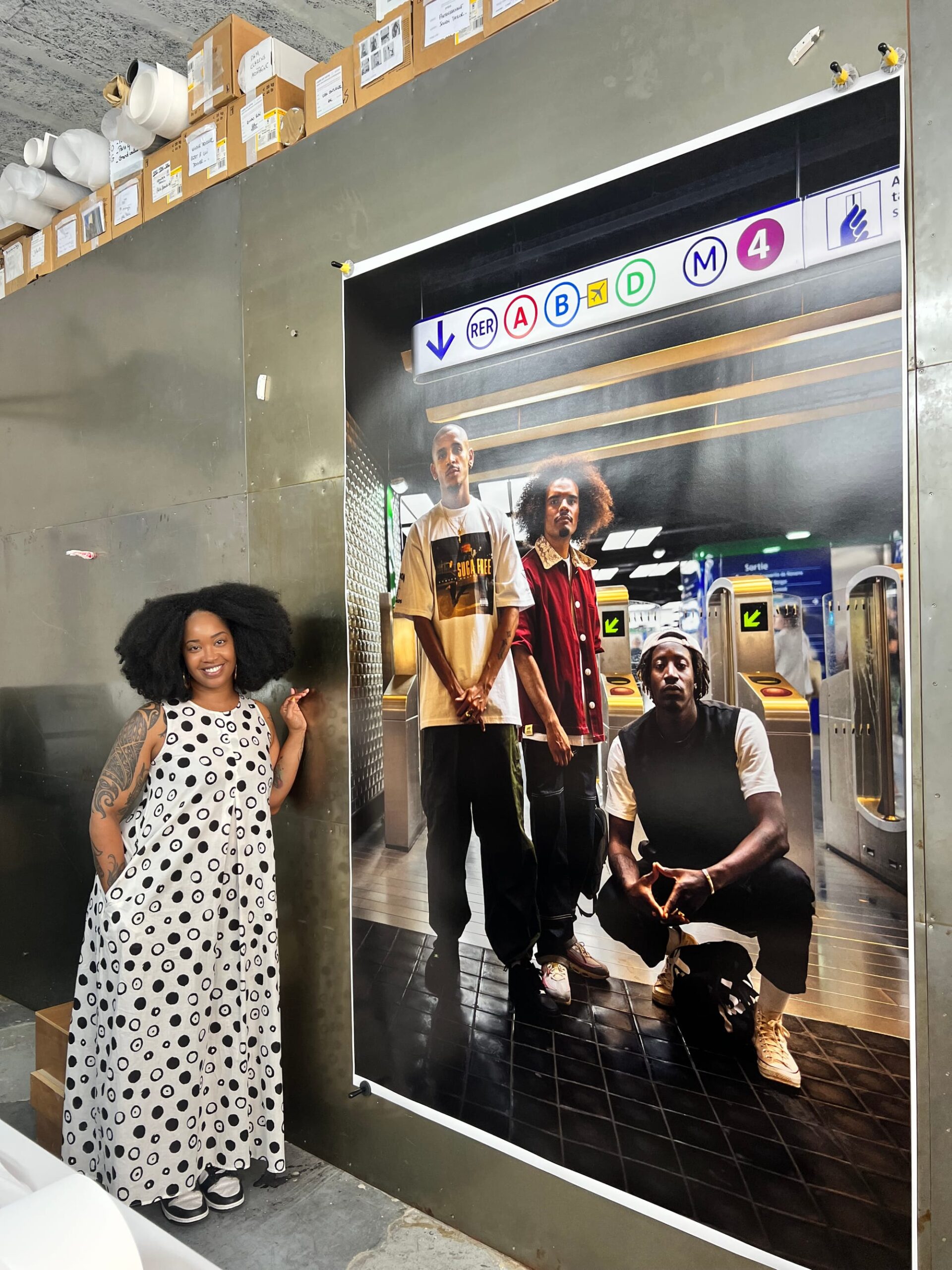
Johnson expanded her “Belonging” project, originally initiated in Chicago in 2018, to France, focusing on youth feeling out of place. Her experiences commuting to a North Side high school informed her understanding of segregation. She remarked on the importance of amplifying marginalized voices, saying, “The questions that you have about your environment at that age really do frame how you think about where you live.” Her work fosters a transatlantic conversation on race, drawing parallels between the histories of slavery and colonization in the U.S. and France.
Recent events, such as the police shooting of Nahel M. in Nanterre, echoed global incidents of racial violence, adding urgency to Johnson’s project. She leveraged her art to explain these issues to her followers, highlighting the segregation of public housing in French suburbs. This renewed focus on French racism and police brutality parallels her work in the U.S., emphasizing art’s role in fostering open discussions. Johnson also captured stories from individuals like photographer Karlton Seydi and florist Colette, who shared their struggles with racial identity in France.