A recent investigation has uncovered that museums and institutions across the United Kingdom possess over 263,000 human remains, including bones and full skeletons. The Guardian’s inquiry into public records identified that 241 UK museums maintain extensive collections, with 28,914 items traced to origins outside Europe. This includes former British colonies, raising concerns among experts. The majority of these non-European remains, totaling 11,856, are from Africa, while nearly 10,000 are from Asia. Less frequently found were items from Oceania, North America, and South America.
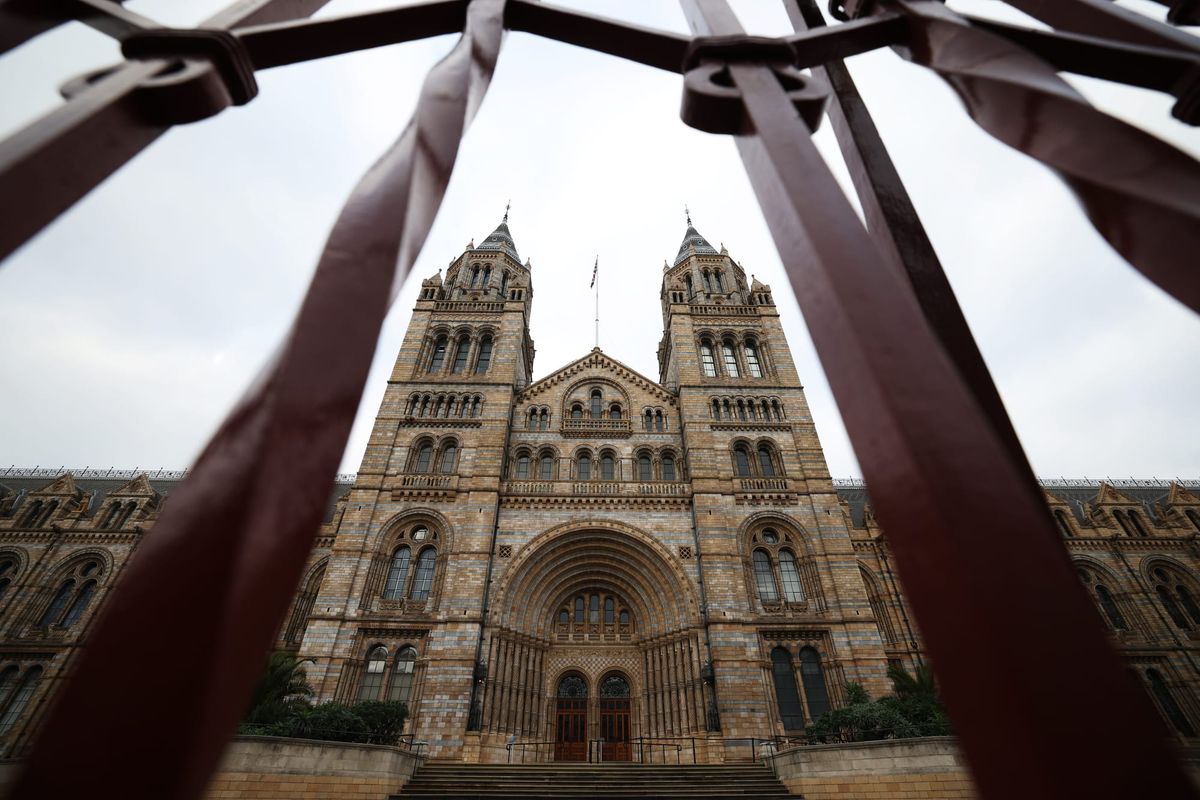
Toyin Agbetu, a museologist and anthropologist at University College London, expressed to Hyperallergic that while the findings were expected, the magnitude of the collection was staggering. Two institutions, the Natural History Museum (NHM) in London and the Duckworth Collections at Cambridge University, are responsible for the majority of non-European remains. The NHM holds 11,856 items and has significant collections from Asia, North, and South America, whereas Duckworth has the largest number of African remains, with 6,223 out of 8,740 non-European items.
The NHM states on its website that many of its human remains were acquired through donations during the 1800s and mid-1900s, aligning with British colonial expansion. Some were obtained through “unacceptable” methods, the museum admits. The NHM emphasizes its adherence to ethical guidelines when handling remains and provides a process for the repatriation of items. Agbetu argues that hosting remains for research is only justified with the informed consent of descendants, and criticizes the large-scale acquisitions made through coercion and violence as ethically indefensible.
Some institutions, unnamed in the report, were unable to detail their collections due to unidentified items stored in cardboard boxes. The NHM spokesperson stated that the museum has never refused to return remains when connections to requesting communities were established. The Duckworth Collections also follows UK government guidelines on the treatment of human remains. The British Museum, not mentioned in the report, maintains a public database of its 6,000 human remains, including Egyptian mummies, though no regulations mandate listing these items.
Internationally, US museums and institutions reportedly hold approximately 110,000 Native American remains. Despite the Native American Graves Protection and Repatriation Act (NAGPRA) passed in 1990, many indigenous groups await the return of their ancestors’ remains. Agbetu highlights the lack of a similar UK law, noting the Human Tissue Act 2004 only advises on the deaccession of remains less than 1,000 years old. Legal scholar Jane Anderson criticized the oversight of not considering originating communities’ claims and urged transparency and support for repatriation efforts, emphasizing the continued harm caused by treating ancestors as mere ethnographic resources.