On my way to a major exhibition at the Metropolitan Museum of Art, an unexpected encounter halted my progress: John Wilson’s “Self-Portrait” (2002). This striking, textured piece of pastel and paint is part of the insightful exhibition Witnessing Humanity: The Art of John Wilson.
Wilson, a long-time Boston resident, was a painter, public sculptor, printmaker, teacher, children’s book illustrator, and activist. Despite his respect among Black artists, he remained largely unseen in the mainstream, White art world, often excluded from surveys of modern and contemporary Black artists in the US. This overdue exhibition, initiated at the Museum of Fine Arts, Boston, which possesses the largest collection of his work, aims to grant him the recognition he deserves.
Wilson’s parents, immigrants from British Guiana (now Guyana), encouraged his art studies at the School of the Museum of Fine Arts. Realizing the lack of Black representation in the museum’s collection, he committed to “witnessing [their] humanity.” This realization echoes that of celebrated Black contemporary artists like Kerry James Marshall, who remarked in 2018, “It’s less about changing the narrative than it is about participating, being a part of it.”
After graduating from Tufts University, Wilson received the James William Paige Traveling Fellowship in 1947, which allowed him to study in Paris with Fernand Léger. Attracted to Léger’s socialist and humanist beliefs, Wilson’s convictions grew stronger, distinguishing him from the American avant-garde’s art-for-art’s-sake approach. This perspective resonated with many Black artists during the burgeoning Civil Rights movement.
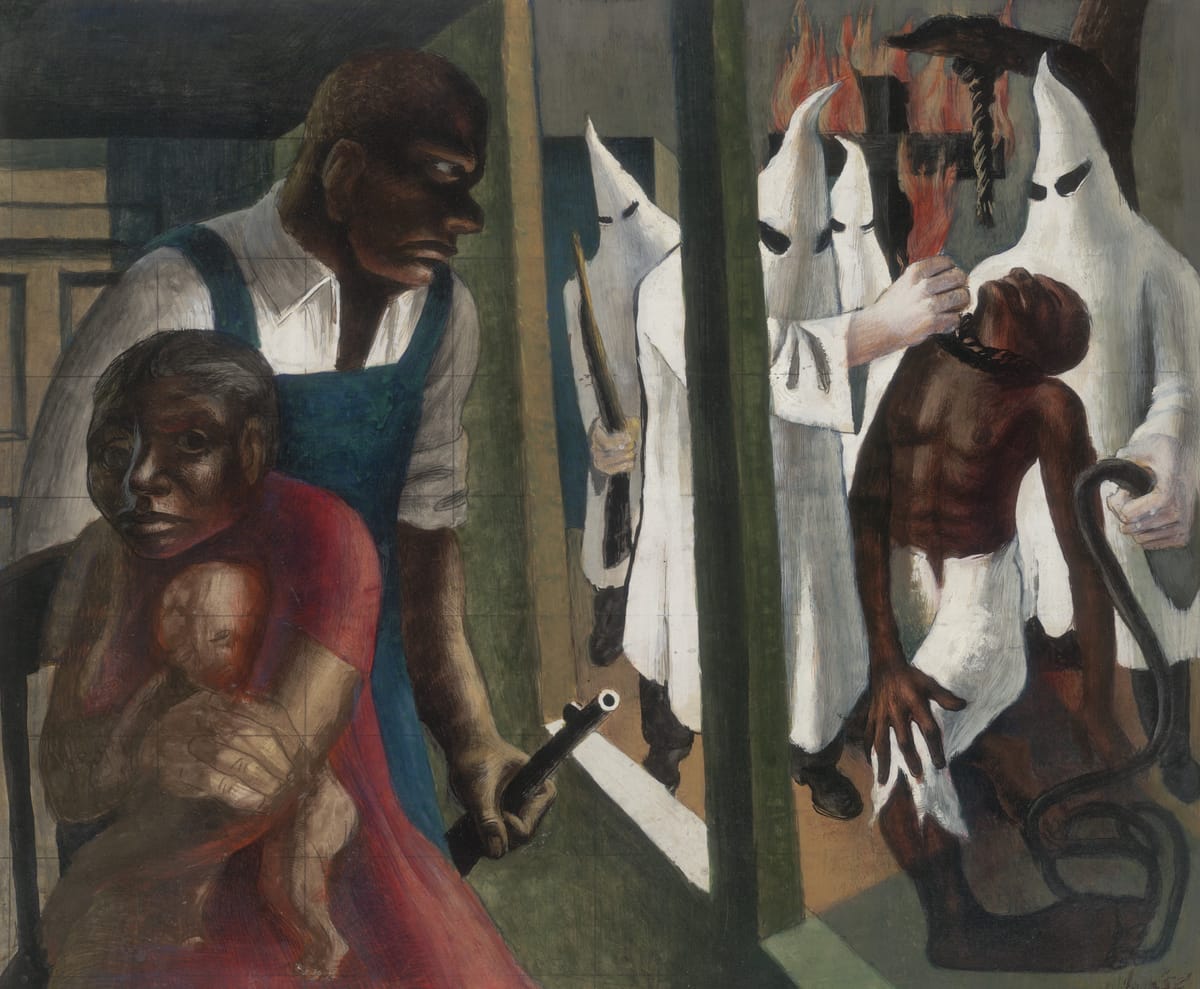
Among the exhibition’s over 100 works is a charcoal drawing of Martin Luther King Jr., with an idealized yet weary expression. The lines dividing his head and torso symbolize King’s martyrdom and the crosshairs of an assassin’s rifle. Also featured is an eight-foot bronze maquette of King’s head, modeled in 1982 and cast in 2021. Wilson’s work, such as his 2002 “Self-Portrait” and the lithograph “City Child” (1965), inspired by Ralph Ellison’s Invisible Man, addresses the invisibility faced by people of color. As Ellison wrote: “I am invisible, understand, simply because people refuse to see me.”
Witnessing Humanity: The Art of John Wilson is on display at the Metropolitan Museum of Art (1000 Fifth Avenue, Upper East Side, Manhattan) until February 8. The exhibition is curated by Jennifer Farrell, Leslie King Hammond, Patrick Murphy, and Edward Saywell.