CHICAGO — With her distinctive long dark hair framing her gentle face, Yoko Ono has been a significant figure in my personal list of influential female creators throughout my life. As a troubled teenager in a suburban area of the Midwest, her presence was felt — her avant-garde music filling my room with discordant melodies. Her call was like an enigmatic feminist beacon piercing through an oppressive cultural haze. Ono stands as one of the world’s most giving artists, inviting viewers to become active participants in her creations, consistently highlighting collective hope against a backdrop of societal issues like war, violence, racism, and sexism, all of which have personally affected her.
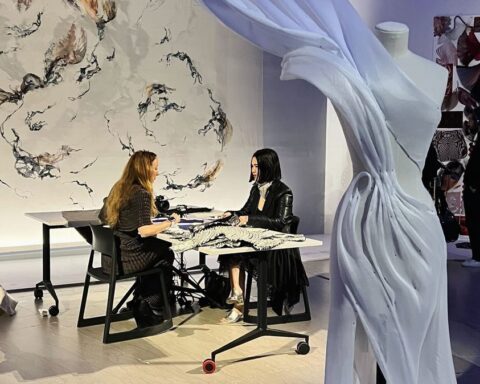
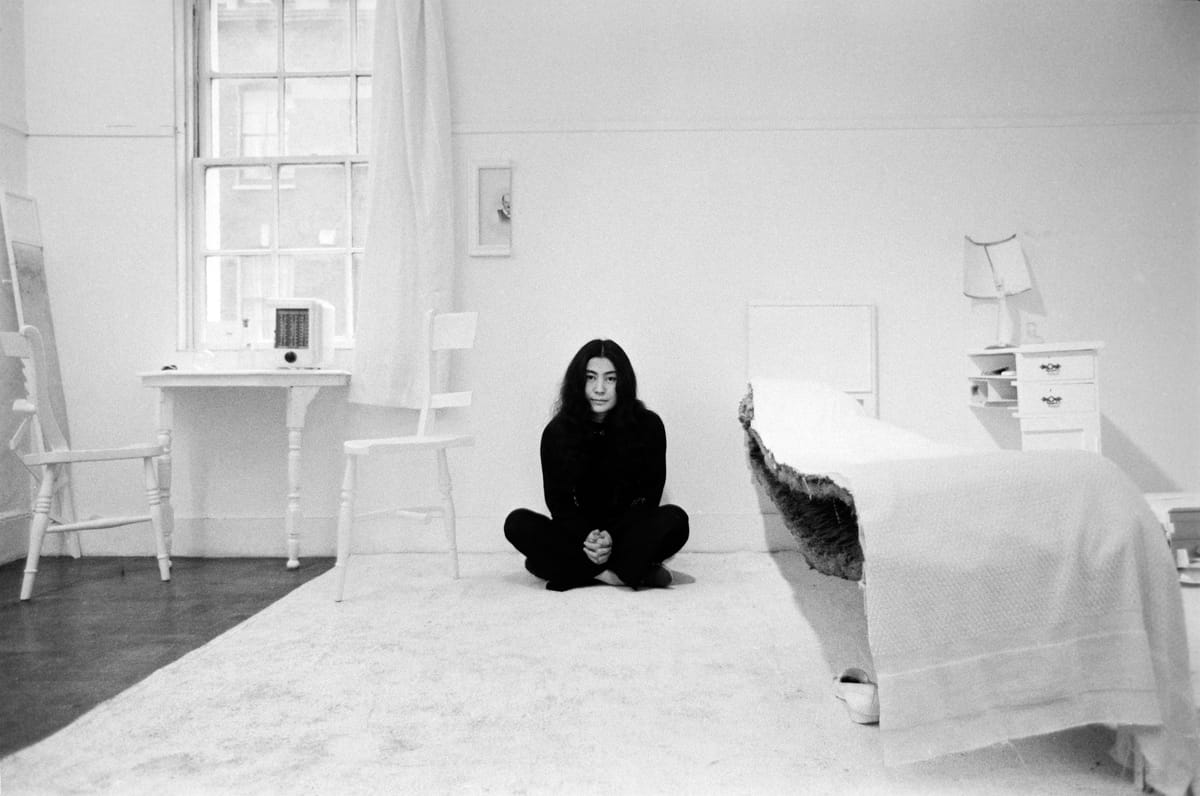
At 92, Ono now enjoys a quieter existence on 600 acres of rural land in upstate New York, having moved from her iconic residence at The Dakota on the Upper West Side, where she was a central figure during New York City’s avant-garde era. The exhibition “Yoko Ono: Music of the Mind,” currently showcased at the Museum of Contemporary Art Chicago, was initially presented at Tate Modern in London. This significant exhibition follows a mostly chronological order, with a striking black and white theme in both the wall colors and artworks, reminiscent of book pages. The exhibition is rich with nuanced details such as small instruction cards, archival materials including posters and exhibition invitations, various videos, and interactive pieces like a nail wall and chess tables.
Before entering the main exhibition, visitors encounter “Wish Tree” (1966) in the entrance hallway, encouraging them to write wishes and attach them to one of four trees. These trees, now laden with numerous notes, seem to bear the weight of humanity’s aspirations and longings. Nearby, “My Mommy is Beautiful” (2004) prompts visitors to pen notes to their mothers and affix them to a wall. As a mother herself, Ono experienced the tragedy of her second husband Tony Cox kidnapping their daughter, as documented in David Sheff’s recent book, Yoko: The Biography. While “My Mommy is Beautiful” may appear sentimental, it also delves into the complexities of parenthood, revealing emotions of absence, sadness, gratitude, and respect through the notes left by visitors.
One of Ono’s early works, “Painting to be Stepped On” (1960), greets visitors with a torn canvas taped to the floor, reflecting her early connections with Fluxus artists like George Maciunas and John Cage in New York. In “Painting to Shake Hands” (1961), visitors have the opportunity to put their hand through a hole in a canvas and wait for someone else to shake it — a task that raises questions of connection and touch. Ono’s practice often involves suspending everyday actions to highlight the implications of lived experiences. Despite her works’ engagement, the question remains whether such ephemeral, anti-materialist art can be effectively reframed within institutional settings or if they inherently resist formalization.
A video of Ono performing “Cut Piece” (1964), one of her most recognized works, displays her seated on the Carnegie Recital Hall stage in New York as audience members cut away pieces of her clothing. This performance explores vulnerability and courage, bringing these emotions to the forefront. Nearby, black capes from “Bag Piece” (1964) invite viewers to engage in similar interactions. Throughout her career, Ono’s works have encouraged participation, reflection, and a reexamination of ordinary actions, ultimately fostering a shared human experience. Her exhibition at the Museum of Contemporary Art Chicago runs until February 22, curated by Juliet Bingham and Patrizia Dander.