Philadelphia has initiated a lawsuit against the Department of the Interior (DOI) and the National Park Service (NPS) following the removal of slavery-related exhibits from Independence National Historical Park on January 22. This action comes after an executive order by Trump that called for reviews of exhibits at the Smithsonian and National Parks. The Philadelphia Inquirer recorded footage of staff dismantling these exhibits, which included the Liberty Bell and the site where the Constitution and Declaration of Independence were signed.
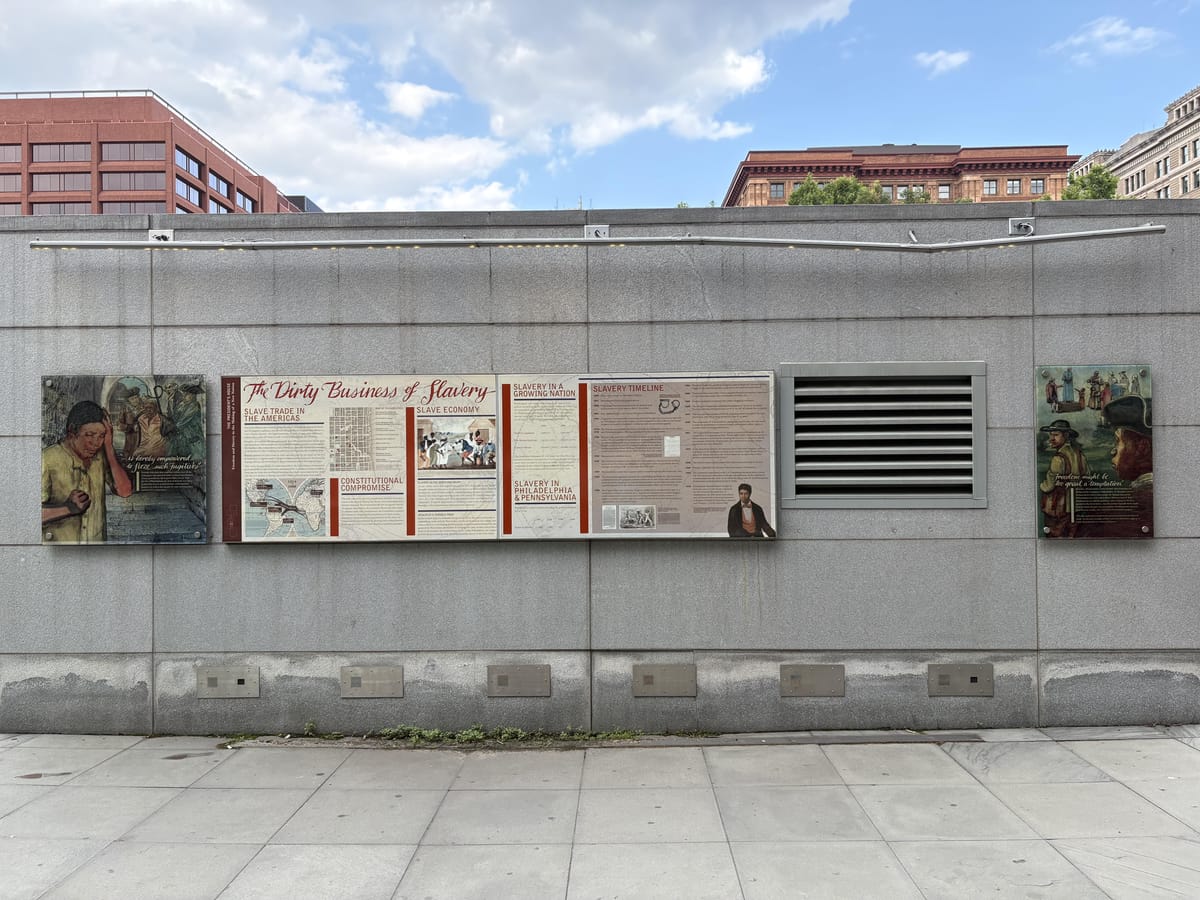
The lawsuit, filed in federal court, claims that the removed exhibits were part of the $8.5 million Freedom and Slavery in Making a New Nation exhibition, established in 2009. This exhibition highlighted the stories of nine enslaved individuals brought by George Washington to his residence. Among the removed panels was “The Dirty Business of Slavery,” which discussed the Constitution’s failure to abolish slavery and included a graphic on the trans-Atlantic slave trade routes.
Documentary filmmaker Louis Massiah, who contributed to the exhibition, noted that the video screens he created were inactive during a recent visit. He expressed uncertainty about the location of the video files. A DOI spokesperson stated that the removal complied with Trump’s directive to ensure displays do not negatively portray Americans, criticizing Philadelphia’s lawsuit as an attempt to disparage the Founding Fathers.
Save Our Signs, a project documenting National Park exhibits, has archived the Independence Park exhibition’s contents, expressing disappointment over its removal. Founding member Molly Blake described the administration’s actions as censorship and emphasized the importance of preserving the original panels. In court, Philadelphia contended that the NPS lacked the authority to dismantle the exhibits, which were a collaborative effort between various community stakeholders.
The lawsuit seeks to halt further removal of exhibits from the President’s House Site and secure the preservation of any items already taken. Massiah highlighted the exhibition’s significance in recognizing the contributions of Black Americans in the nation’s early history and the ongoing impact of decisions about citizenship.