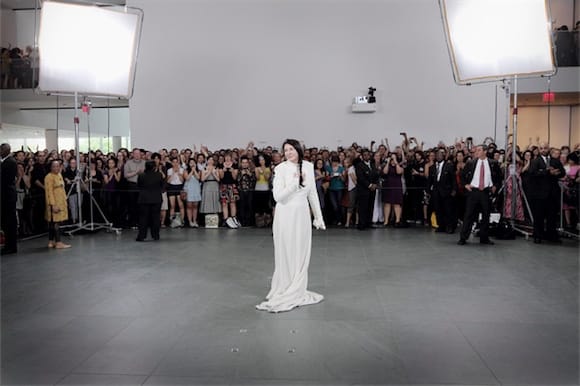
Jeremy Sapienza, the senior editor at Antiwar.com and editor of BushwickBK, delves into the background of artist Marina Abramović to unravel the significance of her recent performance. He observes, “For those unacquainted with Abramović’s history and previous works, she may merely appear as a woman seated. However, understanding her past unveils the profound meaning in what initially seems like nothingness.”
Sapienza highlights the historical context Abramović wrestles with: “Her artistic influences are deeply rooted in the postwar Yugoslav nationalism — her parents were renowned WWII figures, and her great uncle was the patriarch of the Serbian Church. Abramović matured amidst the oppressive environment of Tito’s communist regime, which stifled individuality. This might lead one to explore self-denial and self-imposed stress, akin to methods used by torturers, and to embrace self-inflicted suffering. She participated in a protest that persuaded the dictator to transform a military facility into an art school, yet Yugoslavia remained intolerably restrictive.”
The notion of freedom, though not immediately apparent, emerges as a crucial element of Abramović’s work. It suggests that the value of freedom often becomes most evident when it is stripped away.
For those interested, MoMA’s Inside/Out blog offers an in-depth interview with Abramović. Given the discussion surrounding her themes of freedom and personal history, one particular line stands out: “What is especially novel about this performance is the focus on individuals within the audience, establishing a one-on-one interaction. As people enter the light square and sit, they experience isolation. They are watched by the group, by me, and in turn, they observe me. This triple observation quickly leads them to introspection. I serve merely as a catalyst, a mirror to their own lives, evoking emotions such as vulnerability and pain, culminating in tears as they confront their own selves.”