In 1568, Italian historian Giorgio Vasari expressed his perplexity over the Venetian artist Giorgione, stating that the painter was consumed by “making figures according to his own fancy.” Regarding Giorgione’s artworks, Vasari confessed, “I for my part, have never understood them, nor have I found, for all the inquiries I have made, anyone who understands them.”
Vasari had a point. Giorgione, known as “Big George,” remains one of the most cryptic figures in Western art history. Despite producing approximately 30 paintings before his death from the plague in 1510, little is known about his life, and even less about the meanings behind his work. A new book, ‘Giorgione’s Ambiguity’ (Reaktion Books, 2021) by Tom Nichols, suggests this was intentional.
Nichols argues that the puzzling aspects of Giorgione’s paintings, from their indistinct brushstrokes to their unusual color palettes and mysterious figures, were designed to captivate and intrigue. In an era defined by rational thought and self-evident historical art, Giorgione’s cryptic style was a deliberate departure from the norms, challenging the expectations of his time.
Originating from the small town of Castelfranco, Giorgione’s early life is largely unknown, though Nichols’s research hints at a period of incarceration during his youth. By 1500, he had relocated to Venice, working for a select circle of affluent patrons. Unlike his contemporaries, Giorgione had few public commissions and remained on the periphery of Venice’s art scene, which favored grand religious and patriotic themes.
Giorgione consciously avoided mainstream trends. While Renaissance artists pursued majestic works, Giorgione’s remained intimate, with figures often overshadowed by their surroundings. He pioneered the colorito style, favoring a soft, sensual focus over the precise disegno approach. Nichols asserts that Giorgione’s most significant innovation was his deliberate opacity, rendering his paintings open to endless interpretations.
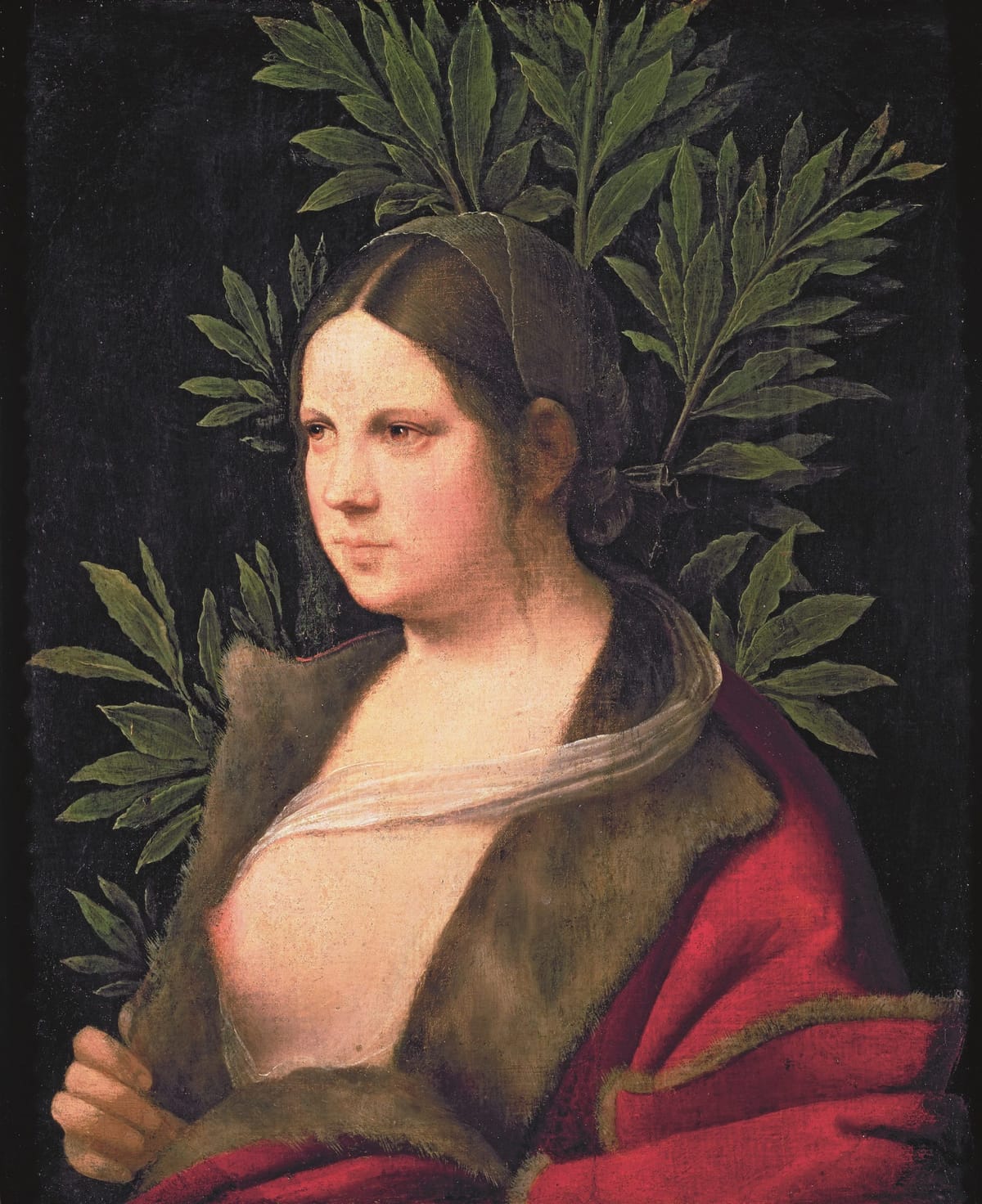
Consider “Laura” (1506), where the subject’s gesture obscures whether she’s revealing or concealing her breast. In “La vecchia” (c. 1506-7), an elderly woman gestures towards her heart, yet her message remains elusive. Similarly, in “Venus” (c. 1510-11), completed by Titian, the reclining nude’s expression is left to the viewer’s imagination.
Nichols explains that Giorgione envisioned viewers as “intensely subjective and sensual,” appreciating the multiple, often conflicting interpretations his works inspire. His masterpiece “Tempest” (c. 1509) continues to baffle scholars and viewers alike with its solitary figures and dreamlike, stormy landscape. Giorgione’s art invites endless analysis, engaging audiences repeatedly.
Despite the mysteries surrounding Giorgione’s life and art, Nichols’s book offers a clear, well-researched, and compelling analysis of what is known. It serves as a valuable resource for scholars, artists, history enthusiasts, and possibly even Vasari himself.
‘Giorgione’s Ambiguity’ by Tom Nicholson (Reaktion Books, 2021) is available for purchase on Bookshop.