If Century III Mall in West Mifflin, Pennsylvania had remained open, it would be nearing its half-century mark, having closed seven years ago. Initially celebrated as the world’s third-largest mall with 200 stores, it was anchored by now-defunct department chains such as Joseph Horne Company, Gimbels, and Kaufmann’s. Built on a slag heap managed by US Steel, the mall’s name commemorated the 1976 bicentennial. Like many other shopping centers, it succumbed to closure, leaving behind empty shells of a Sears, a Macy’s furniture store, and a food court awaiting demolition.
Matthew Newton, in his work Shopping Mall (2017), describes such places as “ghost malls,” where temporal boundaries blur. An image by Dave Columbus shared on the “liminal photography” Facebook group on November 11, 2025, captures this eerie abandonment. The photograph features gray carpets and white walls, with ’70s-inspired orange-and-green squares, epitomizing the online aesthetic of “liminality.” These spaces, stripped of their usual human presence, evoke unease and nostalgia, embodying a collective digital movement reflecting the strange experience of contemporary dystopian capitalism.
The roots of this aesthetic can be traced to a 2019 Creepypasta story, “The Backrooms,” on 4chan. It was inspired by a desolate image of a yellowed backroom, imagined as an infinite, recursive space. The narrative describes it as a realm of non-spaces, akin to empty airport lobbies and deserted stores. This mythos fostered an active online community, and its popularity has led to a YouTube series being adapted into an A24 film. Central to the aesthetic is the absence of people, compelling viewers to envision themselves alone in these spaces, akin to the eerie loneliness in Spanish TikToker Javier’s 2021 videos during the COVID-19 pandemic.
While “The Backrooms” is a well-known example, liminal aesthetics often exist without specific narratives, emerging as an organic art movement of found images. As Karl Emil Koch wrote in Musée Magazine, these images evoke emotions of nostalgia, lostness, and uncertainty. The aesthetic resonates widely, with the “Liminal Spaces” Facebook group boasting 228,000 followers, while “Liminal Photography” has 357,300. Reddit’s r/LiminalSpace sees 136,000 weekly visitors, emphasizing real-world surreal images over AI-generated ones.
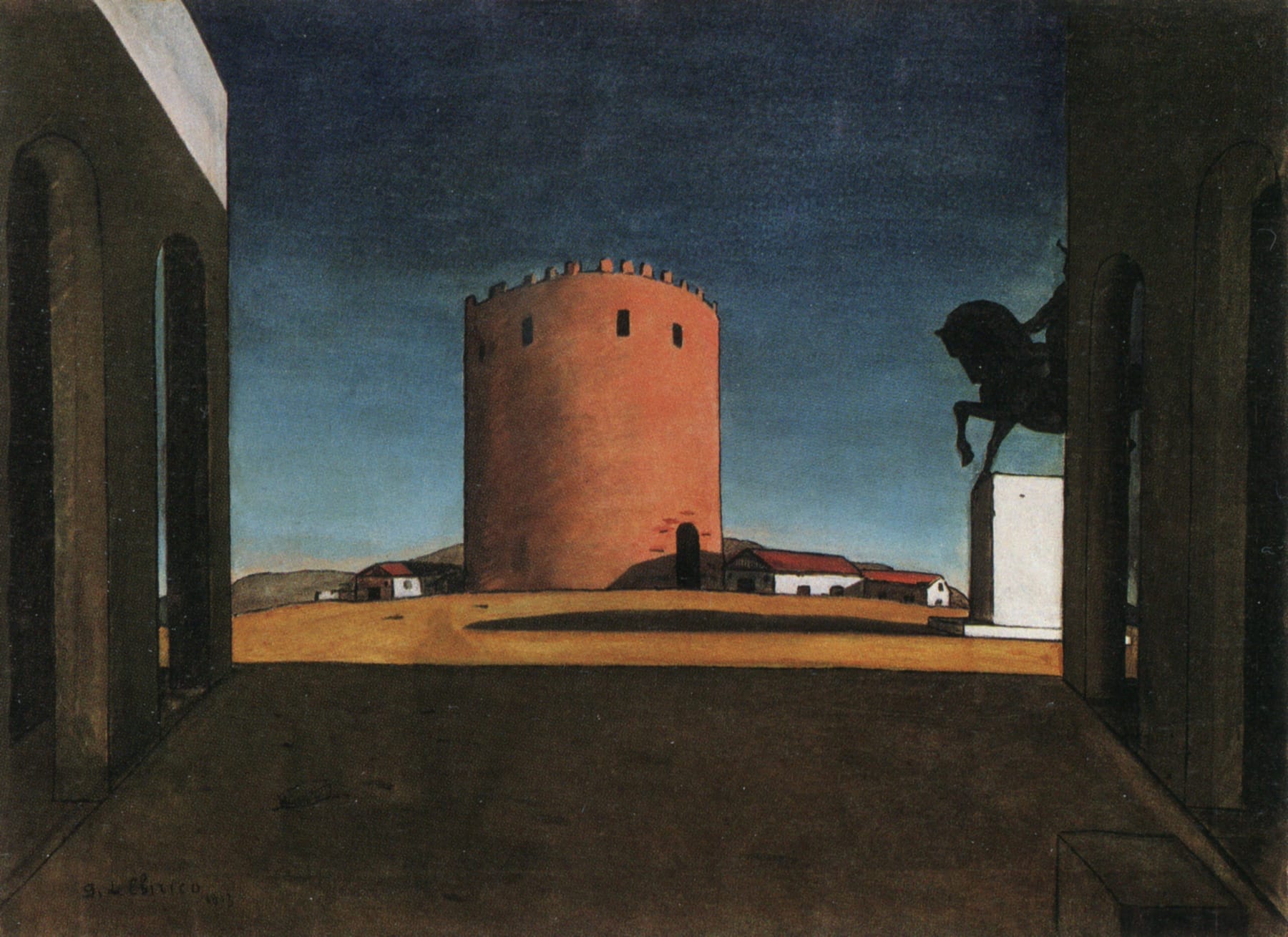
Historically, Liminalism connects to Surrealism, echoing artists like René Magritte and Giorgio de Chirico. American postwar artists like Grant Wood and Andrew Wyeth also prefigured these themes of isolation and rural loneliness. Edward Hopper’s work, with its portrayal of alienating landscapes and empty urban scenes, is a clear precursor to Liminalism. This aesthetic, as Robert T. Tally Jr. notes in Landscapes of Liminality: Between Space and Place (2016), reflects contemporary spatial confusion and cartographic anxiety.
Liminalism’s placelessness mirrors the homogenization of digital experiences, with its anonymity and alienation expressing the zeitgeist. The pandemic intensified interest in this aesthetic, yet its relevance endures beyond those shutdowns. By depicting empty spaces, Liminalism emphasizes the current era’s emptiness and hyperreality, suggesting a simulated existence. It thrives through digital platforms, embodying an internet art form shaped by its mode of creation and consumption, resonating with the fragmented, isolated reality of modern life.