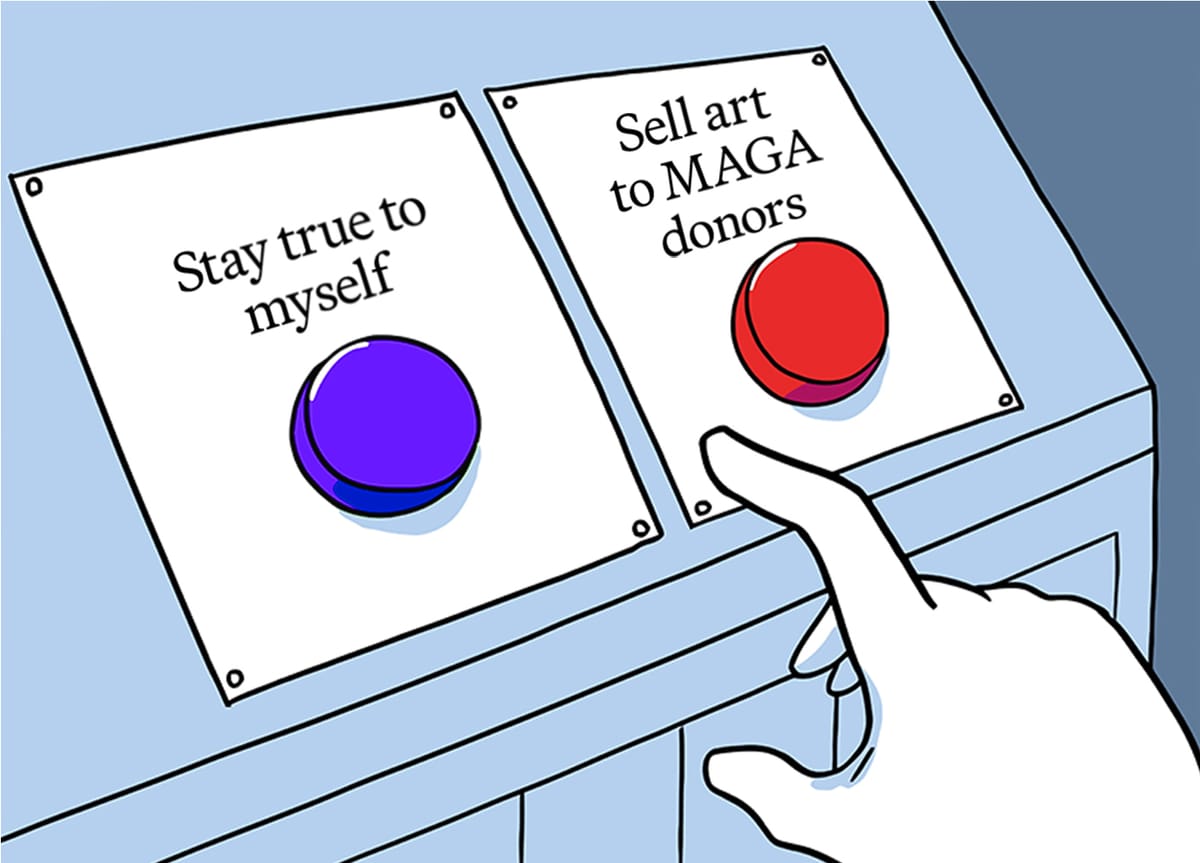
Is it right to let your art be acquired by those with political beliefs you strongly oppose? A concerned painter in the United States voices their discomfort with the ongoing injustices in Minneapolis, refusing to accept it as merely a difference of opinion.
The simple answer is no; you shouldn’t sell your artwork to MAGA supporters. The administration is embroiled in corruption, and choosing to support it is a deliberate decision. Artists don’t owe them their creations.
Your ability to act on this decision hinges on your financial situation, your relationship with your gallery, and the leverage you possess. For some artists, the decision is straightforward, for others, it involves significant sacrifice. It’s up to you to determine if you can bear that cost.
Artists have more independence here than in other art world sectors. Institutions often struggle with MAGA affiliations due to their reliance on wealthy patrons. Museums and galleries cannot easily reject MAGA-supporting donors due to financial dependencies. The Kennedy Center’s closure remains a notable instance where MAGA politics disrupted an arts organization. Prioritizing your values over operations is paramount to preserving the integrity of your work.
An artist risks less by refusing a sale. Unlike institutions, you’re not tied to a specific buyer. Selling directly or through a gallery, you may choose to donate proceeds to organizations like Communities United Against Police Brutality to deter MAGA collectors. However, if gallery representation is your sole option, complexities arise, potentially jeopardizing future opportunities.
Even when supportive, galleries rely on collectors and may not act against them. High-profile artists have made impactful stands, like Amy Sherald and Philip Glass, who withdrew from major engagements due to political conflicts. While their actions drew media attention, an individual artist’s influence varies between that of a gallery and a renowned artist.
Rather than focusing solely on the potential loss of a sale, consider the reputational impact. If the administration continues its trajectory of deportations, censorship, and violence, do you want your art displayed in the homes of its supporters? Many artists conclude they don’t. Collaborate with your gallery to refuse such sales, but even if you can’t, exert economic influence elsewhere. Support small businesses over companies backing the administration. While refusing collector sales may seem more impactful, collective consumer choices can drive change. It’s time to make our financial contributions meaningful.