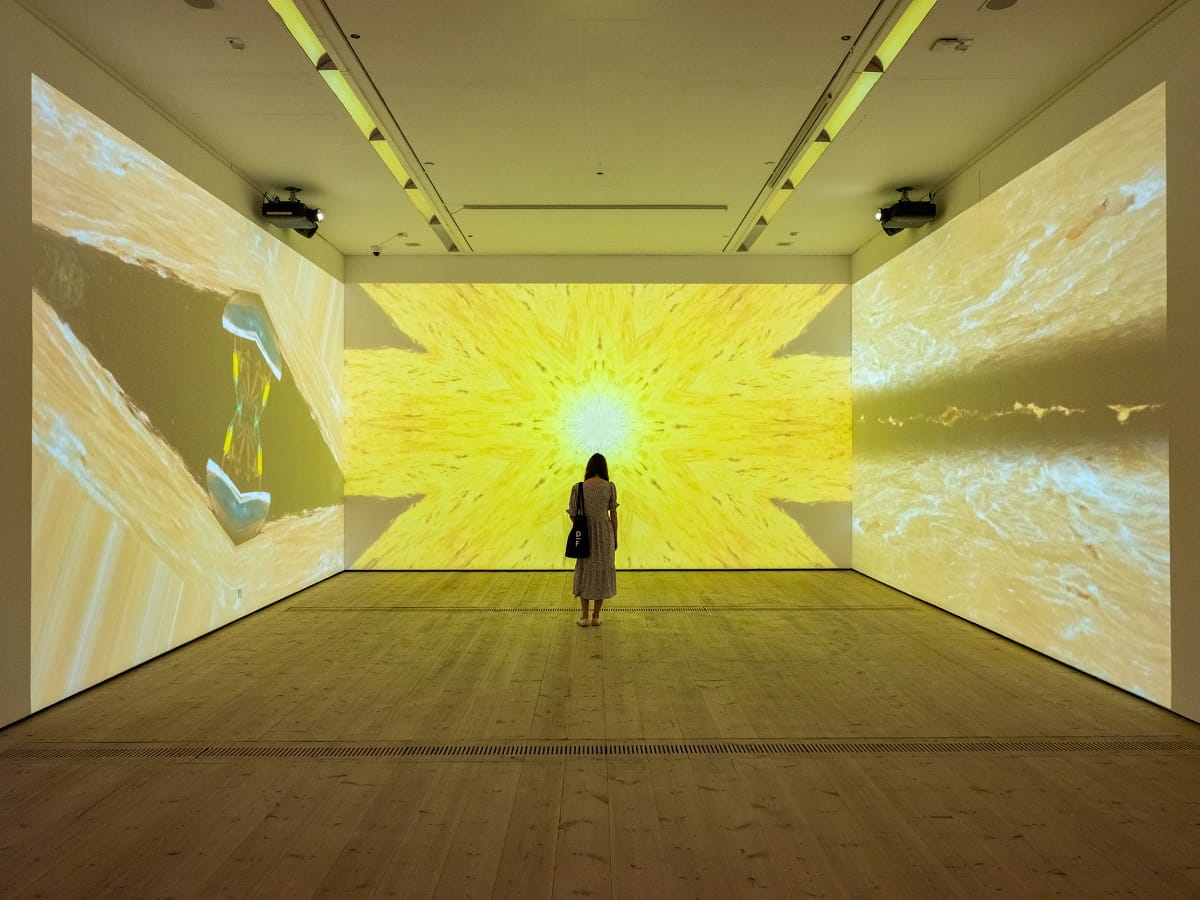
Colombian artist Carolina Caycedo, who was born in London, describes her creative journey as “spiritual fieldwork” when embarking on new projects. Unlike ethnographic research, where neutrality as an outsider is emphasized, Caycedo integrates structured scientific inquiry with a personal, immersive approach that fosters spiritual connections with people and places. Her latest solo exhibition at BALTIC highlights the significance of friendship and empathy in her artistic practice.
The exhibition, titled Land of Friends, marks Caycedo’s first European survey and features work from her ongoing “Be Dammed (Represa/Repressión)” project initiated in 2012. This extensive collection critiques the sociocultural and environmental consequences of dam constructions on rivers, advocating for the self-determination rights of rivers and the people living along their watersheds.
Caycedo’s work aims to challenge and unlearn the colonial perspective, offering alternative ways of perceiving and relating to ecosystems and communities. She critiques how visual art often reduces complex ecosystems to mere landscapes, adhering to European art traditions that detach human viewers from nonhuman subjects. Her work seeks to integrate human presence and actions into these systems.
Among the exhibition’s highlights are pieces from the “Water Portraits” series (2016–ongoing), where Caycedo crafts digital montages of river environments, printed on translucent fabric and suspended above viewers. These works blur traditional distinctions between portrait and landscape, emphasizing the personhood and agency of rivers. A similar technique is used in the “Serpent River Book” (2019), an accordion-fold publication that serves as both an art object and a tool for research and workshops.
The exhibition also focuses on Colombia’s Magdalena River, or Yuma as called by Indigenous communities. Caycedo, who lived near this river, began documenting its transformation due to dam projects that inadequately consulted local residents. Works like “YUMA, or the Land of Friends” (2014) and the video “Spaniards named her Magdalena, but natives call her Yuma” (2013) explore themes of control and resistance, highlighting traditional knowledge and the impact of extractivist economies on Indigenous communities.
Resistance is further explored in the latter half of the exhibition through cultural materials of protest, such as the 2019 banner “My Feminine Lineage of Environmental Struggle-Expansion 1.” This banner, featuring portraits of women environmental leaders, underscores collective activism. The exhibition also includes banners from the Women’s Banner Group, celebrating women’s contributions to the Durham Miners’ Gala.
In collaboration with curator Irene Aristizábal, Caycedo connects her South American themes to local contexts with “Tyne Catchment” (2022), a large-scale drawing of the River Tyne. This piece, rendered in colored pencil, resonates with the local landscape and encourages reflection on the environmental and cultural significance of the river.
Carolina Caycedo: Land of Friends is on display at BALTIC in Newcastle, UK, until January 29, 2023. The exhibition is curated by Irene Aristizábal.