PORTLAND, Maine — The Portland Museum of Art honors David C. Driskell with a compact exhibition titled David C. Driskell: Collector. This tribute showcases an artist and scholar intimately connected to Maine, who curated one of the leading collections of African-American art in the United States. Driskell began his collection journey in 1955 while serving as an art professor at Talladega College. During a 2017 lecture at the Whitney Museum of American Art, he recounted setting aside a small portion of his initial $3,000 salary for art purchases each year.
Driskell’s focus on African-American artists sharpened during the 1960s, leading to his pivotal role in curating the 1976 exhibition Two Centuries of Black American Art. This landmark show, which debuted at the Los Angeles County Museum of Art and toured nationally, was part of his ongoing mission to affirm the rightful place of Black artists in American art history. The works featured in Collector, some donated to the Portland Museum, highlight the diverse styles within Driskell’s collection. Edward Mitchell Bannister’s painting “Untitled (Walking in the Woods)” (1880s) and Loïs Mailou Jones’s “Paris” (1962) exemplify this range, drawing from Romanticism and Impressionism, respectively.
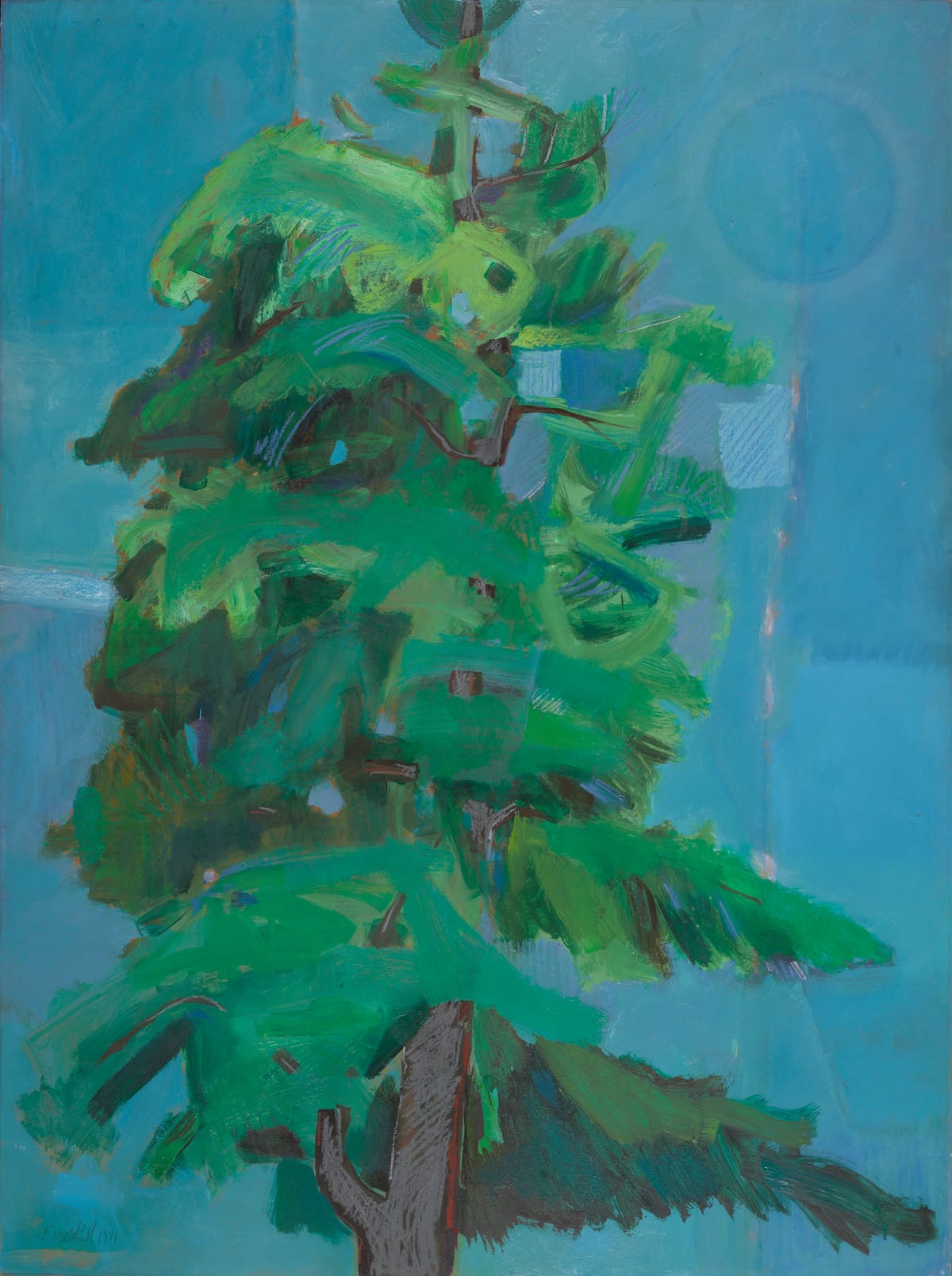
Sculptures also hold a significant place in Driskell’s collection. Elizabeth Catlett’s bronze “Mother and Child” (1977–78) and Meta Vaux Warrick Fuller’s “Secret Sorrow (Mother and Child)” (c. 1914) reveal varied influences and stylistic approaches, from Catlett’s stylization to Fuller’s Rodin-inspired expressiveness. Driskell’s own artistic contributions mirror the diversity seen in his collection, spanning from a 1953 social realist self-portrait to the multi-technique “Night Vision” (2001). His work, like “Pine and Moon” (1971), showcases his fascination with the organic form inspired by Maine’s landscape.
A notable aspect of the exhibition is the visual dialogues between artworks. Romare Bearden’s “Urban Street Scene” (1974) and Driskell’s “Ghetto Wall #2” (1970) create a narrative interplay, while other pieces like Driskell’s “Frost and Ice, Maine” (1977) and Alma Thomas’s untitled watercolor (1964) offer abstract interpretations of natural phenomena. The exhibit begins with a compelling juxtaposition: Driskell’s 1953 self-portrait gazes down at a marble statue of General Ulysses S. Grant, creating a silent dialogue across time and space.
Beyond his art collection and creations, Driskell’s influence extends through the annual David C. Driskell Prize at Atlanta’s High Museum of Art, awarded to those advancing African-American art. Alison Saar, a 2025 recipient, expressed the profound impact of this recognition on the Black arts community, calling it “an amazing gift.” David C. Driskell: Collector is open at the Portland Museum of Art (7 Congress Square, Portland, Maine) until March 1, curated by Shalini Le Gall.