I’ve been fortunate in having attended only a few funerals, none of which were grand, tearful ceremonies in majestic cathedrals. Instead, they featured military uniforms and simple chairs, with an atmosphere of quiet respect. Despite being labeled by some as a member of the ‘godless left,’ I felt a profound sense of reverence in a secluded room at the Brooklyn Museum. The exhibition, Unrolling Eternity: The Brooklyn Books of the Dead, presents a 2,000-year-old guide to the afterlife, depicting boats journeying through the Field of Reeds and the iconic weighing of the heart against the feather of Ma’at.
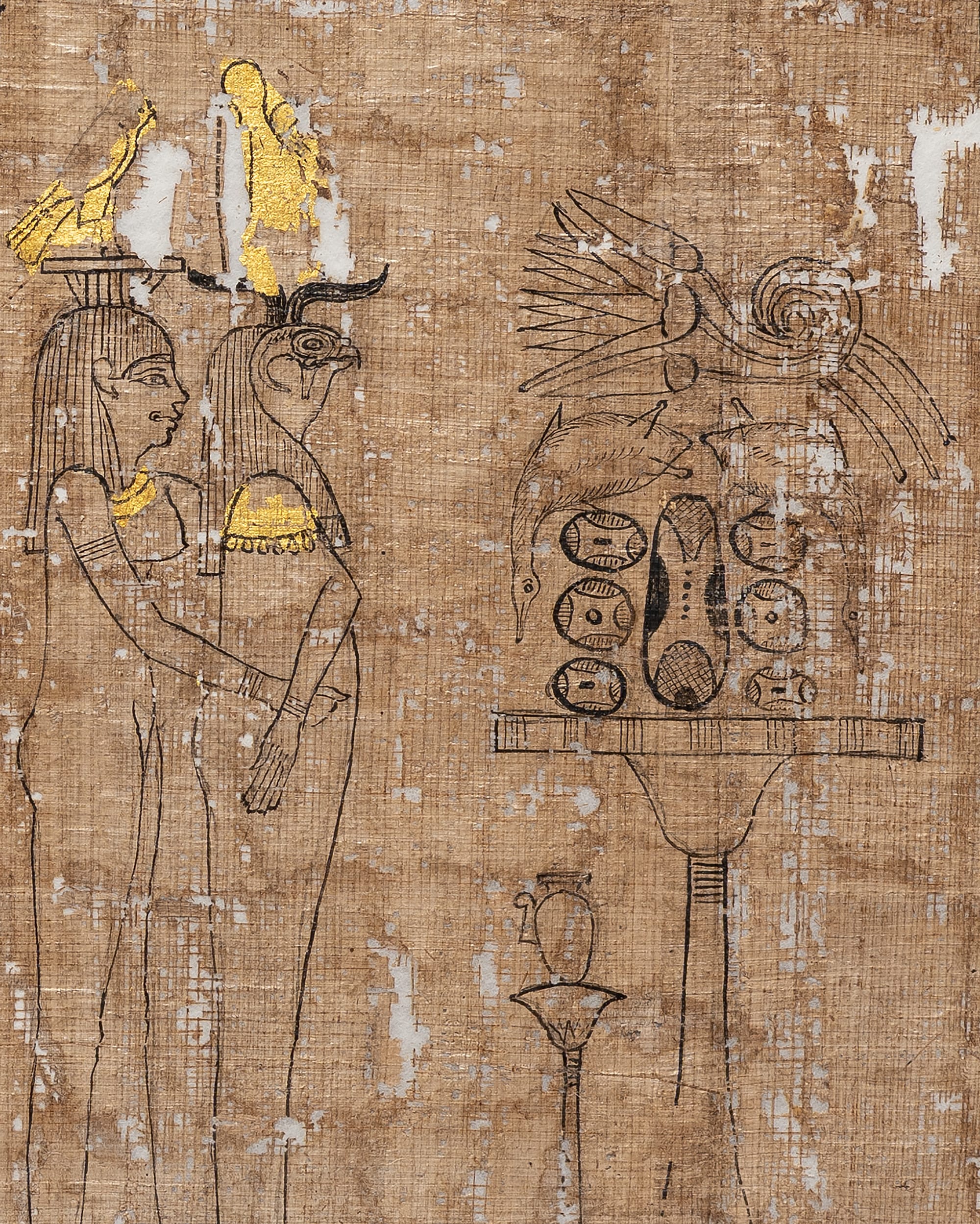
The term ‘Book of the Dead’ refers to a flexible collection of Ancient Egyptian funerary texts. These texts, involving protection spells and mummification guidelines, could be purchased from scribes for a price. The Brooklyn Museum’s highlight is a 21-foot papyrus from around 250 BCE, featuring over 160 spells. Notably gilded, it’s among the few surviving examples and had been stored since 1937 until a conservation grant enabled its restoration.
Initially acquired by Henry Abbott in the 1840s, the papyrus was part of an Egyptian artifact collection displayed in New York in 1853. Morgan Moroney, an assistant curator, explained that the papyrus was initially glued to a paper backing, both preserving and damaging it. With a grant from Bank of America, conservator Ahmed Tarek from Cairo meticulously restored the artifact, employing techniques he had used before to detach the backing without losing fibers.
Tarek, who has trained in various countries, described the uniqueness of restoring papyrus, which often exists in fragments. By transforming these fragments into a complete sheet, the papyrus becomes readable for many. Despite its organic nature, papyrus can endure the test of time thanks to Egypt’s dry climate. However, it primarily reflects the writing of the elite, offering a partial glimpse into society.
Unrolling Eternity showcases the creation process behind a Book of the Dead. Alongside Ankhmerwer’s Book is an older, better-preserved copy, without the gilding or illustrations. The exhibition also features stelae, figurines, and mummy bandages. Yekaterina Barbash, curator, noted that at least two scribes contributed to Ankhmerwer’s Book, evidenced by varying handwriting styles. The exhibition also includes a coffin containing Gautseshenu’s body, reminding visitors of the need for respect.