The New York Public Library hosts a small yet impactful exhibition, Niyū Yūrk, which delves into themes familiar to the Southwest Asian/North African (SWANA) community in the U.S.: the census. While many ethnicities are distinctly categorized, SWANA individuals, often labeled as Middle Eastern/North African (MENA), are classified under ‘White’ on the U.S. census. This classification issue extends beyond the census to medical forms and college applications. Although there have been efforts to introduce a distinct category, with potential inclusion by 2030, the 2020 census still prompts entries like ‘German, Irish, English, Italian, Lebanese, Egyptian, etc.’ The ongoing challenge for SWANA individuals in the U.S. is the feeling of erasure, a sentiment echoed in this exhibition.
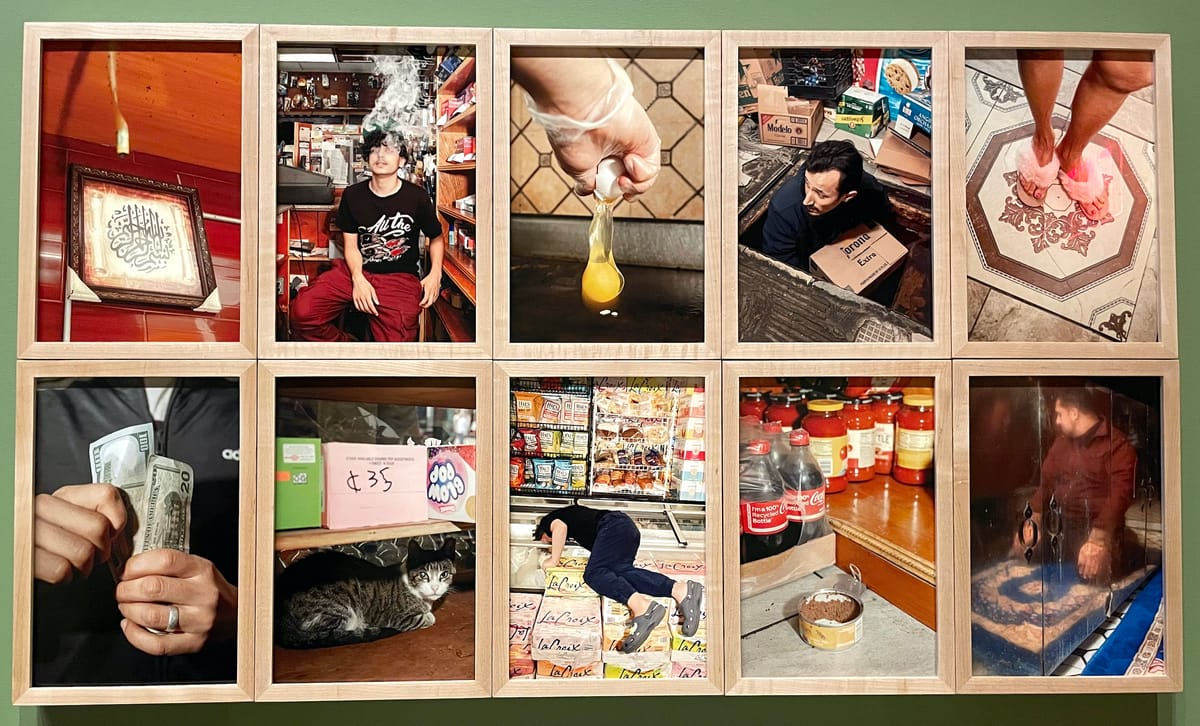
The exhibit explores the history of the SWANA diaspora in New York City by showcasing everyday presences like SWANA-owned bodegas and historical photographs such as Lewis Hine’s 1926 portrait of ‘A Syrian Arab at Ellis Island.’ It includes archival documents from groups like the Organization of Arab Students in the USA, as well as cultural outputs like poetry, literature, and vinyl records. Visitors learn about notable figures like Lebanese-American dance scholar Ibrahim Farrah and Iranian-American author FM-2030. A video interview with Palestinian scholar Edward Said is also featured.
Curator Hiba Abid has crafted a sensitive narrative using materials exclusively from the NYPL’s collection. The exhibition highlights that the SWANA diaspora is an integral part of America’s social fabric, countering the need for constant self-assertion. While other marginalized communities are progressing from visibility to nuanced representation, the SWANA identity often remains in the stage of proving its very existence.
The NYPL’s website describes the SWANA community as ‘often overlooked’ and emphasizes the cultural contributions of MENA communities to New York City. The framing of these communities as shaped by the city before shaping it reflects the paradox of SWANA invisibility in the U.S., compounded by Western stereotypes of ‘villains’ or ‘victims.’ The portrayal as ‘victims’ has grown since the escalation of violence in Gaza, yet the broader presence of SWANA in American culture remains limited.
Niyū Yūrk’s standout piece is the short film ‘In My Own Skin’ by Jennifer Jajeh and Nikki Byrd, featuring interviews with five Arab women in the U.S. post-9/11. These women discuss the pressure to suppress their identity in order to assimilate, highlighting the complex interplay of visibility and invisibility. The exhibition runs at the New York Public Library (Stephen A. Schwarzman Building, Fifth Avenue and 42nd Street, Manhattan) through March 8, curated by Hiba Abid.