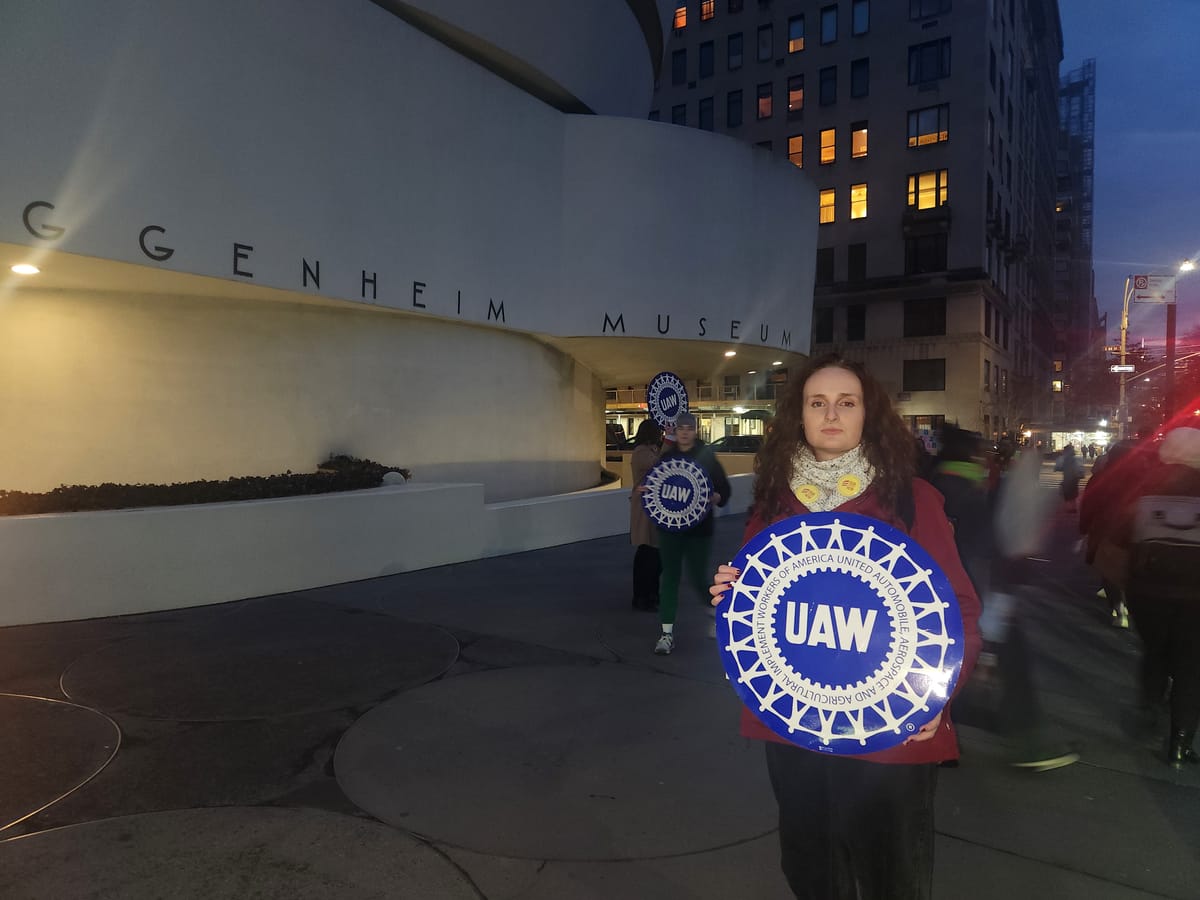
On a pleasantly mild evening in New York, March 4, fervent demands for equitable contracts filled the atmosphere outside the Guggenheim Museum during the opening reception for Carol Bove’s solo show. As contract discussions are ongoing, museum staff, represented by Local 2110 UAW, gathered to highlight issues such as high healthcare costs and job instability, drawing attention to last year’s sudden dismissal of 20 employees.
Around 30 museum workers and supporters formed a picket line outside the iconic rotunda, wielding signs, chanting slogans, and distributing colorful flyers to both event attendees and onlookers. Key figures like museum educator Drew Reynolds, the union chair, and seasoned labor organizer Maida Rosenstein of Local 2110 UAW, spearheaded the protest.
Reynolds, with over two years at the museum, shared with Hyperallergic amidst the noise of supportive honks and amplified voices, that the union aims to urge the museum to reconsider its current stance in the negotiations. The union claims that the museum has dismissed proposals aimed at bolstering job security and lowering healthcare costs, which currently start at $1,600 annually for individual plans, rising to $4,500 for family plans.
Following last year’s layoffs, which impacted 14 union positions, the union lodged an unfair labor practice complaint, citing a breach of contract for not providing adequate termination notice. Reynolds and Rosenstein reported that affected employees were informed just 30 minutes prior to being escorted from the premises, while the museum continues to deny any misconduct regarding the layoffs.
Rosenstein criticized the museum for not adequately explaining the criteria for the layoffs and subsequently hiring new staff, despite claiming a financial shortfall. She also challenged the low $24 hourly starting wage, noting that incremental pay raises do little to alleviate the situation due to the museum’s generally low compensation levels. This has resulted in doubled workloads in the affected departments.
Liz Jaff, leading paper specialist and shop steward for the museum’s other union, IUOE Local 30, was also present in support. She emphasized the solidarity between the unions, stating, “These are our coworkers, and they deserve a fair contract.” Attendee Maggie Heath expressed approval of the union’s visible presence, recognizing the significance of their protest amidst the affluent visitors.
Rosenstein concluded with a reflection on the dedication of museum workers, noting, “They love their jobs. They love the work that they do — they just want to make it sustainable.”