What common thread ties together Indian artist Abanindranath Tagore, Mexican poet Octavio Paz, and Martinican philosopher Frantz Fanon? These notable figures, from different decades and continents, were unified in their efforts to challenge Western imperialism through the mediums of art and literature during the rise of the so-called ‘Third World.’ This term, originally coined by French anthropologist Alfred Sauvy, referred to African, Latin American, and Asian nations that remained non-aligned during the Cold War. Today, it has been largely replaced by the term ‘Global South,’ which centers on the challenges faced by developing economies.
In her insightful and thoroughly researched upcoming book, Non-Aligned: Art, Decolonization and the Third World Project in India (2025), art historian Atreyee Gupta distinguishes between the geopolitical Third World and the intellectual Third World. She proposes the latter as a constructive term to describe an ‘intellectual consciousness’ that existed prior to the political emergence of the Third World in the 1950s. The book focuses on the Non-Aligned Movement and the pivotal Bandung Conference of 1955 in Indonesia, where newly independent nations sought to assert cultural and political independence from Western influence. Gupta’s work explores these themes within the context of Indian art during the interwar and postwar periods.
Gupta employs a ‘locational approach’ to reinterpret art history through Global Modernisms, which move away from Western-centric perspectives. She examines the works of artists like Tagore, sculptor Dhanraj Bhagat, and painters F.N. Souza and Jagdish Swaminathan, who engaged with Latin America’s Indigenismo movement and the ‘spirit of Bandung.’ Tagore’s Khuddur Jatra series (1935–36) is highlighted for its blend of South Asian, African, East Asian, and Russian motifs, illustrating a pre-existing transnational solidarity before India’s formal association with the Third World.
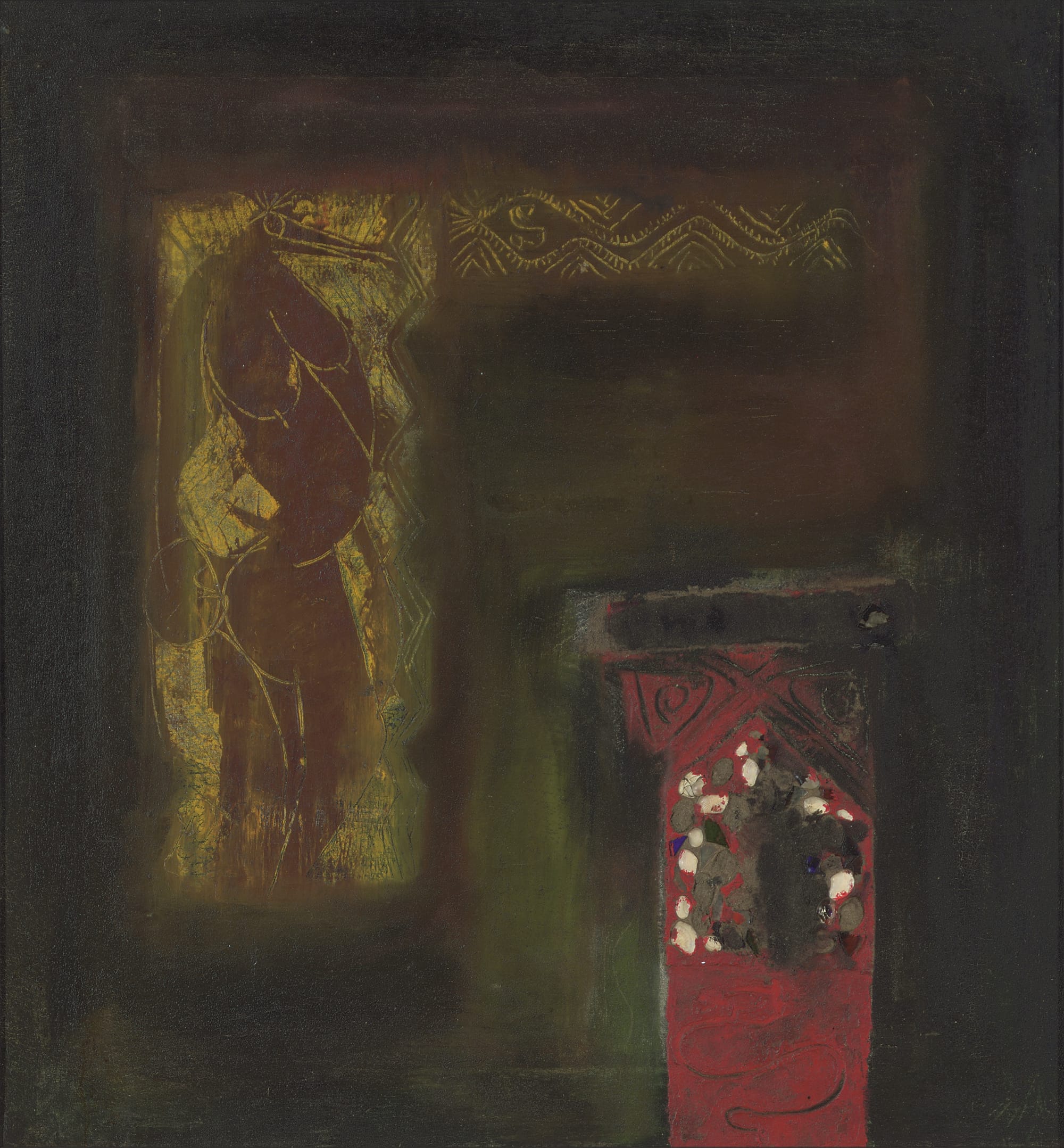
The book also delves into the relationship between Swaminathan and Paz, examining their decolonial artistic exchange. Swaminathan’s paintings, such as ‘The Sign and the Altar’ (1964), draw on African and Indian Indigenism, while Paz’s poetry invokes diverse mythological figures. This cross-cultural dialogue showcases how an intellectual consciousness predating the ‘Third World’ concept influenced their artistic practices.
While using the Non-Aligned Movement and Bandung Conference as a framework for analyzing 20th-century Indian art is ambitious, Gupta acknowledges the limitations due to scarce explicit references by artists like Swaminathan. Nevertheless, the book turns these gaps into opportunities for inquiry. For instance, it explores the role of the color black in Souza’s work, linking it to themes of subjugation and colonialism. Despite these compelling arguments, the extent of Souza’s awareness of parallel movements like the Harlem Renaissance remains unknown. Gupta’s scholarly work is occasionally marred by complex language, but it ultimately offers a nuanced perspective on art history, moving beyond simplistic labels like ‘Third World’ and ‘Global South.’