Upon its arrival at the San Francisco Opera in 2023, El Último Sueño de Frida y Diego left such a strong impression that one critic suggested its visually striking scenes, inspired by Frida Kahlo and Diego Rivera’s works, would suit a museum display. The Museum of Modern Art has taken this suggestion to heart with their latest exhibit.
The exhibit, titled Frida and Diego: The Last Dream, opened last weekend in tandem with a new staging of the acclaimed opera set for the Metropolitan Opera in May. Described as a “first-of-its-kind collaboration” between MoMA and the opera, this cross-disciplinary effort enlisted British stage and costume designer Jon Bausor to bring his stage vision into the gallery. However, while the opera itself was praised for its original portrayal of the artists’ tumultuous relationship, the exhibition falls short, appearing somewhat disjointed.
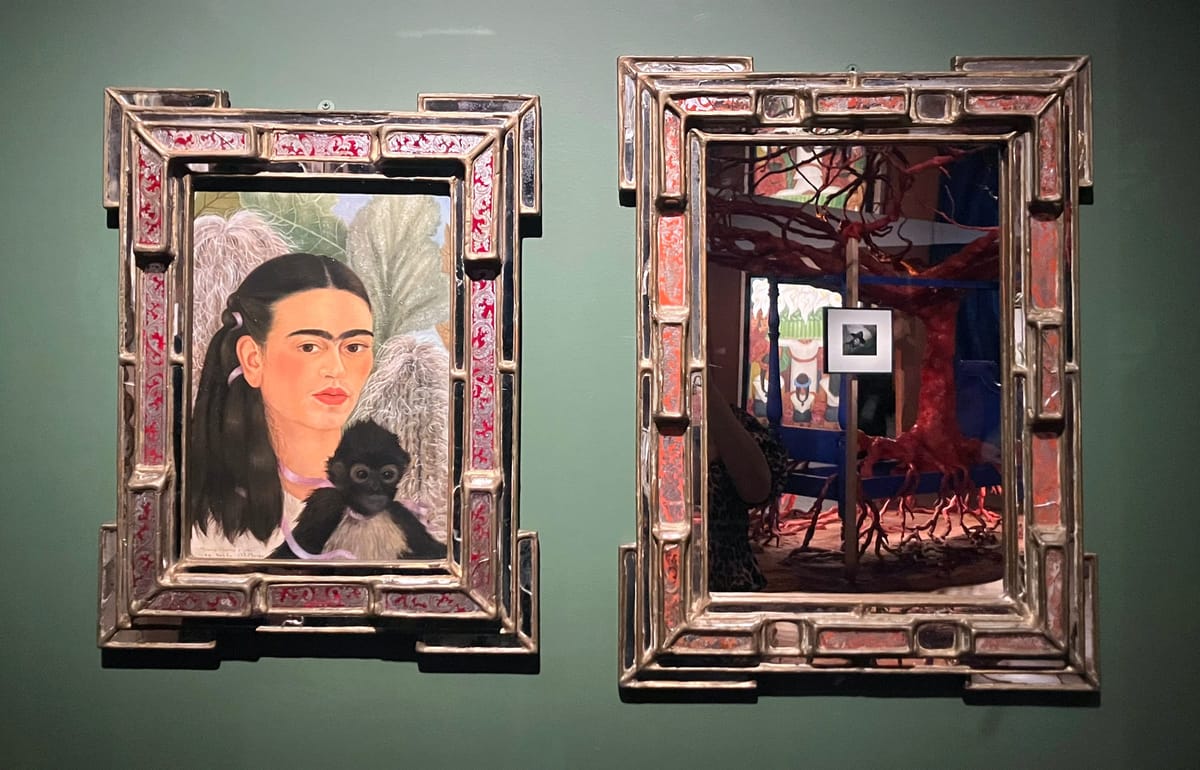
In the museum’s lobby, visitors are greeted by a model of the opera’s set design featuring a haunting tree of life set against cracked earth, wooden scaffolding, and blue tarp walls. This, along with a short promotional video, serves as a prelude, marketing the opera before attendees enter the exhibit. Inside, the design choices, such as scaffolding and blue tarp, intended to honor Kahlo and Rivera, feel misplaced. An exception occurs with the dramatic display of Kahlo’s “Self-Portrait with Cropped Hair” (1940), which breaks the visual monotony with its bold narrative.
The gallery further explores Kahlo’s life with a wooden bed frame and ceiling mirror, reflecting her physical struggles and emotional turmoil while subtly inviting visitors to engage with the space. The exhibit attempts to align their political views by juxtaposing Kahlo’s “Self-Portrait On The Border Between Mexico And The United States” (1932) with Rivera’s “Agrarian Leader Zapata” (1931). However, these connections seem tenuous. Rivera’s sketches for Carlos Chávez’s ballet Caballos de vapor add to the interdisciplinary theme but offer little else.
Despite these shortcomings, the allure of Frida-mania draws crowds, as evidenced by the packed gallery and waitlists on the opening day. The exhibition attempts to capture the complexity of the artists’ love while flirting with cultural elements, like an Aztec pyramid-inspired seating area, which feels more like a marketing ploy. Ultimately, Frida and Diego: The Last Dream serves as an enticing promotional tool. However, the main takeaway remains: don’t miss the opera itself.