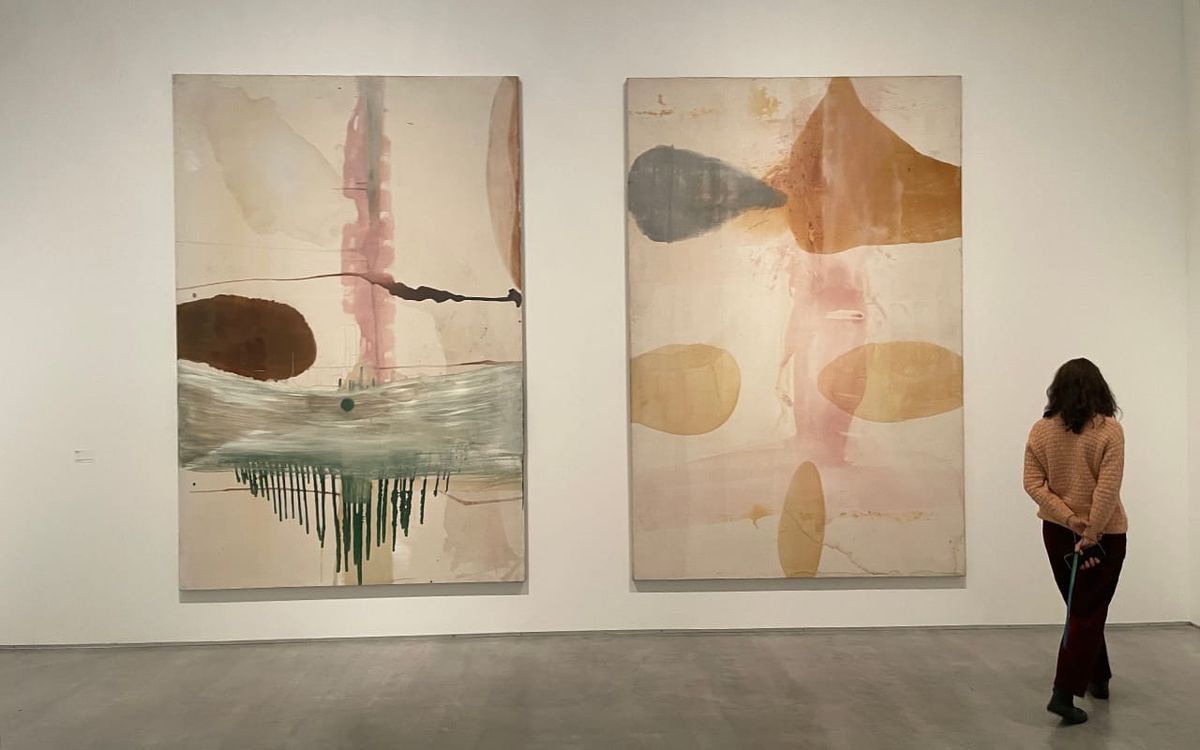
MADRID — Juan Uslé’s dynamic canvases, filled with lively loops and color grids, have marked him as a prominent figure in Spanish abstraction since the late 1980s. Residing in New York City, the Cantabrian artist now has a retrospective at Madrid’s Museo Reina Sofía, making him one of the few living artists in Spain to have two solo exhibitions at the museum. Titled ‘Ese barco en la montaña (That Ship on the Mountain),’ this exhibition showcases around 100 pieces from four decades, providing an extensive look at Uslé’s unique and captivating painting style.
Uslé’s vibrant marks and vivid colors often impart a buoyant feel to his works. However, the exhibition begins from a tragic event. Curator Ángel Calvo Ulloa has chosen the 1960 shipwreck of the Elorrio, which Uslé witnessed as a child, as the thematic starting point. This event ties Uslé’s art to the deep psychic implications of intertwining childhood imagination with real-world tragedy. The opening gallery features drawings and paintings from the 1980s, reflecting this pivotal memory and marine themes, illuminating the emotional depth of his art. An untitled drawing from 1987, depicting a ship stranded on sea rocks, stands out with its ghostly, artifact-like quality.
These dark, dreamlike images eventually gave way as Uslé reinvented his artistic approach in New York in the early 1990s. Despite the stark contrast between the bustling city and the rural Cantabrian backdrop of his earlier life, Uslé felt an immediate connection to New York, stating at the exhibition’s press preview on November 25, 2025, that it “seemed like home to me.” Water continued to be a significant motif, with the river under the Williamsburg Bridge frequently inspiring him. In a catalog interview with Kevin Power, Uslé likened New York’s immense energy to a “great, calm sea.” His paintings from this period are imbued with a fluid, rhythmic quality that immerses viewers in a serene, lapping motion.
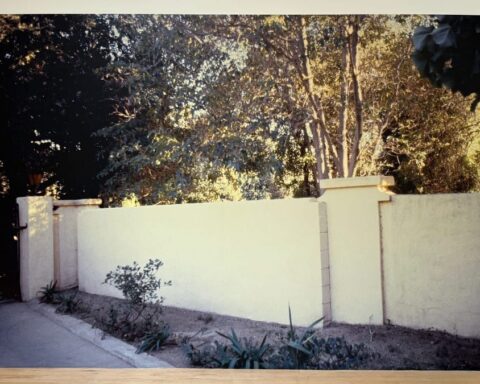
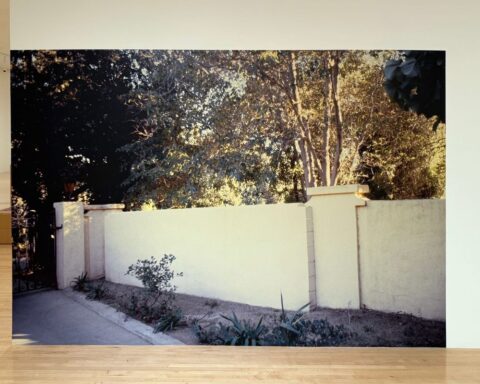
While Uslé is primarily celebrated for his paintings, he captures the frenetic pace of New York through photography as well. The exhibition includes a broad selection of his daily snapshots, which he described during the press preview as capturing both the “absurd” and the “marvelous.” His photos, featuring elements like city steps and chain-link fences, mirror the repetitive structures in his paintings. Others, showcasing clouds, vines, and shadows, reflect his exploratory, whimsical style. His photography, though not a literal record, offers a glimpse into his perspective, tracing the journey from external world to canvas.
New York’s influence is undeniable in Uslé’s oeuvre, yet his work transcends specific cultural identities, as noted by painter Shirley Kaneda. Uslé’s art calls to mind only that of Gen’ichirō Inokuma, a fellow immigrant artist from Japan who also interpreted New York’s vibrant life through abstraction. Both artists embraced the city’s complexities, integrating their discoveries into their art to make sense of the urban landscape through painting.
Juan Uslé. Ese barco en la montaña is on display at the Museo Nacional Centro de Arte Reina Sofía (Calle de Santa Isabel, 52, Madrid, Spain) until April 20. The exhibition is curated by Ángel Calvo Ulloa.