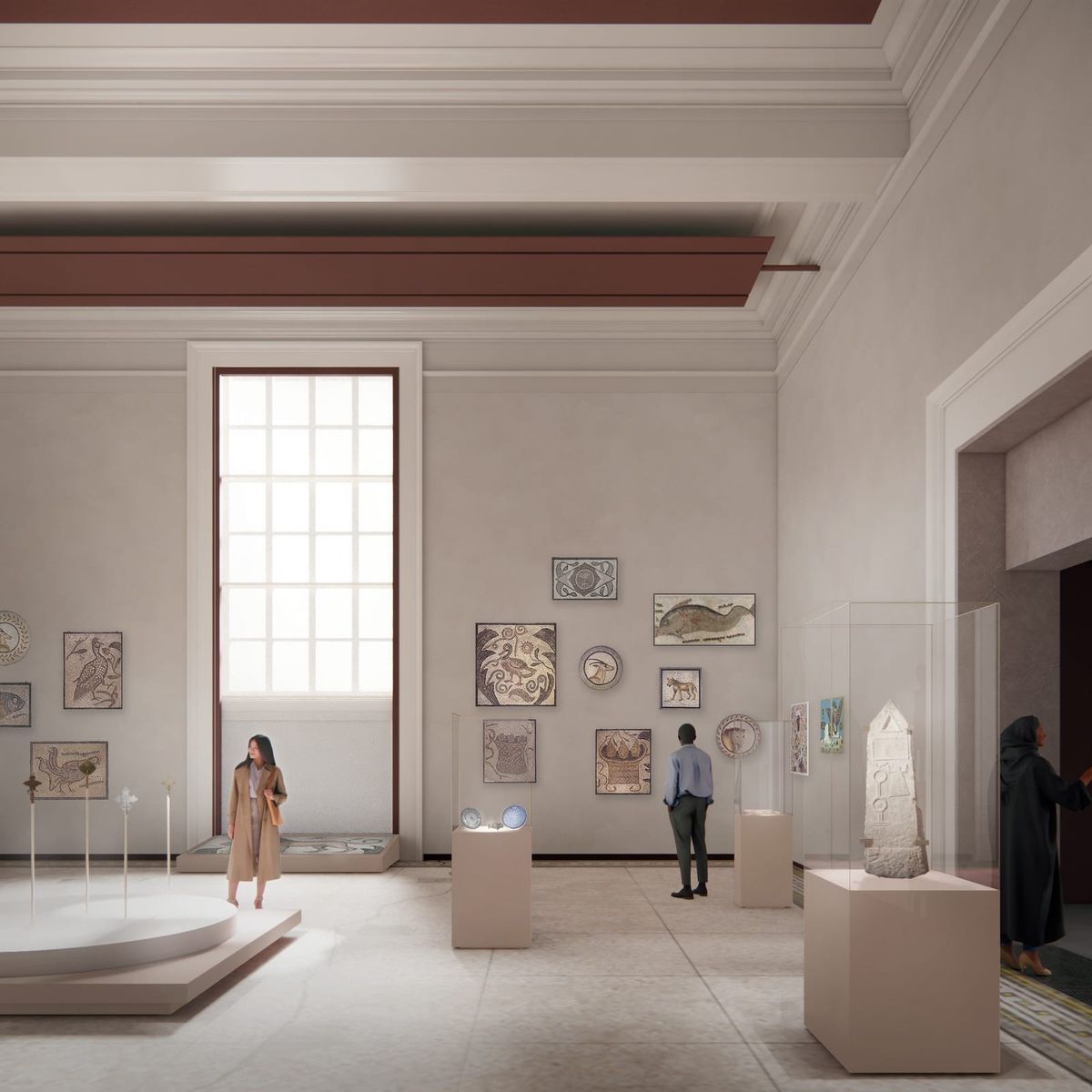
A decade after establishing the Arts of Africa as a separate department, the Brooklyn Museum is set to create a $13 million permanent space for its collection of over 4,500 African objects and artworks. The museum plans to convert unused storage on the third floor into a 6,400-square-foot exhibition area that will seamlessly connect with the Egyptian art galleries. This initiative aims to reunite the cultural and historical narratives of North Africa with the rest of the continent, as announced on March 24.
The redesign is spearheaded by Peterson Rich Office (PRO), a Brooklyn-based architectural firm, in collaboration with the museum’s exhibition design team and the department’s Curator Ernestine White-Mifetu, Associate Curator Annissa Malvoisin, and Curatorial Assistant Yara Doumani. In correspondence with Hyperallergic, both White-Mifetu and Malvoisin expressed enthusiasm for the new galleries. White-Mifetu highlighted how the attention to lighting, wall placement, and casework will enhance the display, while Malvoisin noted a careful planning approach through transdisciplinary and decolonial perspectives.
In preparation for the new gallery, the curators reviewed the collection and selected several previously unseen pieces for conservation. The inaugural exhibition will showcase over 300 works, organized around themes of material and cultural exchanges across the continent’s historical pathways. White-Mifetu and Malvoisin aim to transcend post-colonial and national boundaries, featuring regions like the Nile and Niger Rivers, the Mediterranean, and the Sahara desert.
Engagement with external scholars and community organizations provided insights into what collection pieces resonate with Black, African, and Afrodiasporic perspectives. White-Mifetu and Malvoisin highlighted the significance of Yoruba Ifa-related objects across the diaspora, alongside notable pieces like the Lulua people’s “Bwanga Bwa Cibola” sculpture and a Tuareg traveling sack. A mask from Sierra Leone, described as sci-fi-like, will also be featured.
While the new galleries will exclusively showcase the permanent collection, only a fraction will be on display at any time through rotating exhibitions. The museum’s African art collection, initiated in the early 20th century, now represents 2,500 years of history, despite facing challenges, including a $10 million deficit last year. The new galleries, opening in fall 2027, will further integrate the Arts of Africa with the museum’s broader collections, reinforcing connections with the Arts of the Islamic World and Ancient Egyptian art.