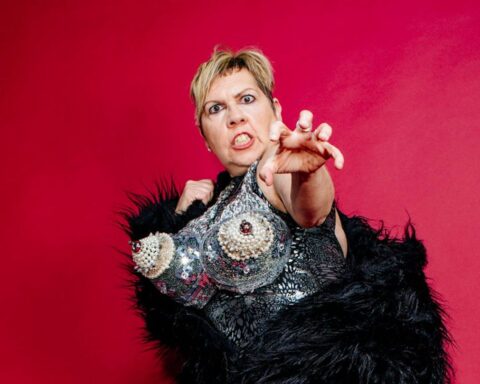
This past Saturday, March 28, along Prospect Park West, a striking magenta cape with the words “ABOLISH ICE” captured the attention of many. Created by Una Osato, an artist and sex educator, the cape was part of Brooklyn’s No Kings march, where Osato participated with her colleague. “There’s a never-ending need for functional art,” she shared with Hyperallergic, as onlookers admired her work throughout the event. Osato emphasized the power of collective action, stating, “When we’re together, we can be more courageous than we ever imagined we could be on our own.”
On that day, over eight million people participated in 3,300 protests nationwide, according to Indivisible, a grassroots organization involved in the coordination of the marches. This No Kings Day, the third in the series, has been reported as the largest single-day protest in U.S. history. Unlike previous years, where protests were centralized, this year saw participants demonstrating within their local neighborhoods, highlighting that issues of authoritarianism are pervasive at community levels.
Sign-making played a significant role, with the activist group ReSisters hosting a workshop on the Upper West Side. There, participants crafted personal signs, such as Julia Cohen’s, which featured the word kakistocracy. Cohen, a classical trombonist, explained her sign’s meaning: “a government by the worst, by the least qualified, by the most corrupt, by the most immoral.” Her motivation for joining the protest was clear: a mix of frustration and the desire for solidarity among like-minded individuals.
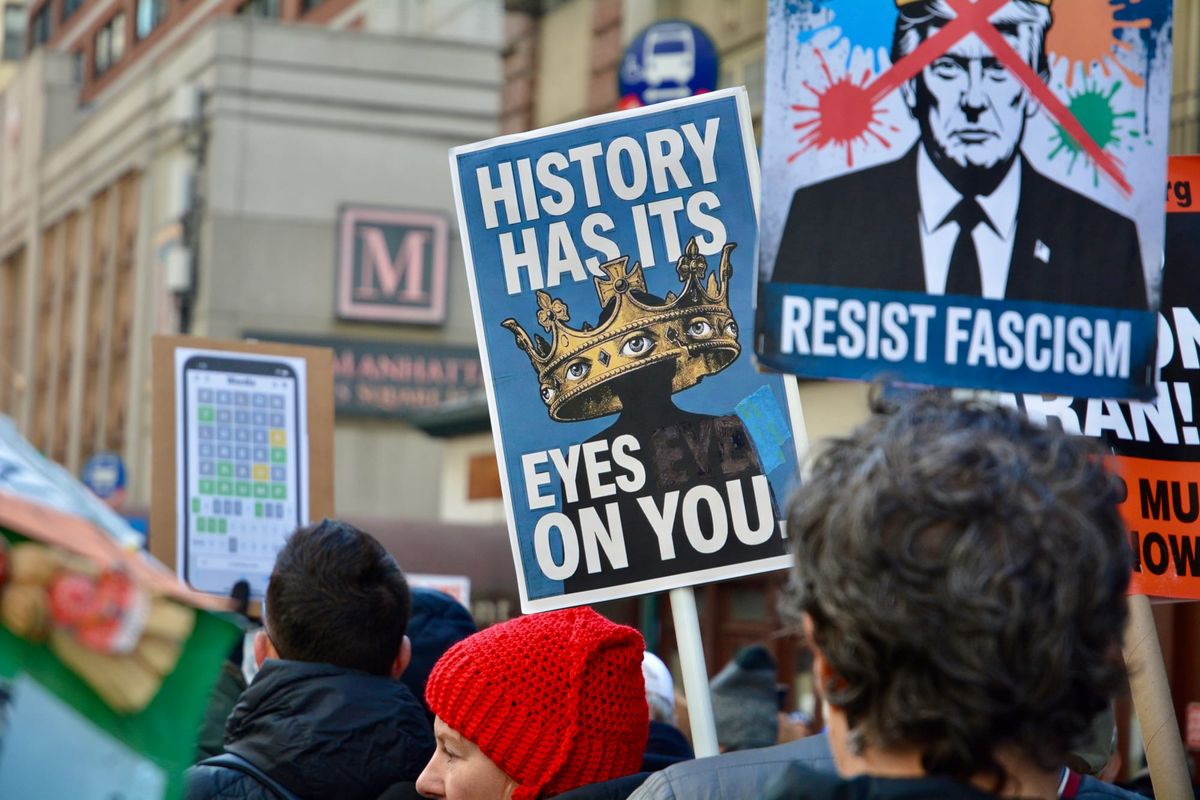
Demonstrators addressed various issues, from antiwar sentiments to immigration and authoritarian rule, with a broad array of artistic expressions. Some participants wore unique wearable art, including a papier-mâché Trump head and an umbrella adorned with political statements. Among those observing the movement’s visual culture was street artist Shepard Fairey, who distributed screen-printed posters titled “Domestic Terrorist” and “Paid Agitator” from his Los Angeles gallery, Subliminal Projects, and offered them as free downloads online.
Fairey’s posters, featuring masked ICE agents, aimed to reflect the administration’s aggressive stance on immigrants and protestors. “These prints serve as a mirror to those committing the dehumanizing attacks,” Fairey stated, advocating for a simple solution: treating all people with dignity. The No Kings movement continues to produce some of the most striking protest visuals in recent years.