In a poignant moment, poet and artist Pamela Sneed delivers a reading in which she envisions meeting her friends in urgent care. This event unfolds within Sacred and Profane, an exhibition co-presented with the visual and performance artist Carlos Martiel at the Leslie-Lohman Museum in Soho, in collaboration with BOFFO. The Leslie-Lohman Museum, recognized as the first of its kind globally, has emerged as a sanctuary for art created by and for those who are often marginalized and politically targeted. These groups include the LGBTQ+ community, as well as Black, Brown, Indigenous, and People of Color. As Sneed articulates, ‘We are all in urgent care.’
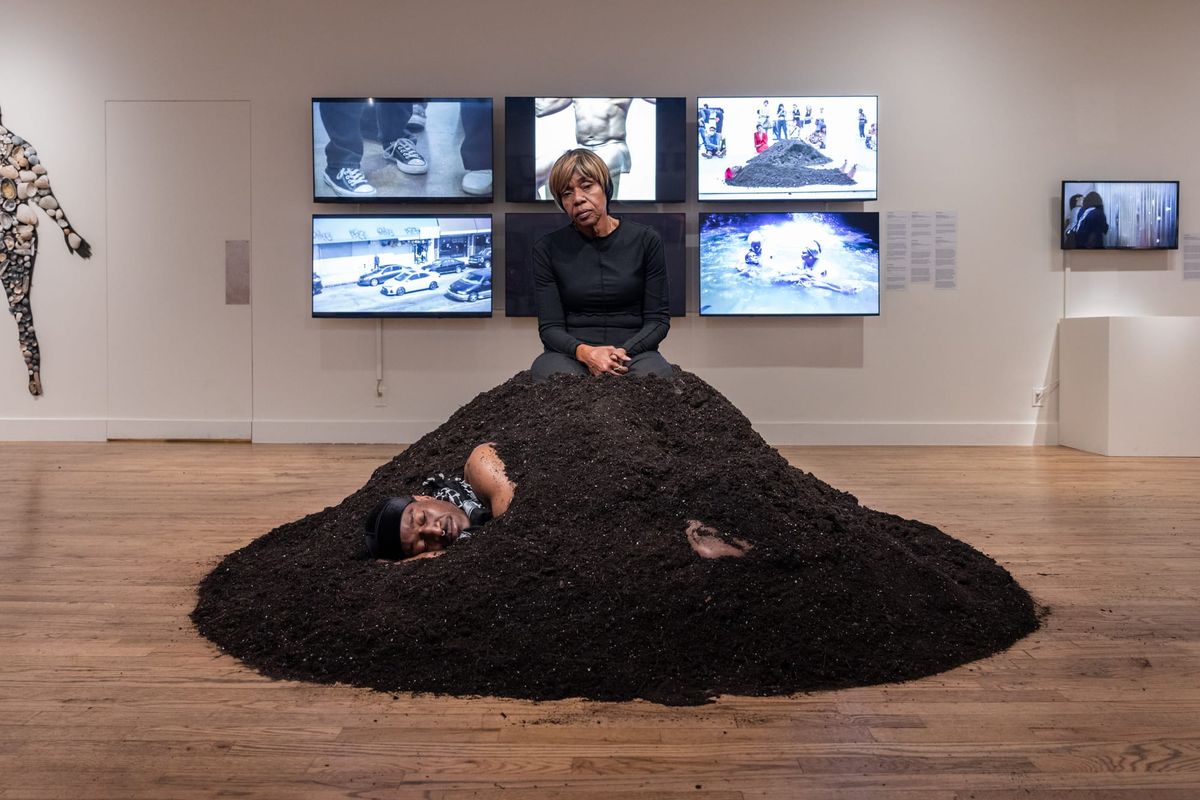
In a powerful performance, Martiel is almost completely buried beneath a pile of earth, with only parts of his face visible, while his mother sits atop the mound, silently observing. This imagery captures both their personal history and the broader context of Black maternal grief due to the premature loss of children to violence. The audience silently witnesses this performance titled ‘No Resurrection,’ which transitions the mood from urgency to a communal, wordless ritual of mourning. As the crowd mingles, some participants immerse their hands in the soil, symbolizing an improvised ceremony that seeks to unearth the past.
The Leslie-Lohman Museum’s dedication to fostering a vibrant performance art scene is evident through collaborations like that of Sneed and Martiel. Their partnership transcends generations and borders, challenging conventional time and space. The exhibition serves as a continuation of their residency on Fire Island, where Sneed explores the island’s slave trade history, bringing to light stories often overshadowed. The gallery walls feature silhouettes adorned with shells and other relics, reminiscent of past exhibits, such as Joshua Obawole’s ‘Waves,’ which used ocean water and human hair to address the transatlantic slave trade’s legacy.
Through the lens of Christina Sharpe’s concept of ‘residence time,’ Black queer and trans artists on both sides of the Atlantic are transforming grief into ritual and performance into community. While joy might seem an unlikely outcome of performance art, it becomes a form of resistance against oppressive forces, as emphasized by theorist José Esteban Muñoz. This joy, rooted in collective experiences, contrasts with enforced happiness and celebrates the shared resilience within the performance community.
As I reflect on the essence of a ‘scene,’ I recall missing my uncle’s homegoing, nearly prevented by distance and financial constraints. Ultimately, I moved mountains to be present, realizing that the soil I scattered was a symbol of joy. As Muñoz writes in ‘Disidentifications,’ our shared losses and radical joy fuel the vibrant Black queer and trans performance scene, offering a vision of a museum that embraces rather than dictates, fostering a future ‘downtown scene’ that celebrates diversity and community.