In Memoriam appears each Wednesday afternoon and pays tribute to members of the art world we have recently lost.
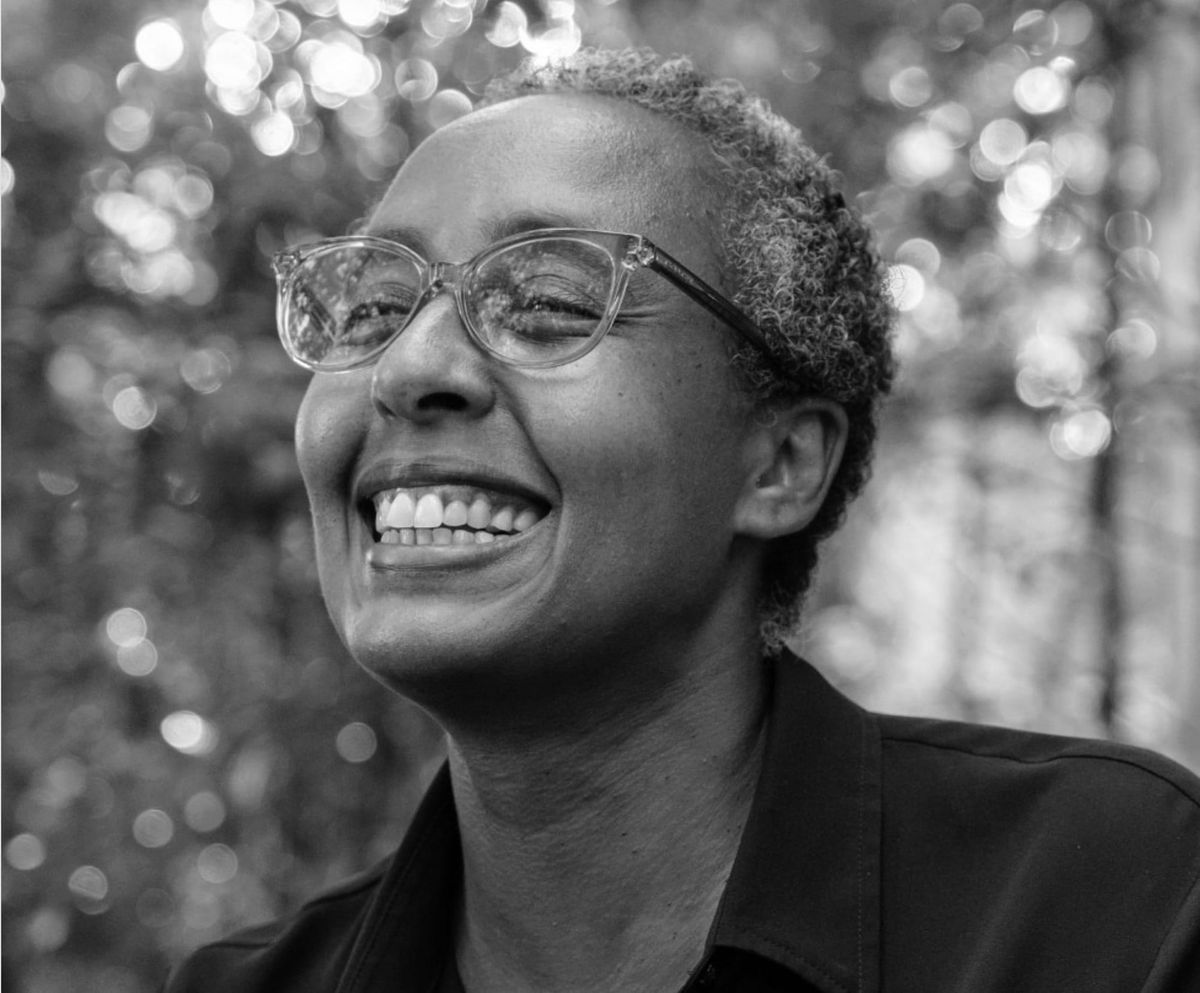
Betelhem Makonnen (1972–2026), an artist whose practice examined diasporic consciousness, worked across photography, video, public art, and installations to explore embedded memory and contemporary experience. In her 2019 video work “change means revolution in Amharic (person, place and thing),” she moves through trees wearing a mask of herself as a child. “On her own now,” Billie Anania wrote in a review in this magazine that same year, “the artist hides behind her former self, occasionally lifting the mask to face the world with caution.”
Makonnen’s work has been exhibited at the Contemporary Austin, Visual Arts Center at the University of Texas at Austin, Blanton Museum, and more. She taught on the faculty of the School of the Art Institute of Chicago, co-organized the Ethiopian video art platform Addis Video Art Festival, and co-founded the Austin, Texas-based art collective Black Mountain Project. “I am finding ways to actively align my practice to support and participate in the abolitionist movements of our times,” Makonnen wrote in a 2020 edition of Hyperallergic’s A View From the Easel column. “Our times are in our hands. Work, rest, repeat.”
Betye Saar (1926–2026), an assemblage artist who opened portals between worlds, mined the archive of Americana and transformed its most grotesque depictions of Blackness into mystical, visionary, and revolutionary works. Her 1972 piece “The Liberation of Aunt Jemima,” in which she placed a racist caricature inside a shadowbox and armed her with a gun and a hand grenade, launched the Black Women’s Movement, according to Angela Davis. Read the obituary.
Jenny Birchall (1948–2026), a British painter known for whimsical beach scenes, made playful paintings on wood set along the shores of Cornwall, England, bringing together rock stars, gay icons, other artists, and additional figures in bright, cheerful compositions. Richard Edgcumbe (1951–2026), a British scholar of European metalwork and curator, is remembered for his 1990 book The Art of the Gold Chaser in Eighteenth-Century London, a foundational text in the field. As a museum professional, he rose from assistant curator at the Peterborough Museum and Art Gallery to registrar at the National Museum of Wales in Cardiff and then assistant keeper of Metalwork at the Victoria and Albert Museum in London, where his final and most significant acquisition was a sapphire-and-diamond coronet designed by Prince Albert for Queen Victoria in 1840.
Joseph A. Helman (1937–2026), a gallerist and dealer, opened his eponymous gallery in St. Louis in 1968, presenting artists including Richard Serra, Roy Lichtenstein, and Frank Stella, and also mounting one of Allan Kaprow’s Happenings. In 1973, he joined with Irving Blum to create the influential gallery Blum Helman, retiring in 1995. Keith A. Morrison (1942–2026), a painter, printmaker, educator, and critic, drew inspiration for his watercolors, oils, acrylic paintings, and prints from his Afro-Caribbean heritage and Jamaican landscapes; his work is held by the Philadelphia Museum of Art, the National Gallery of Art, the Smithsonian American Art Museum, and more. He served as a dean and professor of painting emeritus at the Tyler School of Art and Architecture at Temple University and earlier became the first Black academic dean of art within a predominantly White art school in the United States in 1993, when he joined the San Francisco Art Institute.
Guy Tudor (1934–2026), a conservationist and wildlife illustrator, used pen and brush to depict thousands of birds in books such as A Guide to the Birds of Colombia (1986), A Guide to the Birds of Venezuela (1978), and Field Guide to the Songbirds of South America (2009), many of which became monumental and influential works. He received a MacArthur Award in 1990 for his work as an illustrator and conservationist. Martie Wing Young (1930–2026), a scholar of Asian art and curator, served on Cornell University’s faculty from 1959 through 1998 and played a central role in creating the university’s Johnson Museum of Art, including the commissioning of I. M. Pei as its architect. He also served as the museum’s interim director in the early 1990s.