LONDON and BRIGHTON, England — Nearly twenty years ago, Stacey Clare turned to stripping to support herself while studying environmental arts at the Glasgow School of Art. Coming from a working-class background in Northern England, she was drawn to the intersection of fine arts and sex work, inspired by figures like Annie Sprinkle and The Scarlot Harlot. Clare’s interest led her to propose a stripper life drawing class as a course project, which gained considerable attention within Glasgow’s art community. “I was challenging the notion of what constitutes art,” she recalled in an interview with Hyperallergic.
In Brighton, Sabrina Jade, a fellow sex worker and performer, shares Clare’s views on the challenges faced due to societal biases against sex workers. “Organizing is tough because of whorephobia,” Jade explained, emphasizing the need for community. In 2012, Clare revisited the idea of stripper life drawing at the White Horse in East London. This initiative evolved into the East London Stripper Collective (ELSC), a group advocating for sex worker rights through regular life drawing sessions.
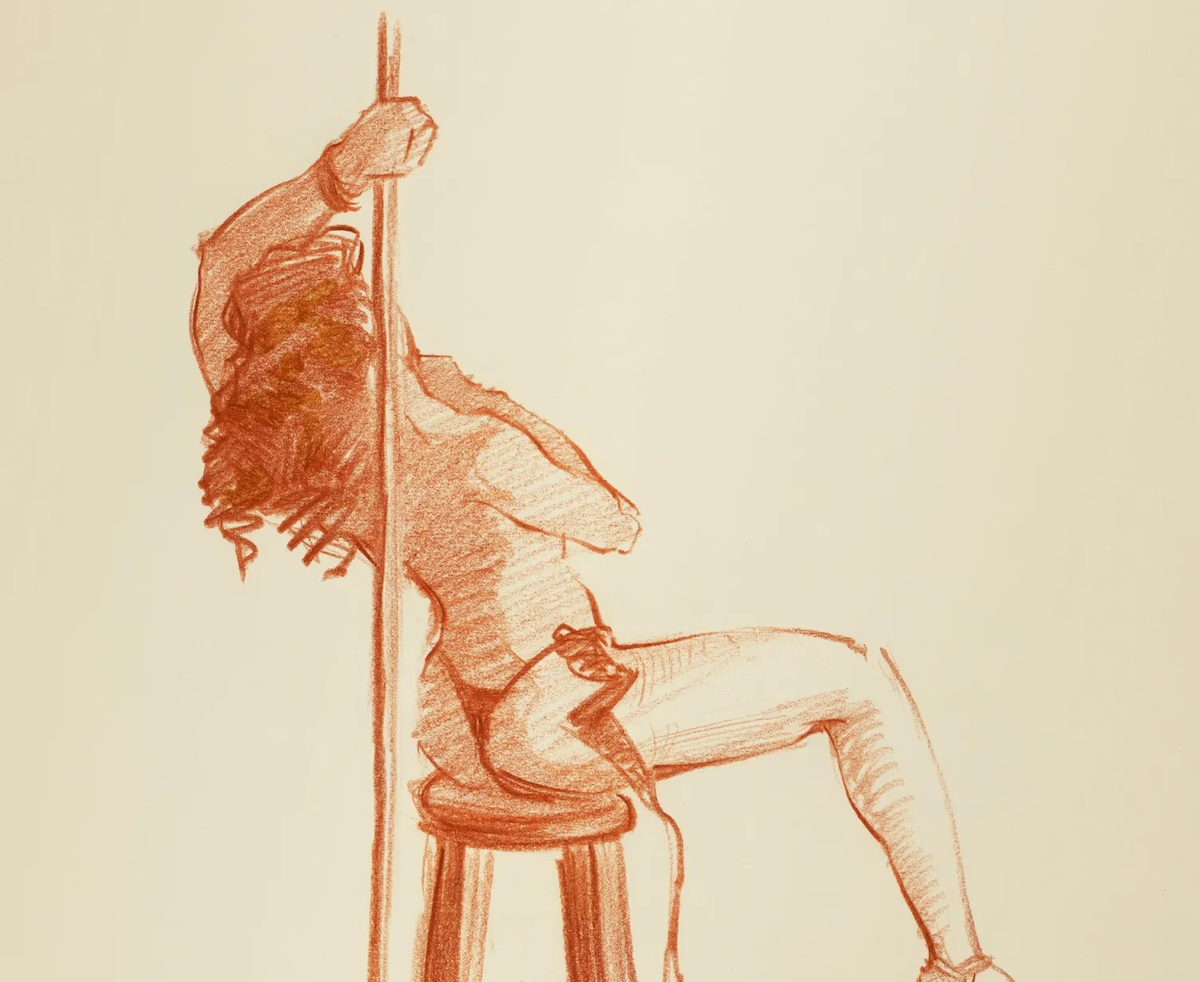
On May 12, the ELSC hosted a life drawing event at the Crown and Shuttle pub, featuring pole dancer NK Pole. Attendees sketched fervently as NK held poses to music, embodying the collective’s ethos that the division between art and sex work is artificial. Clare stated, “You can’t hide behind the identity of ‘you’re here as an artist’ and don’t want anything to do with the sex industry.”
The ELSC’s life drawing classes have become a staple in the local arts scene, attracting over 20 artists per session. Patricia Cervantes, a participant, joined due to the collective’s political stance, finding empowerment in how sex workers assert their presence. Clare noted the minimal resistance faced in London, contrasting this with challenges from art institutions like the Royal Academy of Arts, which initially hesitated hosting a session due to legal concerns.
Despite occasional institutional pushback, Clare highlighted the collective’s efforts in reclaiming their narrative, stressing that the resistance often comes from higher-ups in the art world. “It’s not the artists, but the curators and commissioners who are concerned about their brand,” Clare remarked, advocating for the recognition of sex work and art as legitimate professions.