This story was copublished with Next City, a nonprofit news organization focused on solutions for more sustainable, accessible, inclusive, and equitable cities.
On a sunny August afternoon, riding the perimeter of Prospect Park in Brooklyn, New York, feels effortless: the pedal strokes on a Citi Bike are smooth as I move through Park Slope and most of Windsor Terrace. But once I reach Prospect Lefferts Gardens, also known as Flatbush, the experience changes sharply, and by the time I enter the park at Lincoln Avenue, where Flatbush begins, my ability to keep moving has been dramatically reduced. The shift is so abrupt that I have to get off the bike.
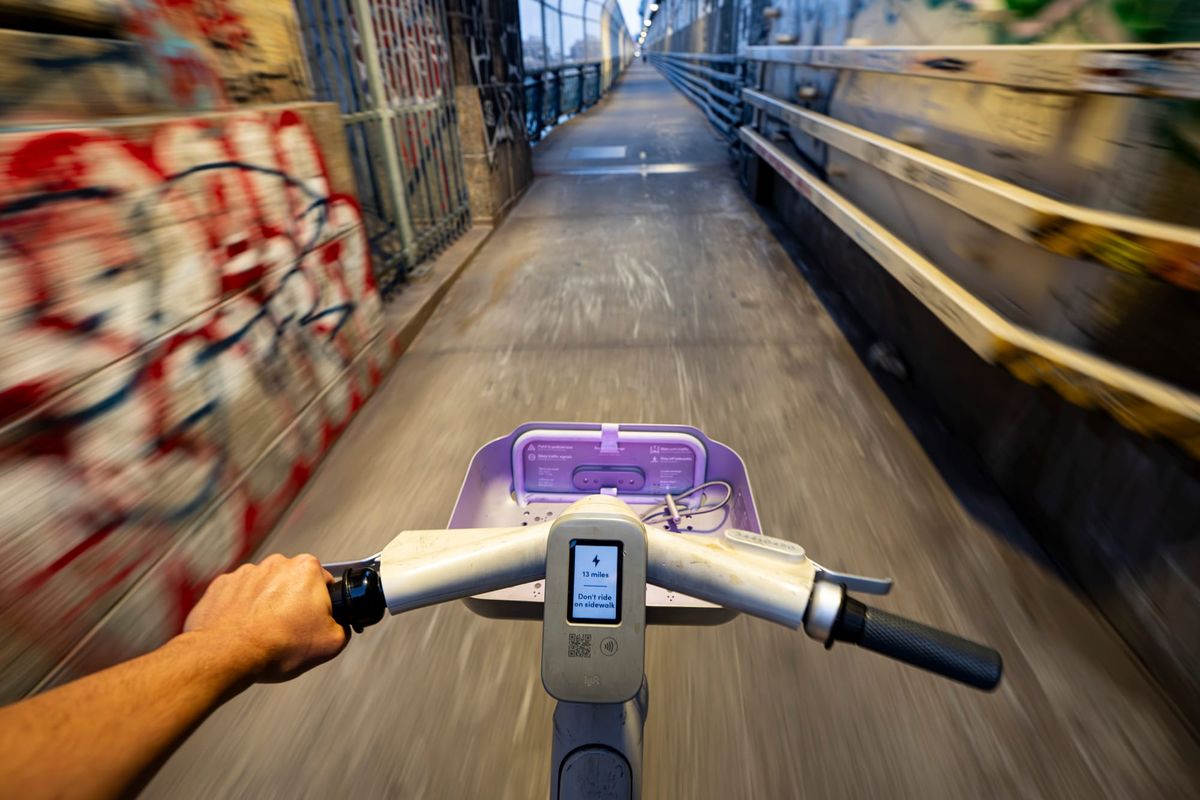
The e-bike I’m on has a device attached that alters the brakes according to the level of rent affordability in the neighborhood being crossed. That device is part of an artwork titled “Ground Truth,” the newest project by Justin Blinder and the centerpiece of an exhibition with the same name. By translating housing inequity into a physical sensation, the work makes New York City’s affordability crisis impossible to ignore.
Blinder is a researcher, biker, scientist, and, at his most vivid, an artist. Though the device is not publicly available, he built versions for both Lyft manual bikes and e-bikes, and he has ridden more than 35 miles across New York City with it installed. The exhibition uses the device to explore how inequality is experienced not just statistically, but bodily.
Funding for the work came from Idle Hands, an art incubation program founded in 2025 by Linden Renz and Gabrielle Sirkin. Blinder was the inaugural recipient of the Idle Hands Incubation award, which provided $10,000 as well as extensive professional support to help bring Ground Truth to life.