In Memoriam appears every Wednesday afternoon and pays tribute to those the art world has recently lost.
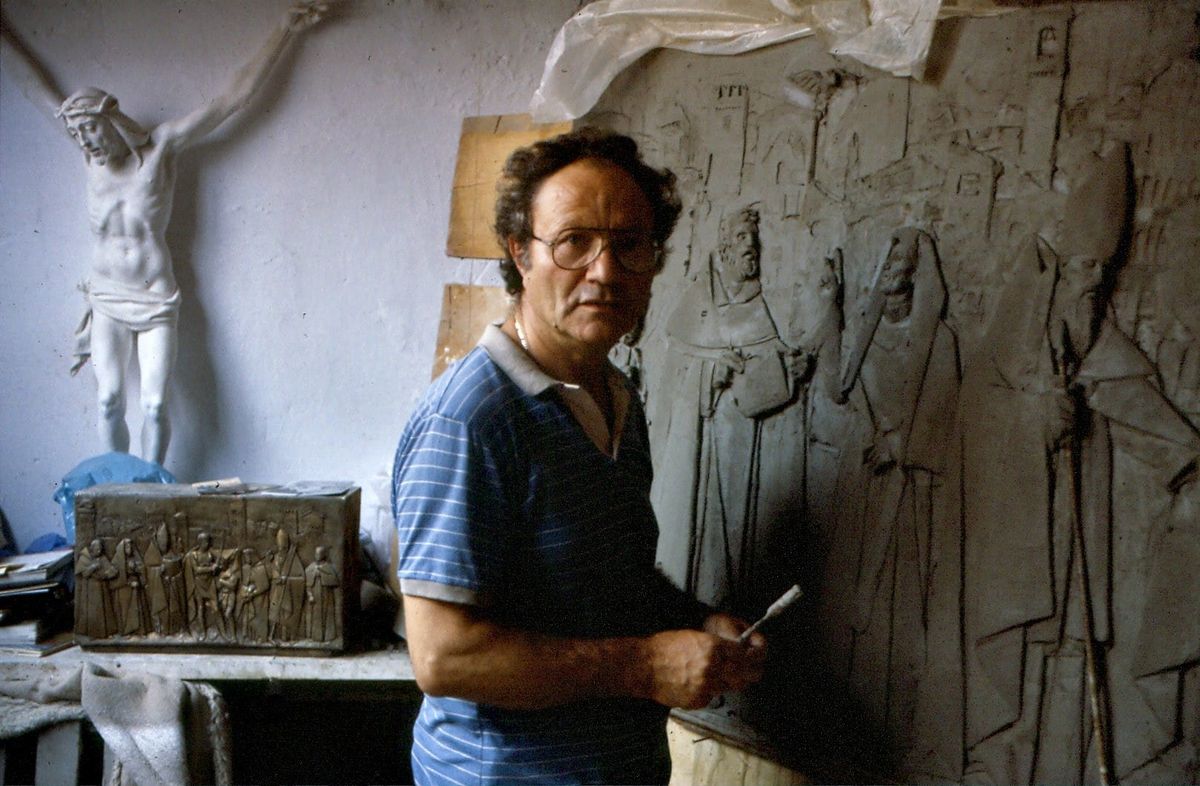
Bruno Lucchesi (1926–2026), a figurative sculptor, spent seven decades shaping the human figure in bronze, terracotta, marble, and other materials. His works are represented in the collections of the Metropolitan Museum of Art, the Whitney Museum of American Art, the Smithsonian American Art Museum, and many others. “His genius is to express a joy of life even when he shows conditions that create misery and suffering,” photographer and writer David Finn said in a statement, “for Lucchesi’s subjects seem to feel that being alive is its own reward.”
Yaacov Agam (1928–2026), the Israeli kinetic artist, created sculptures, paintings, and public works marked by a mystical quality, including what is described as the world’s largest menorah and a singing, fire-breathing fountain. He was featured in the landmark exhibition The Responsive Eye at the Museum of Modern Art in 1965 and later received a retrospective at the Guggenheim Museum in New York in 1980. Chua Mia Tee (1931–2026), a Singaporean social realist painter and one of the country’s most celebrated artists, helped found the Equator Art Society in 1956, which rejected Western modernism in favor of realism.
Chua Mia Tee later received Singapore’s highest art honor, the Cultural Medallion, in 2015, and was the subject of a major retrospective at the National Gallery Singapore in 2021. Dion E. Clarke (1928–2026), an arts advocate and entrepreneur who championed Black artists, spent his career broadening access to collecting and opportunities for Black artists, and founded the Harlem Fine Arts Show in 2009. That exhibition became the largest traveling African diasporic art exhibition in the United States.
Edward Lucie-Smith (1933–2026), the British art critic and poet, began publishing art reviews and artist profiles in the 1970s, writing about figures such as Andy Warhol and Jean-Michel Basquiat. He also authored more than 100 books on topics including the male nude, sexuality in art, an art dictionary, and children’s books, and curated exhibitions ranging from surveys of British art to retrospectives of Lin Emery and George Dunbar. Rudolph “Rudy” Montanez (1942–2026), an artist and educator, had work on paper and sculptures acquired by institutions including the Yale University Art Gallery, and appeared in the 1975 Whitney Biennial as well as multiple exhibitions at the Museum of Modern Art.
Pat Oliphant (1935–2026), the political cartoonist known for targeting the powerful, transformed the form with cartoons that satirized presidents and were syndicated in more than 500 newspapers at the height of his career. He lampooned politicians, priests, and other figures in authority, and also exhibited drawings and sculptures. He won the Pulitzer Prize in 1967.