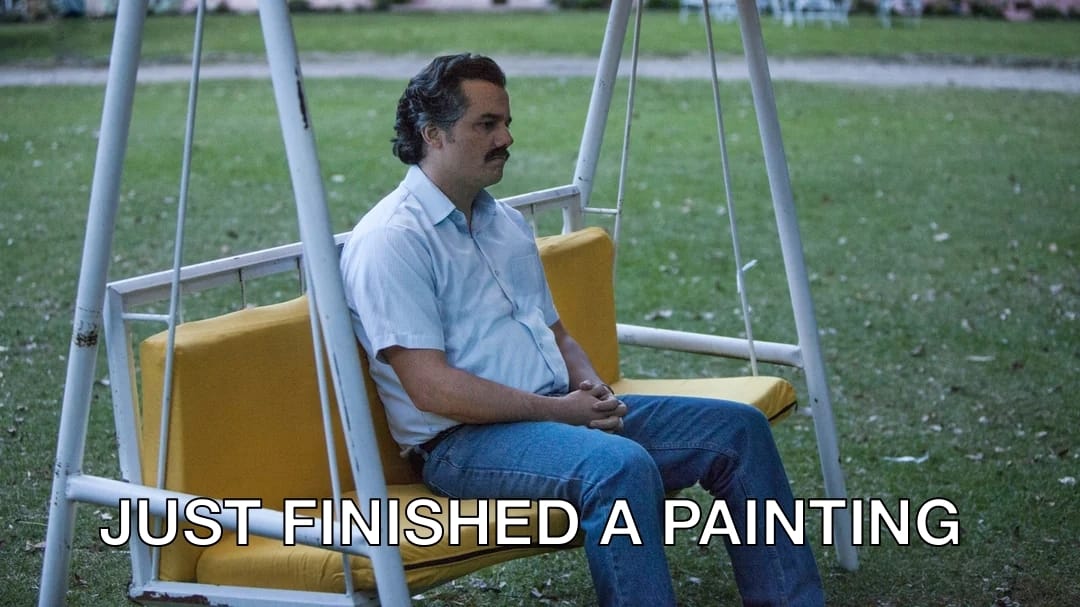
Artists are all too familiar with the void that follows the completion of a significant project. The sense of being drained and fatigued is undeniable. A recent study published in The Journal of Positive Psychology has coined this feeling a ‘creative hangover.’ Researchers conducted a 13-day survey involving 355 adults and discovered that professional artists often experience negative emotions the day after their most creative periods, despite the fact that engaging in their art enhances their immediate emotional states.
Led by Kaile Smith and Jennifer Drake from the Department of Psychology at the Graduate Center of the City University of New York, the study divided participants into two categories: 202 creative practitioners and 153 comparison participants. Creative practitioners were defined as those earning income from their art, formally studying a creative discipline, or dedicating significant time to creative hobbies. In contrast, the comparison group participated in creative activities less intensively, for pleasure rather than necessity.
The researchers employed the PERMA model to assess well-being, which looks at Positive emotions, Engagement, Relationships, Meaning, and Accomplishment. Both groups reported feeling better on days they engaged in creative activity, citing enhanced emotions, meaning, and social connections. However, the following morning, the experiences diverged: casual creators often maintained the positive mood, while creative professionals faced a downturn.
Smith noted that creativity is often viewed as a simple path to improved feelings, but the study reveals a next-day emotional toll for professionals. The intensity of professional creative work requires rigorous self-regulation, which can be mentally exhausting, especially when facing creative blocks or criticism. Neurobiological factors might also contribute, as high levels of creative engagement could deplete certain brain resources.
Drake cautioned against the stereotype of the tortured artist, emphasizing that creativity’s effects are nuanced. Interestingly, creative practitioners began with higher baseline well-being compared to the comparison group, suggesting that while the creative routine can be demanding, it also offers significant psychological benefits. The study highlighted that negativity inspired more creativity the following day for casual creators, unlike professionals, whose creative output remained consistent regardless of their emotional state.