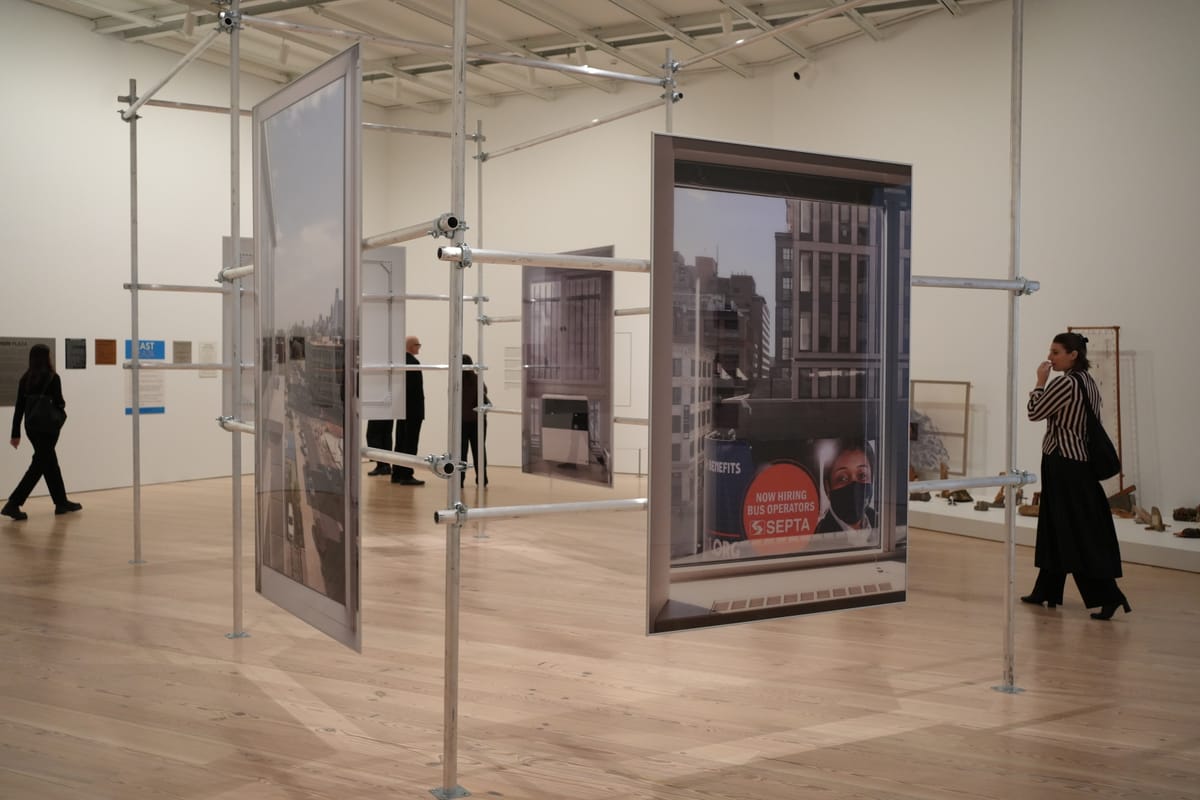
The Whitney Biennial is renowned for capturing the essence of contemporary American art, and the 2026 edition is no exception. Curated by Marcela Guerrero and Drew Sawyer, alongside Beatriz Cifuentes and Carina Martinez, this year’s event features 56 artists, duos, and collectives. Eschewing a central theme, it instead highlights concepts of ‘relationality’ through family, technology, and mythology. This approach feels refreshingly unpretentious, offering a moody and contemplative experience. However, whether it adequately addresses the present moment remains an open question. As the Biennial opens to the public on Sunday, March 8, Editor-in-Chief Hakim Bishara shares initial thoughts on what stands out, what falls short, and what leaves us pondering.
Editor-at-Large Hrag Vartanian notes the success of immersive projects like Basel Abbas and Ruanne Abou-Rahme’s “Until we became fire and fire us” and Oswaldo Maciá’s “Requiem for the Insects.” These works effectively transport viewers into unique artistic worlds. However, Vartanian criticizes the Biennial for lacking a cohesive curatorial vision, likening it to a gallery stroll rather than a groundbreaking exhibition. The commercial art market’s influence is apparent, as many works prioritize aesthetics over deeper engagement with contemporary issues.
Associate Editor Lakshmi Rivera Amin highlights moments of delight, such as Sula Bermudez-Silverman’s glass sculptures and Teresa Baker’s tapestries. These pieces invite viewers to reflect on time and relationships. Yet, Amin feels that the exhibition’s exploration of American art’s meaning falls short, with some critiques feeling hollow. The pairing of Andrea Fraser and Carmen de Monteflores offers a rare exception, providing genuine insight into artistic connections.
Associate Editor Lisa Yin Zhang appreciates the wonder infused into the Biennial, noting the engaging environments created by artists like Young Joon Kwok and Malcolm Peacock. However, Zhang questions the depth of some works, which rely on complex concepts without clear execution. The exhibition’s Instagrammable nature raises concerns about its depth, though its ability to captivate remains undeniable.
Overall, the 2026 Whitney Biennial presents a mix of engaging and thought-provoking works, yet faces criticism for lacking strong thematic cohesion. As the art world grapples with global challenges, the Biennial reflects on the intimate gestures of care and connection, leaving viewers to ponder the role of art in today’s society.