LOS ANGELES — This week marks the 96th birthday of Dolores Huerta, a pivotal figure in the founding of the United Farm Workers (UFW) during the 1960s. In recognition of her continuing influence, Plaza de la Raza, a Chicano cultural hub, has unveiled an exhibition titled DOLORES. The show is dedicated to celebrating the legacy of this labor leader. The New York Times recently released a report on March 18, a day prior to the exhibition’s debut, which included allegations of sexual abuse by UFW co-founder Cesar Chavez against Huerta and two girls during his tenure in the movement. This revelation has triggered a rapid reassessment, leading to the removal of Chavez’s name and image from public spaces.
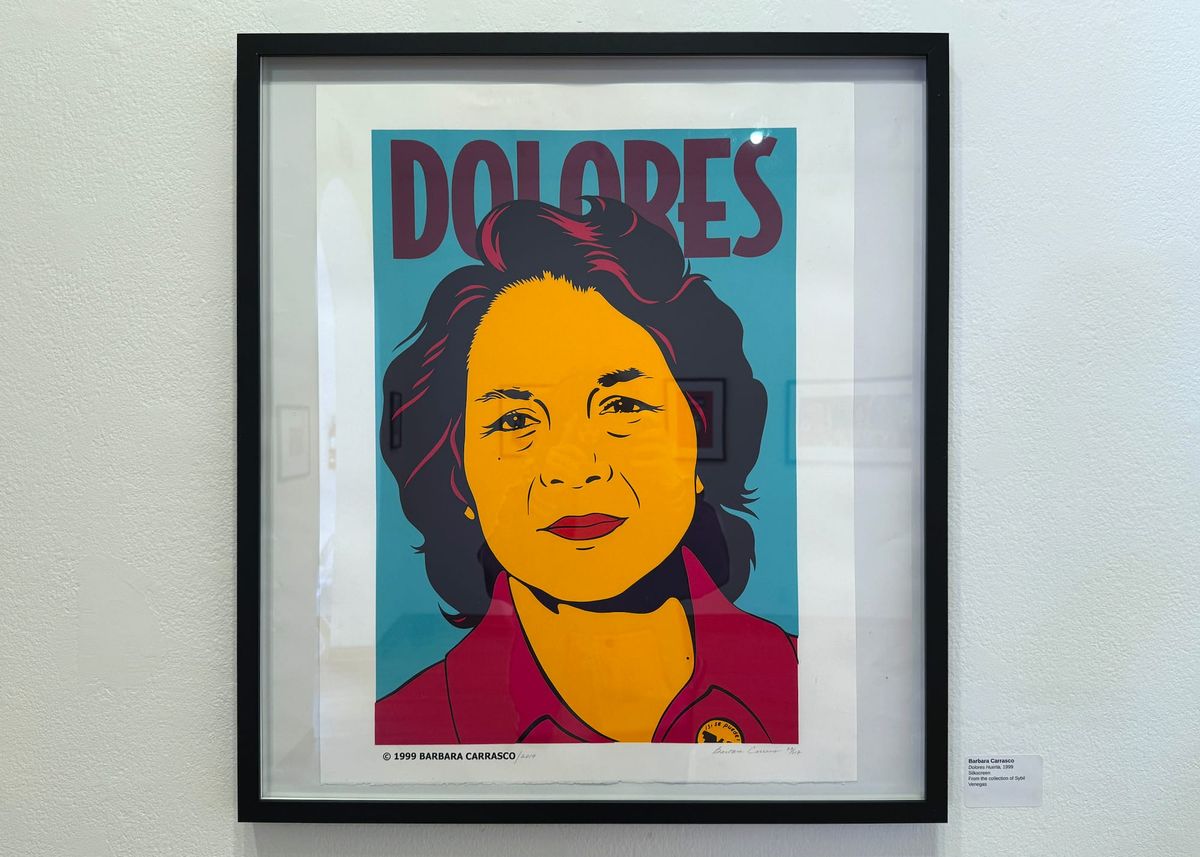
In response, artists have painted over Chavez’s likeness in murals, California has renamed a holiday previously honoring him to “Farmworkers Day,” and there is a proposal to rename a street in East Los Angeles after Huerta. The DOLORES exhibition emphasizes that the UFW narrative can thrive without Chavez as its focal point. It highlights Huerta’s accomplishments through various artistic mediums such as screenprinting, photography, video, collage, and painting. A notable piece by Barbara Carrasco, a 1999 silkscreen print, depicts Huerta adorned with the UFW Aztec eagle logo, a symbol of valor and pride within Chicano and Latinx communities.
Another striking piece is an ink drawing by Vincent Valdez, “Dolores, From the New Americans Series for ACLU Tx” (2025), capturing Huerta’s steadfast gaze as she faces new challenges. The exhibition extends beyond portraits, focusing on migrant workers, the fruits of their labor, and contemporary Chicanx and Latinx cultures. Jean Cornwell’s post-impressionist painting “Earth Mothers” (2016) pays homage to the arduous work of farm laborers, while Daniel Gibson’s “Strawberry Mom” (2026) depicts defiance against authority.
Arthur Carrillo’s serene paintings of vegetables, such as “Maiz II” (2026), pay tribute to ancestral agriculture and are complemented by Paige Emery’s abstract scene “Medicine of the Land, Tended by Hands of Remembrance” (2026). The most poignant pieces in DOLORES align with Huerta’s focus on the everyday lives of farmworkers rather than leaders, capturing the essence of daily life in Los Angeles. Works by artists like Jonah Elijah and Yreina Cervántez reflect the ongoing impact of the UFW’s advocacy for improved working conditions.
While acknowledging Huerta’s lifelong dedication to securing farmworkers’ rights, DOLORES also highlights the broader social victories achieved, including basic rights such as education and leisure. However, the specter of deportation remains, particularly under the heightened immigration enforcement during Trump’s administration, which has seen increased protests in Los Angeles. DOLORES will be on display at the Plaza de la Raza Boathouse Gallery until April 12, curated by Glenna Avila and Harley Cortez.