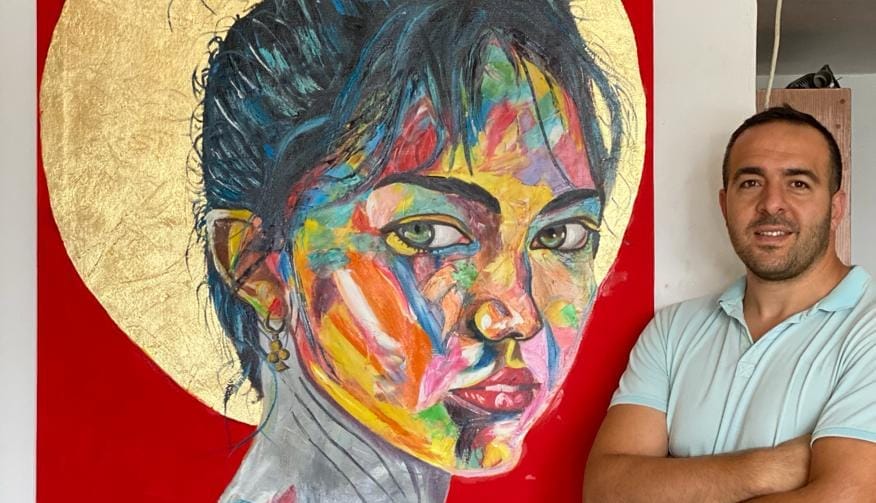
Lebanese artist Ali Sbeity was reportedly killed during an Israeli airstrike in the southern town of Kafra, as confirmed by local media and the international organization Artists at Risk Connection (ARC). Sbeity was known for his vibrant portraits and landscapes depicting his rural hometown in Southern Lebanon, frequently sharing these works on his Facebook page. The Beirut-based Al-Akhbar news outlet stated that Sbeity lost his life in an Israeli bombing of Kafra, an area in Southern Lebanon where air strikes have recently increased.
Julie Trébault, ARC’s executive director, confirmed Sbeity’s death to Hyperallergic through a “local partner” in Lebanon. Additionally, ARC highlighted a Facebook comment from someone claiming to be Sbeity’s cousin, which corroborated the news of his death in response to a post announcing it. Hyperallergic has reached out to this user for further comment but has not yet received a reply. The renewed Israeli strikes in Lebanon, which began earlier this month, are linked to the fallout from the U.S.-backed assassination of Iran’s former leader, Ali Khamenei.
The southern region of Lebanon, Sbeity’s home, has been severely impacted by Israeli offensives, leading to the displacement of over a million people and the death of more than 1,000 since the initial U.S. and Israeli attacks on Iran on February 28. According to Lebanon’s governmental news agency, Kafra was struck on March 19 in the afternoon, although the target of the attack was not specified. Al-Akhbar noted that Sbeity was active in local art exhibitions and contributed murals to schools in Beirut. He also crafted olive oil soaps, woodworks, and painted pottery, drawing inspiration from Iranian, European, and Russian art styles.
“Ali Sbeity painted the South of Lebanon not as a landscape, but as a living memory of loss, resilience, and quiet beauty,” Trébault remarked. “His killing is a heartbreaking loss not only for his family and community but also as part of a wider trend where artists and cultural workers face death, displacement, or silencing amid conflict.”