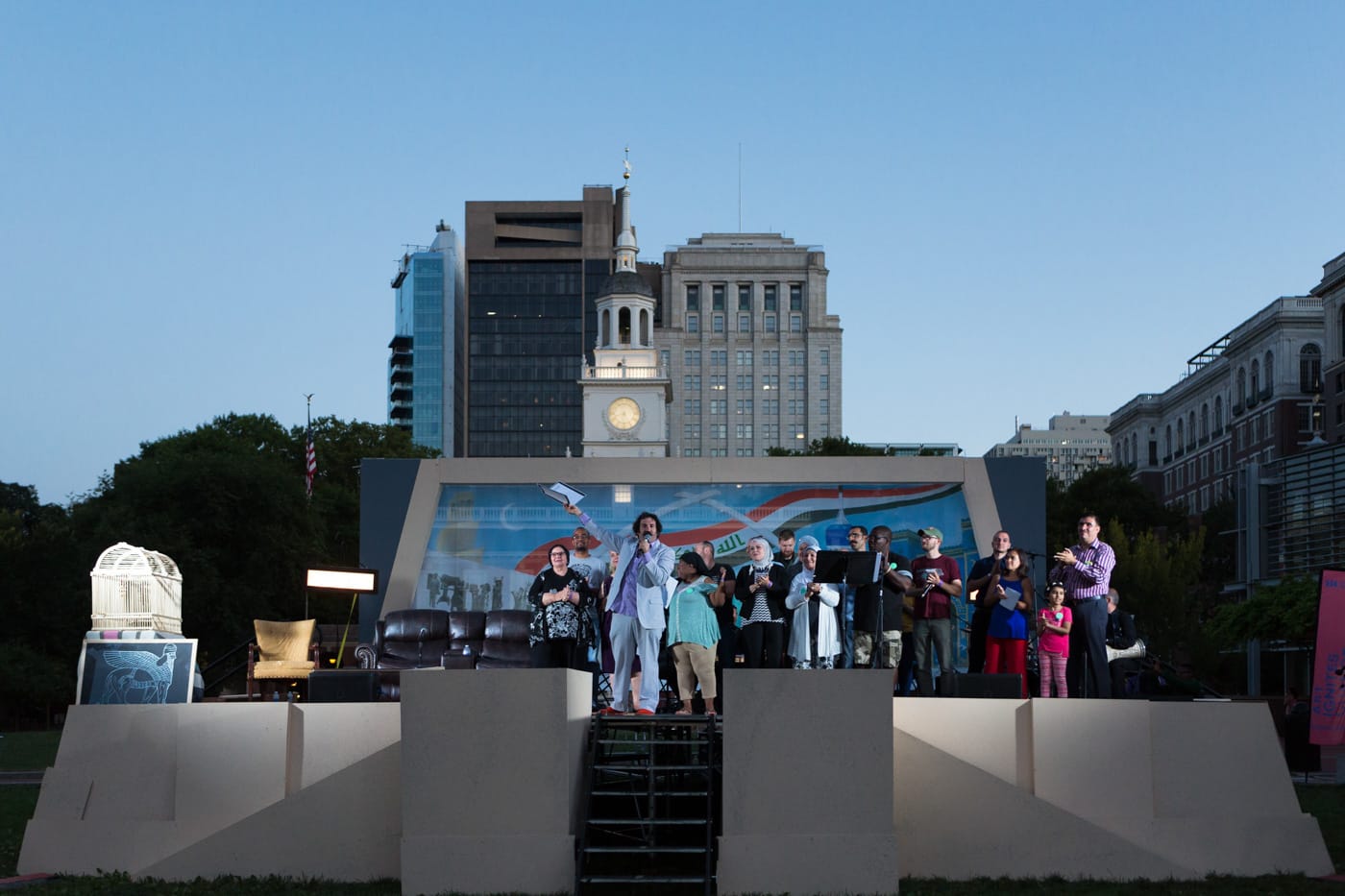
PHILADELPHIA — In the aftermath of the Iraq War, fostering an understanding and appreciation of Iraq’s lost cultural elements appears as a form of reparation, especially for those closely tied to the conflict. Michael Rakowitz initiated a live public broadcast on Philadelphia’s Independence Mall in July 2017 for his project Radio Silence, a podcast series exploring Iraqi narratives, which had started its weekly broadcast on April 15. The event saw Iraqi immigrants, military veterans, and local artists come together to honor Iraqi culture, enjoying cuisine from Amasi, Philadelphia’s sole Iraqi restaurant, on a stage designed to echo the Ziggurat of Ur with a backdrop of the Arc of Triumph monument in Baghdad, right in the heart of American democracy.
Despite its successful public launch, Radio Silence faced challenges due to the political environment. When the Trump administration reinstated the travel ban in June, many original participants, concerned about the anti-Muslim implications and potential impacts on their asylum or residency statuses, chose to limit their involvement. Michael Rakowitz, an Iraqi American, explained that fears of political repercussions and dangers to their families both in the US and Iraq led to several performers withdrawing, resulting in the project being paused for nine months.
Produced by Philadelphia’s Mural Arts Program, Radio Silence interweaves stories of Iraqi refugees and US military veterans, guided by the late Iraqi radio broadcaster Bahjat Abdulwahed. His narrative recordings, combined with interviews, dramatizations, poetry, and music, create a rich tapestry of nostalgia and creativity, addressing themes from the trauma of war to fictional tales like that of Dolphin Man, an Iraqi superhero.
The podcast’s first episode, “Speechlessness,” introduces Abdulwahed, who, despite his death in 2016, remains a central figure throughout the series. Having fled to Philadelphia as a refugee in 2009, Abdulwahed left behind a significant broadcasting legacy. The series explores the themes of suppression and silence, reflected in the anonymity chosen by many Iraqi contributors compared to the openness of military veterans, highlighting the ongoing political sensitivities.
Radio Silence continues Rakowitz’s exploration of Iraq’s contemporary identity amid dictatorship, migration, and conflict. The project, tailored for Philadelphia due to its significant Iraqi refugee population and symbolic ties to US history, integrates non-Iraqi voices, fostering a dialogue through collaboration with Warrior Writers, a local veteran support group. Despite losing significant contributions due to political risks, Rakowitz remains dedicated to the project, valuing the protection of collaborators’ lives over the continuation of the series.