Ryan Vizzions, a photojournalist based in Atlanta, was in Minnesota when poet and mother Renee Nicole Macklin Good was tragically killed by federal immigration agents. For the past five years, Vizzions has been traveling in a small van across the United States, conducting a photographic project examining the essence of being American across all 50 states. He was capturing images at Lake Superior when he received news of Good’s death and promptly drove to the location where she was shot in her vehicle. Vizzions arrived just in time for a large vigil held in her memory.
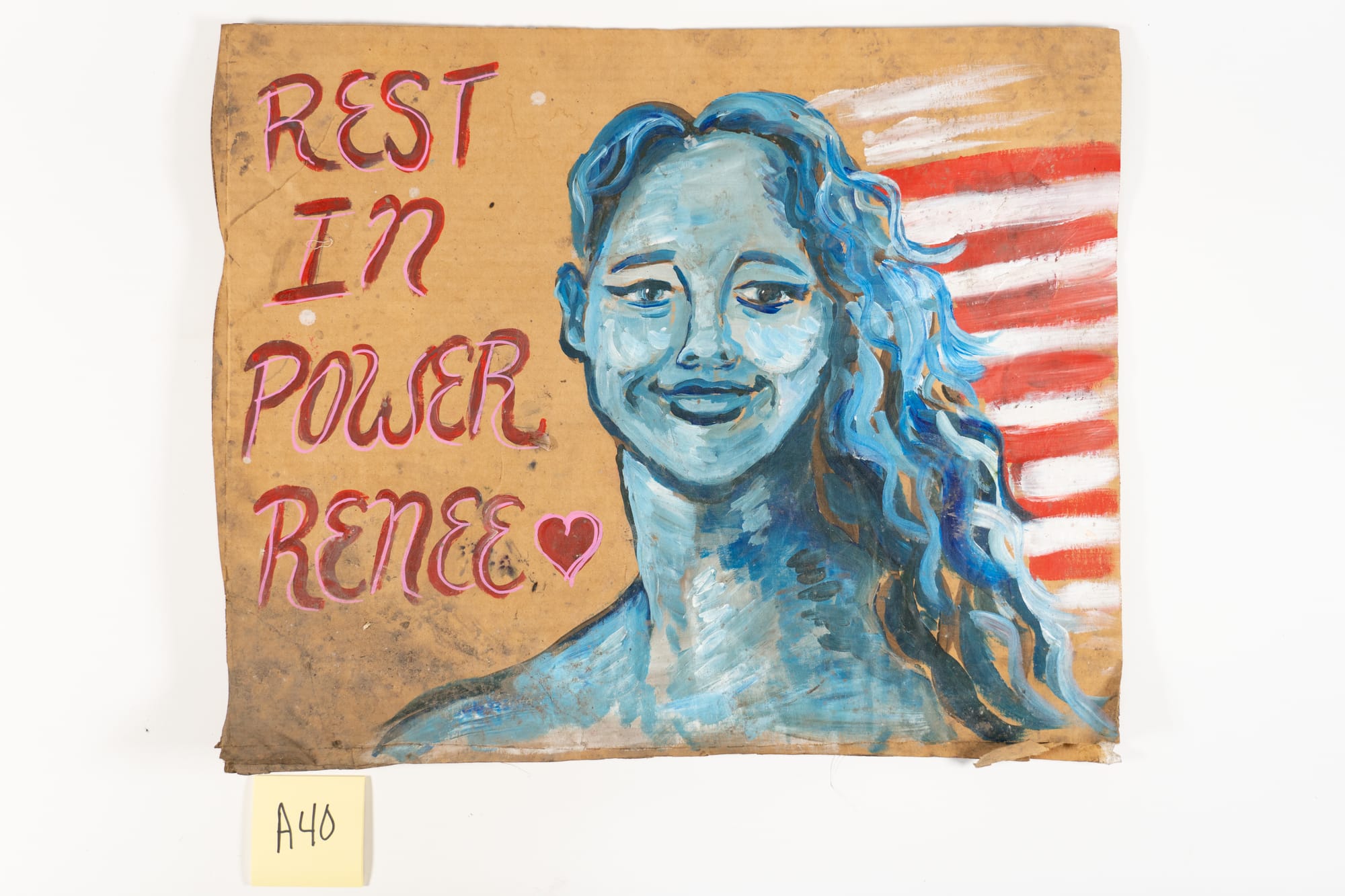
Nearly two months since Good’s passing, Vizzions remains in Minnesota, having shifted his role from observer to active participant. He has taken on the role of the unofficial archivist of Good’s memorial, where mourners have left numerous objects, notes, and artworks as expressions of protest and grief. “I want to make sure people in the future understand what happened here,” Vizzions shared with Hyperallergic. To date, he has photographed around 200 items, relocating delicate pieces to a “secret location” in the city’s southern area, while leaving others like plastic signs for public viewing.
Alongside local community members, Vizzions is preserving the site by removing decaying elements such as flowers. One notable item he documented was a note from a Department of Homeland Security employee. “Ms. Good,” it begins, “We will never forget you. Rest in peace and power. Your work on earth is done. Your legacy lives on.” The card, adorned with stickers, was especially surprising given the association with the institution involved in her death. Vizzions transitioned from observer to participant after an attempt was made to set the memorial on fire, and harsh winter weather threatened the integrity of the site.
On February 18, someone attempted to ignite the memorial with gasoline, but Vizzions and community members guarding the site at night managed to extinguish the flames before they spread. Accustomed to photographing events like the Standing Rock protests, Vizzions remarks that he typically maintains a distance from the communities he covers. However, in this instance, he felt a compelling need to engage directly. Vizzions is in contact with Good’s family through a mediator and intends to honor their preferences regarding the future of the memorial’s collection.
Vizzions is digitizing the memorial items so that those unable to visit can still access them. “It’s really important for me to make sure that the folks who couldn’t be here, and the family who couldn’t come to the vigil because of everything happening, are able to access the memorial in person or online,” he explained. He recalled a poignant note in the snow that moved him to tears, which read: “We all carry whistles now. I hope you hear them. I hope you’re home. We all carry each other now. I know you’re with us. I know you’re home.” The note references activists’ use of whistles to warn of immigration raids, highlighting the significant impact of these messages among the many tributes left at the site.