In Memoriam appears every Wednesday afternoon and pays tribute to figures recently lost in the art world.
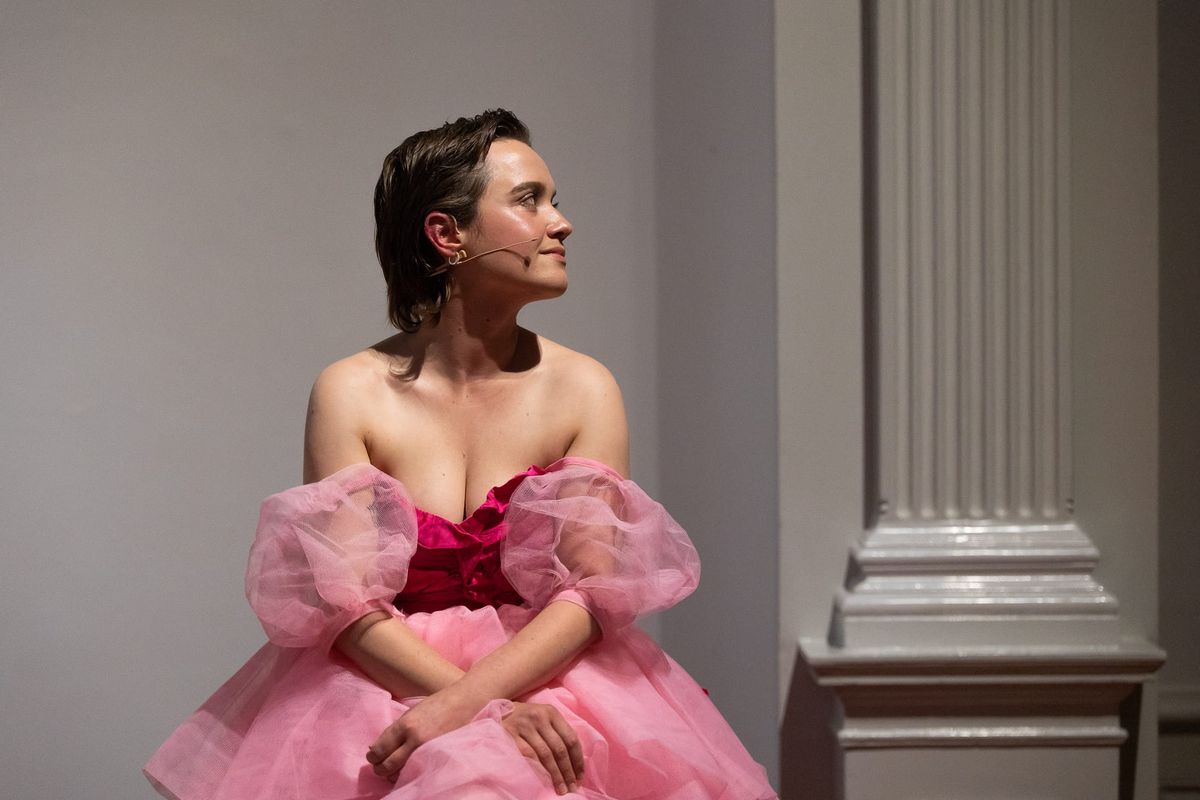
Marijke De Roover (1990–2026) was a Belgian performance artist whose work drew on queer and feminist theories while probing love, social hierarchies, and institutional power. Her performances often mixed references to karaoke, Disney movies, and memes, and she presented work at institutions including Centre Pompidou, the National Museum of Contemporary Art Athens, ARCADE in London, and others.
“Marijke was a great talent,” Nieck de Bruijn, founder of Upstream Gallery in Amsterdam, which represented the artist, told Hyperallergic. “Her unique position in the field of queer and feminist performances brought important issues about love, relationships, feminism and heteronormativity into the spotlight with great humor. In her far too short career, she left a lasting impression on contemporary art and feminist and LGBTQAI+ communities.”
Sliman Mansour (1947–2026), known as a painter of Palestinian hope, remained committed to human rights through his art despite being jailed, beaten, and threatened by the Israeli government. He is perhaps best known for “Camel of Hardships” (1973), which shows an elderly Palestinian man straining beneath the weight of the city of Jerusalem on his back and became an icon of Palestinian liberation. Read the obituary.
Margaret Barwick (1931–2026), a champion of the Cayman Islands visual arts community, was an artist, landscape designer, and arts administrator who helped shape some of the territory’s most celebrated gardens. She also played a key role in expanding its visual arts scene, chairing the Visual Arts Society from 1979–80 and leading the Cayman Islands’ first participation in the Caribbean Festival of Arts, CARIFESTA IV, in Barbados, in 1981.