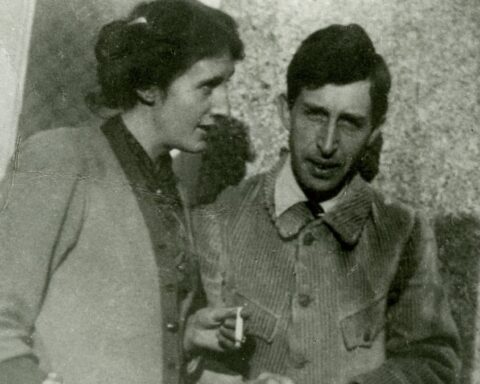
Zarina Hashmi, professionally known as Zarina, led a life marked by movement and migration. Born in 1937 in Aligarh before the Partition of India, she experienced the upheaval of relocating with her Muslim family to Pakistan. Her journey continued through cities like Bangkok, New Delhi, Paris, and Tokyo, where she lived, studied, and worked until her passing in 2020. Her artistic work—comprising minimalist prints, drawings, cast-paper reliefs, and sculptures—consistently explored themes of place, home, and migration, deeply influenced by her nomadic existence.
Despite her global travels, Zarina was fundamentally a New York artist. Arriving in the city in 1976, she became an integral part of its vibrant art scene, participating in the New York Feminist Art Institute and contributing to Heresies magazine, where she co-edited the pivotal Third World Women issue in 1979. She also co-curated the influential exhibition ‘Dialectics of Isolation’ at A.I.R. Gallery in 1980 alongside Kazuko Miyamoto and Ana Mendieta. Her work was recognized by institutions like the Museum of Modern Art as early as 1974, and she was honored with a retrospective at the Guggenheim Museum in 2013. Her current exhibition, ‘Beyond the Stars,’ is featured at Luhring Augustine Gallery.
Zarina’s artistic exploration of dislocation often seemed at odds with emphasizing her place in New York. However, her presence in the city was pivotal for many South Asian American artists, particularly women. She stood as a rare, visible figure against the backdrop of the challenges faced by women of color, including eviction and marginalization by her White feminist contemporaries. Her work countered the erasure of South Asian American artists, who remain underrepresented in major exhibitions like the Whitney Biennial, despite broader recognition of other diasporas in American art.
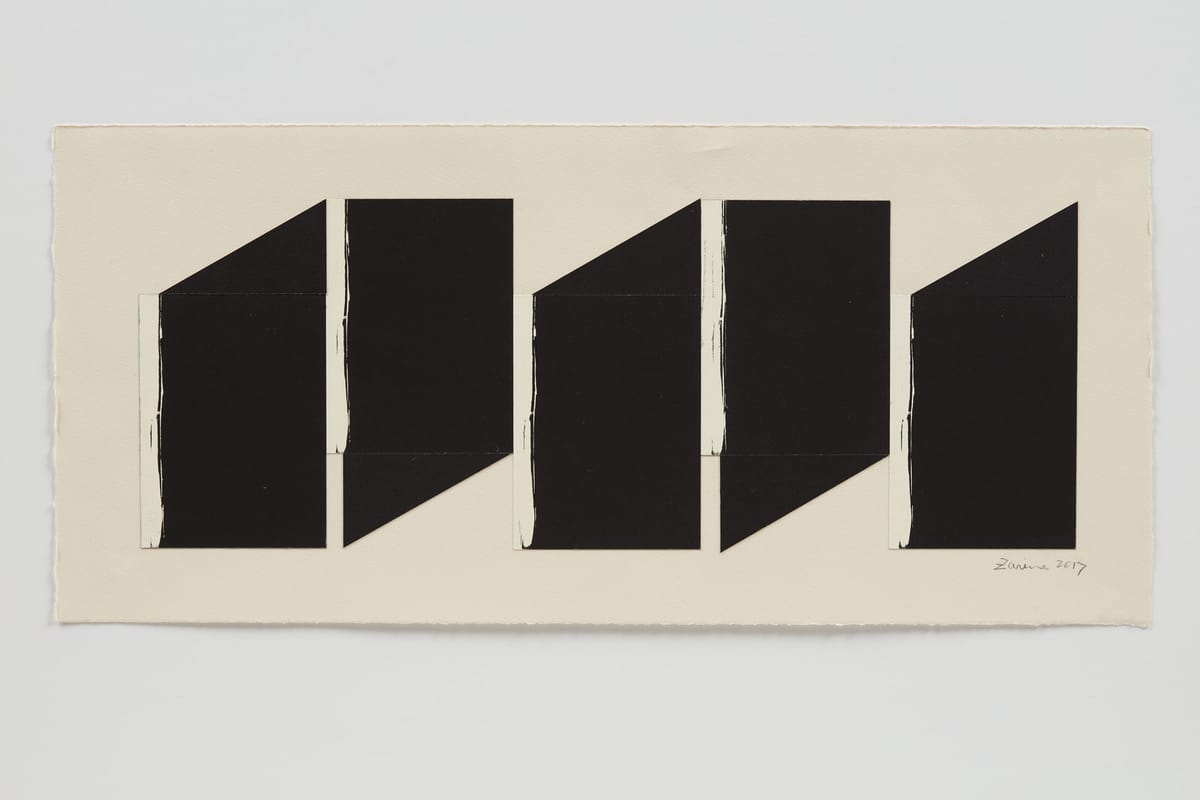
The exhibition ‘Beyond the Stars’ showcases 32 pieces that deftly balance a style deeply rooted in Urdu, South Asian histories, and mysticism, without confining itself to national identity. Her woodcuts, such as ‘Mapping the Dislocations’ (2001) and ‘Cities I Called Home’ (2010), reflect her journey through a unique cartographic lens. Works addressing Partition, like ‘Dividing Line’ (2001) and ‘Abyss’ (2013), distill the historical trauma into elemental forms, offering profound commentary on nationalism’s cruelty.
In Zarina’s art, paper symbolizes both fragility and strength. She uses it to create sculptures like ‘Pool II’ (1980) and ‘Marrakesh’ (1988), imbuing them with architectural depth. Her works capture fleeting memories of cities and homes, while pieces like ‘Fold in the Sky’ and ‘Beyond the Stars’ (both 2014) explore the infinite expanse of the sky, suggesting realms beyond the tangible. ‘Zarina: Beyond the Stars’ is on view at Luhring Augustine Tribeca through March 28, organized by the gallery.