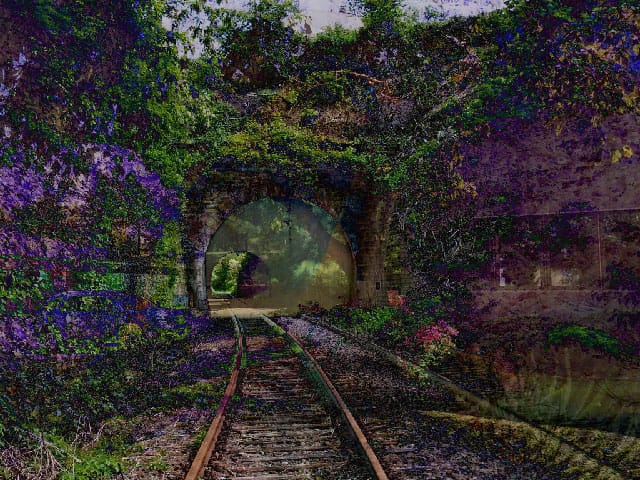
Stephen Thaler, a computer scientist, faced another setback this week as the United States Supreme Court opted not to review his appeal in an ongoing legal battle for copyright recognition of AI-generated “artwork.” Thaler has sought copyright for an image produced by his AI, “Creativity Machine,” since 2018, but lower courts have consistently supported the US Copyright Office’s stance against registration. The office concluded that the AI-created image, “A Recent Entrance to Paradise” (2012), did not fulfill the “human authorship” criterion required for copyright in 2019.
After his appeals in 2020 and 2022 were dismissed, Thaler sued Shira Perlmutter, register of copyrights. In 2023, a District Court judge reinforced the necessity of human authorship for copyright. Thaler then approached the Court of Appeals, which upheld the previous ruling in 2025. Despite multiple requests for more time to approach the Supreme Court, Thaler and his legal team filed a challenge last October. Their petition was supported by several academics who argued that excluding AI-generated works from copyright impedes American creativity and economic growth.
Interestingly, in 2023, the US Copyright Office issued a policy statement suggesting that some AI-generated artworks might be eligible for copyright, contingent on whether the AI elements involved were due to “mechanical reproduction” or resulted from an author’s “original mental conception.” Nevertheless, on Monday, March 2, the Supreme Court declined to address the issue, posing a challenge to Thaler’s efforts to modernize copyright qualification criteria as technology evolves rapidly. Despite this, Thaler remains optimistic, telling CNET he views the rejection as a philosophical milestone. He noted that “the law is lagging behind what technology can already do,” emphasizing that the case highlights the debate on whether inventions must be exclusively human-made.