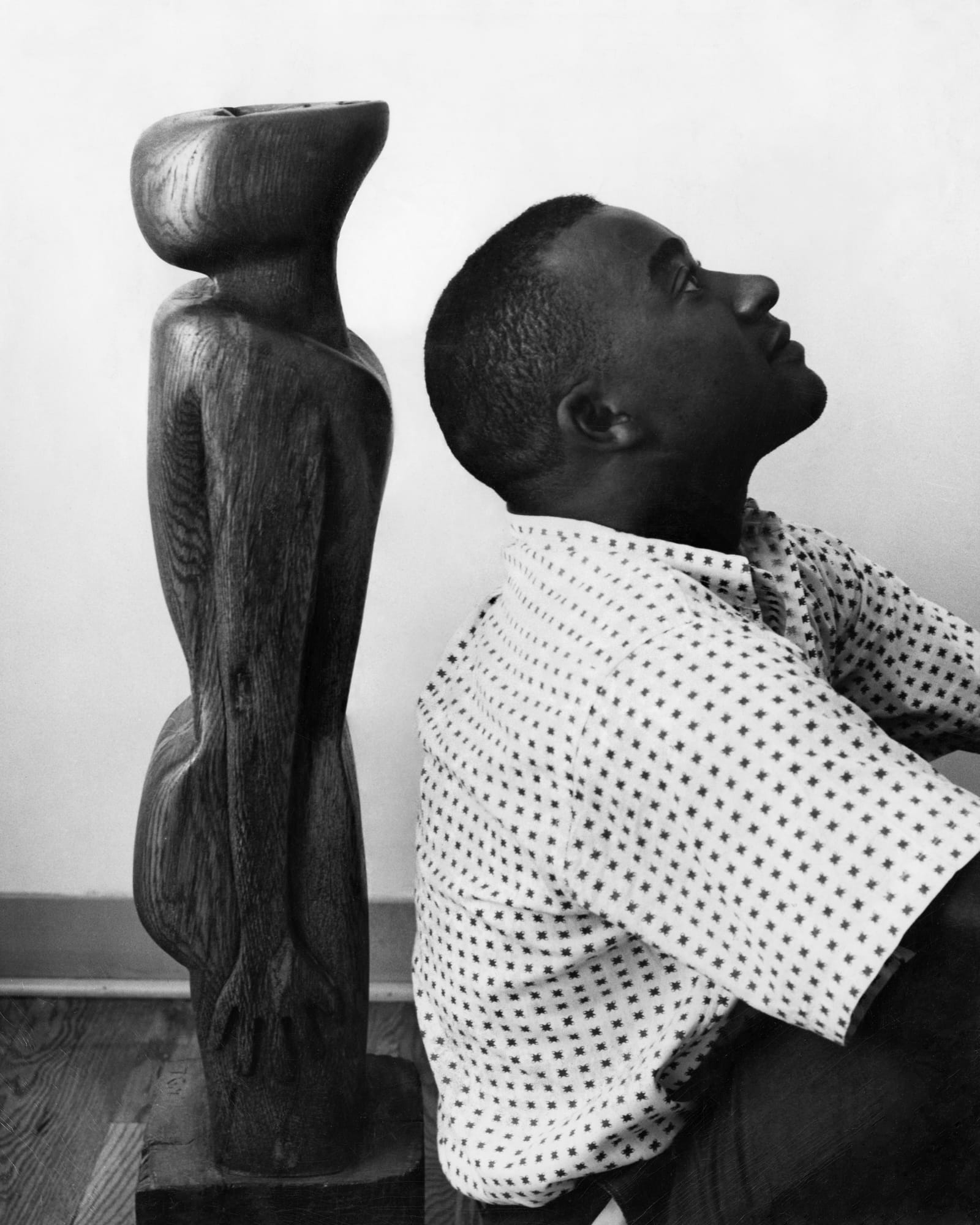
In 2004, Thaddeus Mosley’s wooden sculptures were introduced to New York audiences at CUE, curated by the poet Nathaniel “Nate” Mackey. As a fan of Mackey’s poetry and editorial work, I was drawn to the exhibition, unaware of Mosley’s art. The experience was a reminder of the many artists of color overlooked by the art world.
A year later, captivated by Mosley’s work, I decided to visit his studio in Pittsburgh. Despite not writing for any art publications or having the funds for the trip, I was determined to speak with him. I contacted Ed Roberson, a fellow poet from Pittsburgh, who provided Mosley’s number. After hesitating, I called around 9 pm, reaching his voicemail. To my surprise, he returned my call at midnight after attending a jazz club, and we conversed for half an hour. It was clear Mosley was an extraordinary individual.
Self-taught and driven by passion, Mosley crafted sculptures from logs he collected in Pennsylvania forests, with the support of close friends and family. His sculptures, constructed without nails from interlocking wood pieces, stood impressively tall. While much has been said about his abstract sculptures and influences like Constantin Brâncuși and Isamu Noguchi, these comparisons seem secondary. His art, standing independently and joined seamlessly, was rooted in improvisation and guided by the wood itself.
Mosley’s work was inspired by jazz legends like John Coltrane and Tommy Turrentine, as well as Modernist art and the cultural heritage of Central and West Africa and the American South. As I reflect on his art, I am reminded of Charles Olson’s poem, “Maximus to Gloucester: Letter 2”: “people don’t change. They only stand more revealed.” Yet, this doesn’t fully encapsulate Mosley’s essence. Recently, Ed Roberson mentioned at a literary conference that Mosley was in hospice. Ed’s words, “Mosley was a model for us,” resonate deeply.
Observing Mosley’s sculptures and his creative process reveals what Ed meant. His art transcends traditional Modernism, focusing on the unique creation circumstances and the role of an artist within a community. This understanding drove my desire to visit his studio and spend time with him.