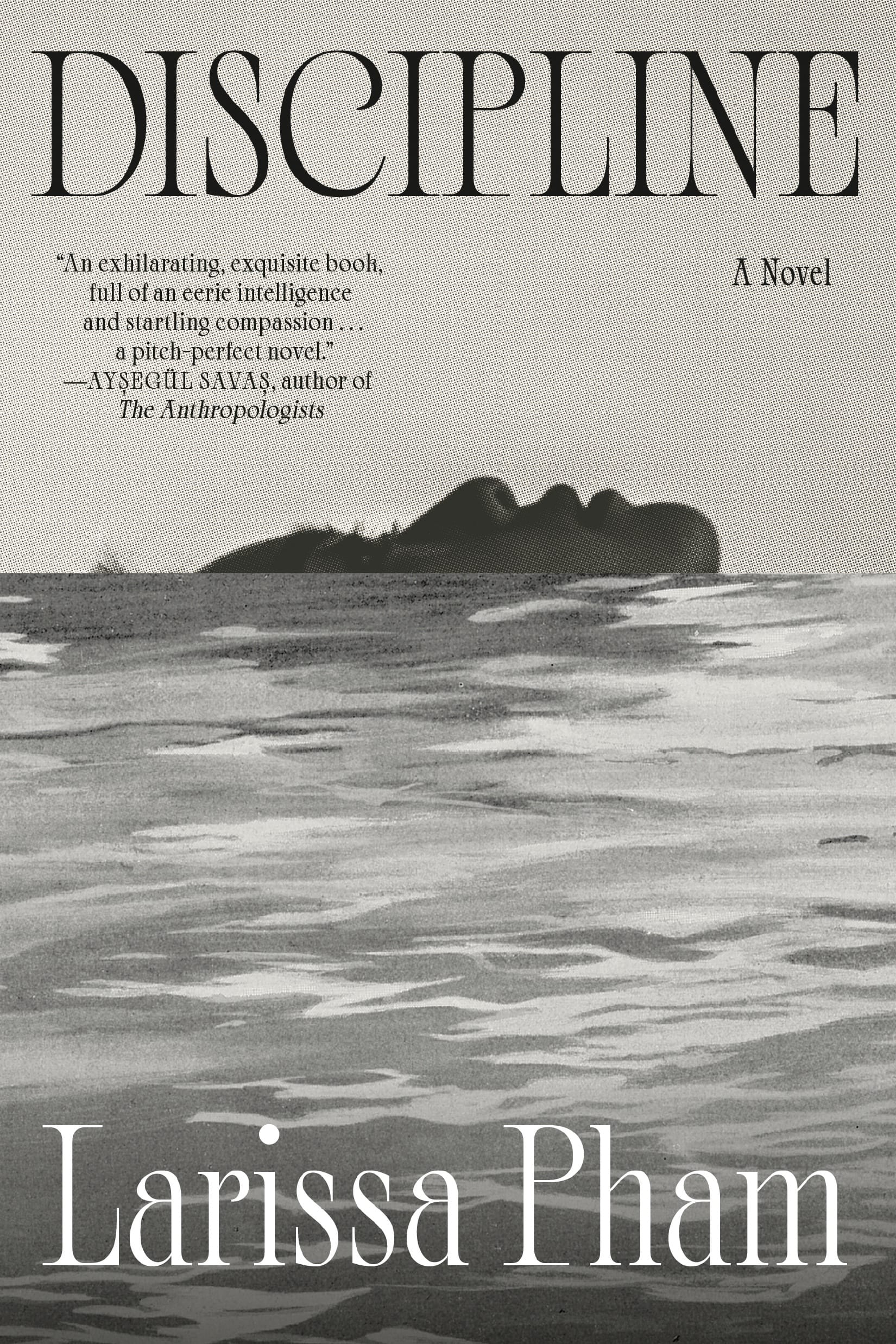
“People are always writing from their own lives,” says Christine, the central figure in Larissa Pham’s debut novel, Discipline. “You can’t ever change what’s already happened to you, but when you write about it, you can reframe it. Take control of it, maybe.” This self-awareness, present in both the character and the author, will resonate with enthusiasts of autofiction, though some might find it overly familiar. Christine, a writer in her twenties and a former painter, is haunted by her past affair with her professor, Richard, echoing the struggles of creatives often depicted in the works of Rachel Cusk, Ben Lerner, Tao Lin, and Sheila Heti.
The blurring of lines between writer and protagonist fuels the narrative of autofiction, and Discipline follows suit. Pham, an art critic and ex-painter herself, has shared her own experiences of sexual assault by older men, including a faculty member at the Yale School of Art. Discipline innovatively places a central trauma at the core of autofiction’s exploration, leading it from a minimal plot into a dramatic intersection of art and its creators.
The novel begins with Christine having just released her own autofictional work, which narrates her affair and parallels Discipline. As she navigates her book tour, various encounters — with exes, fellow artists, and even artworks — reveal more about her than she openly admits. These interactions cast a shadow over Christine’s past, suggesting its inescapability. While engaging with Helen Frankenthaler’s paintings, Christine ponders, “Was there ever a way to keep things just as they were… To feel the pierce of first experience again?”
Pham’s writing transforms as Christine confronts the stagnation in her painting career. The initially fragmented narrative becomes alive and sensory during her confrontation with Richard. As Christine becomes more present, Pham’s prose shifts, capturing the immediacy and comparisons between art and life. Witnessing a bird flying, Christine observes, “Its body is the shape a pen makes when you drop it on paper. Its path the line.”
In Discipline, Pham poignantly illustrates the impacts of teacher-student dynamics, even when both are adults. Christine’s artistic and personal awakening is tied to Richard, whose inadequate guidance teaches her more about manipulation than art. As the plot reaches its peak, Pham offers a candid look at how predatory mentors shape their students’ relationships with themselves and their art. “I cannot stop being cruel to him,” Christine admits as the novel nears its conclusion.